Gabriella Miller Kids First Research Act 2.0 This bill reauthorizes through FY2027 a pediatric disease research initiative within the National Institutes of Health (NIH) and requires the NIH to coordinate pediatric research activities to avoid duplicative efforts. Additionally, the Department of Health and Human Services must report, within five years, to Congress about research funded through the initiative.
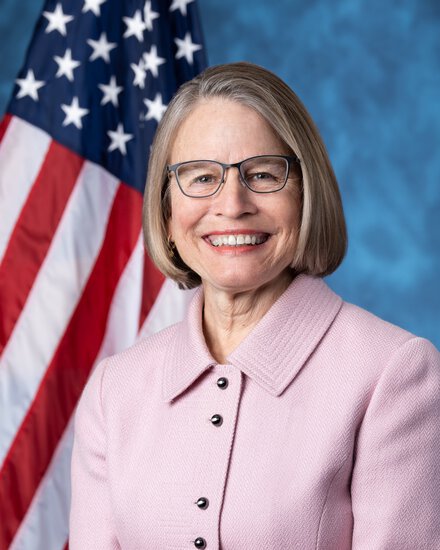
Rep. Mariannette Miller-Meeks
Sponsored bills
This resolution expresses support for U.S. Border Patrol agents, denounces the politicization and falsification of claims against agents in Del Rio, Texas, and calls on the Biden administration to support front line agents.
Greater Access to Telehealth Act This bill modifies the extension of certain Medicare telehealth flexibilities after the end of the COVID-19 public health emergency. Specifically, the bill provides that certain flexibilities continue to apply until December 31, 2026, if the emergency period ends before that date. The bill allows beneficiaries to continue to receive telehealth services at any site, regardless of type or location (e.g., the beneficiary's home); occupational therapists, physical therapists, speech-language pathologists, and audiologists to continue to furnish telehealth services; federally qualified health centers and rural health clinics to continue to serve as the distant site (i.e., the location of the health care practitioner); evaluation and management and behavioral health services to continue to be provided via audio-only technology; and hospice physicians and nurse practitioners to continue to complete certain requirements relating to patient recertifications via telehealth. The bill also delays implementation of certain in-person evaluation requirements for mental health telehealth services until January 1, 2027, or the first day after the end of the emergency period, whichever is later.
Access to Safe Contraception Act of 2022 This bill prohibits states from banning any form of contraception that is approved by the Food and Drug Administration. The bill does not preempt state laws that protect the right of any entity to opt out of providing contraception due to the entity's religious or moral beliefs.
Maddy summaryThe National Park Foundation Reauthorization Act of 2022 extends and increases funding for the National Park Foundation. It amends federal law to authorize $15 million annually (up from $5 million) for the Foundation through 2030 (extending from 2023). This bill directly affects the National Park Foundation by providing a longer-term, higher level of federal appropriations for its operations. The key change is a specific funding authorization adjustment in Title 54 of the U.S. Code, with no new program requirements or policy changes.
Allowing Greater Access to Safe and Effective Contraception Act This bill requires the Food and Drug Administration to prioritize review of supplemental applications for over-the counter oral contraceptives that are intended for routine use. It also removes certain limitations in relation to such products and health savings accounts, flexible spending arrangements, and other arrangements (e.g., limitations on the number of items that may be purchased).
This bill ensures that members of the Armed Forces who were granted a general discharge under honorable conditions (on the sole basis that the members failed to obey a lawful order to receive a vaccine for COVID-19) are eligible for Department of Veterans Affairs educational assistance under the Montgomery GI Bill-Active Duty and Post-9/11 GI Bill programs.
This bill expands eligibility for Department of Veterans Affairs (VA) reimbursement of emergency treatment for veterans who are treated in a non-VA facility. Specifically, the bill waives the requirement that a veteran must have received VA care within the 24-month period preceding the furnishing of emergency treatment if the veteran receives such emergency treatment within the 60-day period following their enrollment in the VA health care system.
Department of Veterans Affairs Continuing Professional Education Modernization Act or the VA CPE Modernization Act This bill modifies the program under which the Department of Veterans Affairs (VA) reimburses specified full-time health care professionals for continuing professional education expenses. Under current law, only board-certified physicians and dentists are eligible for such reimbursement. The bill expands the program to require reimbursement for various specified full-time health care professionals (e.g., registered nurses) and increases the amount available for a physician or dentist. Additionally, the bill removes the requirement that an individual be board-certified to receive reimbursement. The VA may adjust the amounts available based on inflation.
Standing with Moms Act This bill requires the Department of Health and Human Services (HHS) to disseminate information about pregnancy-related resources. Specifically, HHS must maintain a public website (life.gov) that lists such resources that are available through federal, state, and local governments and private entities. Additionally, HHS must maintain on its website a portal that provides a user, based on the user's responses to a series of questions, tailored information about pregnancy resources available in the user's zip code and risks related to abortion. HHS must develop a plan to conduct follow-up outreach to users of the portal (if the user consents to the outreach). States must recommend resources that meet criteria set by HHS for including through the portal. HHS may award grants to states to establish or support a system that aggregates resources to include on the portal. Further, the Health Resources and Services Administration must share information about life.gov and the portal through the Maternal Mental Health Hotline. HHS must also ensure that the life.gov website and hotline are available to families who speak languages other than English. The bill excludes from life.gov, the portal, and the hotline resources provided by entities that (1) perform, induce, refer for, or counsel in favor of abortions; or (2) financially support such entities. The bill also requires HHS to report on traffic to life.gov and the portal, gaps in services available to pregnant and postpartum individuals, and related matters.