

Maddy summaryHRES 1365 is a non-binding House resolution calling for the immediate termination of Kimberly Cheatle as U.S. Secret Service Director. It directly addresses the Secret Service Director and the executive branch, though it has no legal force to remove her from office. The resolution’s sole provision is a formal request for her termination, reflecting the sponsors' position on her leadership. As a symbolic gesture, it does not change her employment status or require any action from the President or Secret Service.
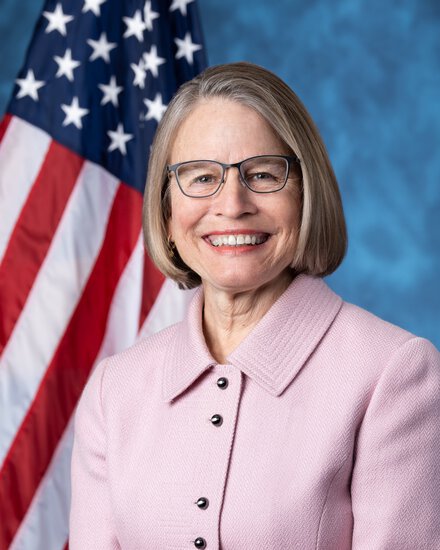
Rep. Mariannette Miller-Meeks
Sponsored bills
Maddy summaryThe Storm Recovery and Community Restoration Act provides tax relief to Iowa residents in specific disaster-affected areas following storms and flooding. It allows penalty-free withdrawals of up to $100,000 from retirement accounts for individuals living in designated counties (e.g., Polk, Shelby, Clay, or Sioux) who suffered economic loss, with the option to repay within three years to avoid taxes. The bill also increases retirement loan limits to $100,000 and delays loan repayments for one year for affected residents. Additionally, it temporarily suspends limits on deducting cash charitable contributions to Iowa disaster relief efforts between April 24 and December 31, 2024.
Maddy summaryHR 9060 extends tax credits for biodiesel and renewable diesel producers and users through 2025, replacing the previous 2024 expiration date. It amends the Internal Revenue Code to extend the biodiesel credit (Section 40A) and biodiesel mixture credit (Section 6426) for fuels sold or used after December 31, 2024. The bill also adds a provision preventing double benefits by requiring the credit amount to be zero for fuels already claiming another credit under Section 45Z(a). This directly affects biodiesel producers, refiners, and businesses using these fuels for tax purposes.
Maddy summaryHR 4581, the Maternal and Child Health Stillbirth Prevention Act of 2024, amends Title V of the Social Security Act to explicitly allow federal funds to support stillbirth prevention efforts. The bill directs states receiving Title V maternal and child health funds to use these resources for evidence-based programs and research aimed at reducing stillbirths, including tracking fetal movements, screening for growth issues, smoking cessation, and community support. It directly affects state maternal health programs by clarifying that existing funding can now cover specific stillbirth prevention activities previously not explicitly permitted. The law changes how Title V funds may be spent, adding clear provisions for research and programs targeting stillbirth reduction. This is a policy change that updates funding guidelines without creating new programs or mandates.
Maddy summaryThis bill transfers specific federal lands in Iowa and Nebraska from the Army Corps of Engineers to the Bureau of Indian Affairs, then places those lands into trust for the Winnebago Tribe of Nebraska. The lands, described in detail as Tracts 119, 210, and 113, are declared part of the tribe's historic 1865 reservation under the same terms as the original treaty. The bill explicitly prohibits Class II and Class III gaming on these lands under the Indian Gaming Regulatory Act.
Maddy summaryHRES 1355 is a non-binding resolution supporting the designation of July 10 as Journeyman Lineworkers Recognition Day. It honors lineworkers who maintain electrical infrastructure under hazardous conditions, including during disasters, and commemorates Henry Miller, the first president of the International Brotherhood of Electrical Workers, who died on July 10, 1896, while troubleshooting an electrical outage. The resolution encourages public recognition of these workers' contributions but does not create new laws or policies.
Maddy summaryHR 7637, the Refrigerator Freedom Act, modifies how the U.S. Department of Energy sets and enforces energy conservation standards for refrigerators, refrigerator-freezers, and freezers. It requires the Secretary of Energy to determine that any new or updated standard must be technologically feasible, economically justified, not increase net consumer costs (including purchase, maintenance, and disposal), and result in significant energy savings before prescribing or enforcing it. The bill directly affects the Department of Energy’s authority to regulate appliance efficiency and the appliance industry, which must comply with these new criteria for standards. It does not create new standards but changes the conditions under which existing standards can be implemented.
Maddy summaryThis bill requires online platforms and internet service providers (like social media companies and messaging services) to report certain drug-related crimes to the Drug Enforcement Administration (DEA). Providers must submit reports if they have actual knowledge or a reasonable belief about fentanyl/methamphetamine sales, counterfeit prescription drugs, or illegal online pharmacies, including account details and location information. The law includes penalties for non-compliance ($190,000 for first violation) and requires the DEA to publish annual reports on the number of reports received and their outcomes. It exempts broadband internet providers and text messaging services from these requirements and includes privacy protections to prevent providers from being required to monitor content. The law aims to help law enforcement combat illegal drug trafficking by creating a structured reporting mechanism for online platforms.
Maddy summaryHRES 1317 designates the week of June 24-July 3, 2024, as "National Tire Safety Week" to promote public education on proper tire maintenance, such as checking tire pressure and tread depth. It encourages American motorists to learn about these practices, which can prevent accidents by reducing tire-related failures like underinflation or worn treads. The resolution expresses congressional support for this observance but does not create new laws or regulations. It aligns with existing tire safety recommendations from the U.S. Tire Manufacturers Association.
Maddy summaryThe HEART Act of 2024 (HR 8846) creates a tax exclusion for individuals receiving compensation from federally declared disasters caused by severe storms, straight-line winds, or tornadoes. It excludes from gross income any "qualified" relief payment received after December 31, 2023, for losses like property damage, additional living expenses, or lost wages not covered by insurance. The bill specifically prevents double tax benefits by disallowing deductions or basis increases for expenses already covered by this excluded payment. It directly affects individuals who received disaster relief payments for qualifying weather events after 2023.