

Maddy summaryThis bill awards a Congressional Gold Medal to the 761st Tank Battalion (known as the "Black Panthers"), the first predominantly Black armored unit in World War II's European Theater. It recognizes their combat service from 1944-1946, including key roles in the Battle of the Bulge and breaking the Siegfried Line, despite facing racial prejudice during and after the war. The medal will be displayed at the National Museum of African American History and Culture, with bronze duplicates available for sale to cover costs. The bill commemorates the battalion's 130,000 enemy casualties inflicted, 50% casualty rate, and their 1978 Presidential Unit Citation. It does not create new laws or affect current policies.
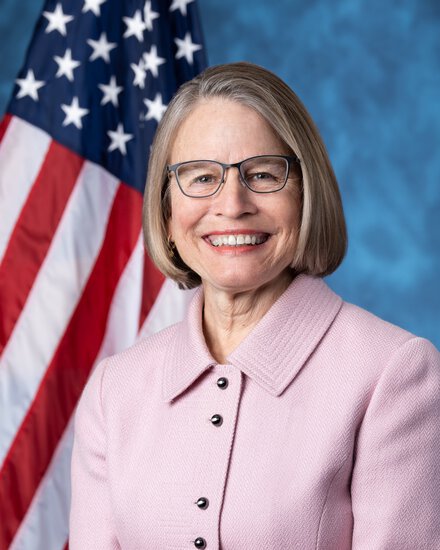
Rep. Mariannette Miller-Meeks
Sponsored bills
Maddy summaryThis bill requires the U.S. Department of Agriculture (USDA) to join the Committee on Foreign Investment in the United States (CFIUS) for reviews of certain transactions involving foreign adversaries. It specifically targets acquisitions of U.S. agricultural land, biotechnology, or agriculture-related infrastructure (like transportation, storage, or processing) by entities from China, North Korea, Russia, or Iran. The USDA must notify CFIUS about reportable transactions, prompting the committee to determine if a full review is needed. The provisions expire for any country removed from the official list of foreign adversaries in federal regulations.
Maddy summaryHR 1575, the "No American Land for Communist China Act," prohibits the People's Republic of China government and businesses with 25% or more Chinese government ownership from purchasing real estate adjacent to specific federal lands. The bill directly affects Chinese government agents and Chinese-affiliated businesses seeking to buy property near lands managed by the Departments of Interior, Defense, Agriculture (Forest Service), and Energy, as well as Indian country. Key provisions require the President to take necessary actions to block such purchases, defining "covered Federal lands" broadly to include national parks, military bases, and tribal lands. The law aims to prevent foreign government influence over land near sensitive U.S. properties through a clear purchase restriction.
Maddy summaryHR 1539, the Medical Device Electronic Labeling Act, allows medical device manufacturers to provide required product labeling exclusively through electronic means, rather than physical copies. This change directly affects device manufacturers, healthcare providers, and patients who access device information. Key provisions require that electronic labeling be readily accessible online, manufacturers must provide paper copies upon request without cost, and the physical device label must still include essential safety and usage information. The bill does not alter existing safety standards but updates how labeling is delivered, with the FDA retaining authority to issue additional requirements via Federal Register notices for specific devices.
Maddy summaryHR 1502 authorizes the creation of a Congressional Gold Medal to honor the volunteers and communities (primarily from Nebraska, Colorado, and Kansas) who supported the North Platte Canteen during World War II. The bill directs the Treasury Secretary to design and strike the medal, which will be presented to the individuals who contributed to the canteen’s operations and then permanently displayed at the Lincoln County Historical Museum in North Platte, Nebraska. It also permits the sale of bronze duplicates to cover production costs, with proceeds going to the U.S. Mint. This is a commemorative measure recognizing historical service, not a policy change affecting current laws or programs.
Maddy summaryHR 1475, the SBA Disaster Transparency Act, requires the Small Business Administration (SBA) to publish all disaster assistance reports on its website. This bill amends existing law by adding specific language mandating that the SBA "publish on the website of the Administration" reports related to disaster assistance, including those submitted by state and local officials. The key mechanism is a procedural update to existing reporting requirements, ensuring all required reports are publicly accessible online rather than only being submitted internally. This directly affects the SBA (by changing its reporting process) and the public (by providing greater transparency into how disaster aid is distributed). The bill does not alter disaster assistance eligibility or funding levels.
Maddy summaryHR 1492 amends the Social Security Act to extend the negotiation period for standard drug manufacturers under the federal drug pricing program. Specifically, it changes the timeframe from 7 years to 11 years for small-molecule drugs (like traditional pills) to negotiate prices with the government, aligning it with the existing 12-year period for complex biologic drugs (like insulin or monoclonal antibodies). This adjustment directly affects pharmaceutical companies that produce small-molecule drugs, giving them a longer window to negotiate pricing terms. The bill makes this change effective as if it had been part of the 2022 law that established the program.
Maddy summaryThis bill would require states to create a simplified process for out-of-state healthcare providers to join Medicaid and CHIP programs. Qualified providers (those already enrolled in Medicare or another state's program with low fraud risk) could enroll without excessive screening and would be approved for five years. It directly affects children under 21 enrolled in Medicaid or CHIP by expanding access to providers outside their state, particularly in underserved areas. The change applies to all states' Medicaid programs but takes effect three years after enactment.
Maddy summaryHR 1463 prohibits the use of federal funds to implement, administer, or enforce a specific FDA rule about medical devices known as "laboratory developed tests" (LDTs), published in the Federal Register on May 6, 2024 (89 Fed. Reg. 37286). The bill directly affects the Food and Drug Administration (FDA), preventing it from using taxpayer money to carry out this regulation. Its key mechanism is a straightforward funding ban on the specified rule and any substantially similar future rule. This is a procedural restriction focused solely on blocking financial support for the FDA's LDT regulatory approach.
Increasing Access to Dental Insurance Act This bill permits individuals to enroll in a dental benefits plan on a health insurance exchange without also enrolling in a qualified health plan.