

Maddy summaryHCONRES 58 is a symbolic congressional resolution denouncing socialism in all its forms. It does not create new laws or affect any policies, as it is a non-binding statement of opinion. The resolution cites historical events and quotes from Founding Fathers to argue that socialism leads to authoritarianism and economic harm, referencing examples like the Soviet Union and Venezuela. It formally "denounces" socialism and opposes implementing socialist policies in the U.S., but has no legal effect on citizens or government actions. This is a procedural resolution, not a policy measure.
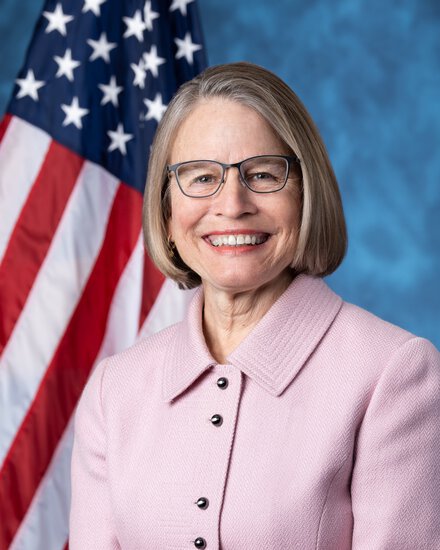
Rep. Mariannette Miller-Meeks
Sponsored bills
Maddy summaryHR 6293, the Housing Supply Expansion Act of 2025, updates federal definitions to include manufactured homes built without a permanent chassis under the same regulatory framework as traditional manufactured homes. It requires the Secretary of Housing and Urban Development to establish new labeling standards (including distinct data plates and invoice notations) for these homes and mandates that states certify they treat them equally to homes on permanent chassis in areas like financing, installation, and sales. States must submit initial certification within one year (or two years for biennial legislatures) and annual recertifications to confirm compliance, with non-compliant states prohibited from allowing the sale or installation of these homes. The bill directly affects manufacturers, state regulators, and homebuyers purchasing manufactured homes without permanent chassis, ensuring consistent federal and state treatment.
Maddy summaryThis bill requires health plans and insurance to cover prenatal services (like ultrasounds and doctor visits) without additional out-of-pocket costs if a miscarriage or stillbirth occurs before a birth-related bundled payment is made. It directly affects families who experience pregnancy loss, preventing them from being charged extra deductibles, copays, or coinsurance for prenatal care received prior to the loss. The key provision states that cost-sharing for these prenatal services cannot exceed what would have applied if the birth had occurred normally. The rule applies to plans covering bundled birth payments and takes effect for plan years starting January 1, 2027.
Maddy summaryHRES 903 is a non-binding House resolution designating November as "Complex Regional Pain Syndrome and Reflex Sympathetic Dystrophy Syndrome Awareness Month." It expresses support for raising public awareness about CRPS/RSD, a rare condition causing chronic limb pain, swelling, and disability without a cure or single diagnostic test. The resolution highlights the need for earlier diagnosis, improved treatment access, and research advancement for this condition, which disproportionately affects women. It does not create new laws or allocate funding but aims to support patients and drive medical progress through heightened visibility.
Maddy summaryHR 6036 ensures veterans who served in female cultural support teams (FCS) during 2010-2021 receive proper military records and veterans benefits. The bill requires the military to add FCS service to individual records and count it toward retirement pay, while treating this service as "engagement in combat" for disability claims. Veterans can now submit supplemental claims for service-connected disabilities like PTSD or brain injuries, with the VA improving claim processing and outreach. It also mandates a study to identify other veterans with similar unrecorded service and a report on covered claims by gender and record status. This directly affects women who served in FCS teams but were previously excluded from combat-related benefits.
Maddy summaryThe NEST Act (HR 6096) requires the federal government to provide newborn supply kits to new mothers, focusing on low-income families and communities with high maternal health risks. These kits include essential items like diapers, postpartum pads, breastfeeding supplies, blood pressure monitors, and health information resources. Funds for the kits come from a $5 million annual set-aside in Social Security Act funding, distributed through grants to community health centers, tribal organizations, and hospitals. Priority is given to rural areas, maternity care deserts, and mothers earning below 185% of the poverty line. The program mandates annual reporting on distribution demographics and health outcomes to Congress.
Maddy summaryHRES 885 is a symbolic resolution designating November 15, 2025, as "America Recycles Day" to raise public awareness about recycling and promote national discussion on advancing a circular economy. It does not create new laws or funding but formally expresses congressional support for recycling efforts and acknowledges the sector's economic impact (contributing $168 billion and supporting 500,000 jobs). The resolution encourages Americans to "reduce, reuse, and recycle" while highlighting recycling's benefits for environmental sustainability, job creation, and supply chain resilience. It directly affects the public, recycling stakeholders (including communities, businesses, and governments), and the broader recycling industry by elevating public engagement with existing practices.
Maddy summaryHRES 864 is a ceremonial resolution honoring U.S. veterans on Veterans Day 2025. It does not create new laws or policies but formally recognizes veterans' service and sacrifice, calling on all Americans to observe Veterans Day. The resolution references historical context about Veterans Day's origins (from Armistice Day to honoring all veterans) but contains no concrete policy changes. It directly addresses the general public, urging them to participate in the observance. As a non-binding resolution, it affects no specific individuals or groups through legislative action.
Prevent Government Shutdowns Act This bill provides continuing appropriations to prevent a government shutdown if the appropriations bills for a fiscal year have not been enacted before the fiscal year begins and continuing appropriations are not in effect. Specifically, the bill provides appropriations at the rate of operations that was provided for the prior fiscal year to continue programs, projects, and activities that were funded in the preceding fiscal year. The bill also limits official travel, congressional recesses or adjournments, and the consideration of legislation that is unrelated to appropriations after the beginning of a fiscal year if the appropriations process has not been completed.
Maddy summaryThis bill ensures SNAP (food stamp) benefits continue uninterrupted during government funding gaps in fiscal year 2026. It directs the USDA to use existing Treasury funds to pay SNAP benefits if Congress fails to pass a full-year budget for the Department of Agriculture by September 30, 2025. The bill also covers retroactive payments for missed benefits starting September 30, 2025, through the bill's enactment date. Benefits funded this way stop once Congress enacts a full FY2026 budget for the USDA. It directly affects SNAP recipients who rely on these benefits during budget delays.