

DHS Medical Countermeasures Act This bill directs the Department of Homeland Security (DHS) to establish a medical countermeasures program to facilitate personnel readiness and protection for DHS employees and working animals in the event of a chemical, biological, radiological, nuclear, or explosives attack, naturally occurring disease outbreak, or pandemic, and to support DHS mission continuity. The Chief Medical Officer of DHS shall (1) provide programmatic oversight of the program, (2) establish a medical countermeasures working group, and (3) develop and submit to DHS an integrated logistics support plan for medical countermeasures.
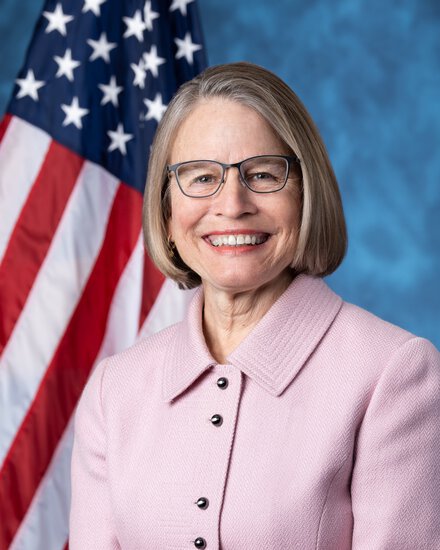
Rep. Mariannette Miller-Meeks
Sponsored bills
Transportation Security Public Health Threat Preparedness Act of 2021 This bill directs the Transportation Security Administration (TSA) to analyze the preparedness of the U.S. transportation security system for public health threats. Additionally, the TSA may provide its personnel to other components of the Department of Homeland Security and other federal agencies to improve coordination with such components and agencies to prepare for, protect against, and respond to public health threats to the transportation security system.
Transportation Security Preparedness Act of 2021 This bill directs the Transportation Security Administration (TSA) to survey its workforce regarding the TSA's response to the COVID-19 pandemic. It must also develop and biennially review a transportation security preparedness plan for addressing future outbreaks of communicable diseases. The Government Accountability Office must submit a report to Congress that contains the results of a study assessing the plan, including an analysis of (1) whether such plan aligns with relevant federal plans and strategies for communicable disease outbreaks, and (2) the extent to which the TSA is prepared to implement the plan.
Entrepreneurs Need Timely Replenishment (for) Eating Establishments Act or the ENTRÉE Act This bill provides FY2021 supplemental appropriations for the Restaurant Revitalization Fund and modifies requirements related to administration of the fund. The fund was established in response to COVID-19 to make grants to eligible food and beverage purveyors for covering specified costs such as payroll, operational expenses, and paid sick leave. The bill correspondingly rescinds unobligated amounts previously made available for the Economic Injury Disaster Loan Program and coronavirus state and local fiscal recovery funds. Further, the bill requires the Small Business Administration (SBA) to (1) review and process grant applications in the order in which they are received; (2) impose requirements on applicants that reduce waste, fraud, and abuse; and (3) submit and report monthly on an oversight and audit plan outlining the SBA's policies, procedures, and activities with respect to these grants.
Facilitating Innovative Nuclear Diagnostics Act of 2021 This bill establishes separate payment requirements for diagnostic radiopharmaceuticals under the Medicare prospective payment system for hospital outpatient department services. The bill's requirements apply to diagnostic radiopharmaceuticals that have an average daily cost of $500 or more in 2022 and as adjusted based on a specified fee schedule factor in each year thereafter.
Year-Round Fuel Choice Act of 2021 This bill amends the Clean Air Act to address the limitations on Reid vapor pressure (a measure of gasoline's volatility) that are placed on gasoline during the summer ozone season. The bill applies the Reid vapor pressure requirements that are applicable to gasoline blended with 10% ethanol (E10) to gasoline blended with more than 10% ethanol. Thus, the waiver given to E10 gasoline, which allows an increase in the Reid Vapor Pressure volatility, is extended to gasoline blended with more than 10% ethanol.
This bill requires the Department of Veterans Affairs (VA), the Department of Agriculture (USDA), and the Department of the Interior to jointly establish a pilot program to employ veterans in positions that relate to the conservation and resource management activities of USDA and Interior. The VA, USDA, Interior, and the Department of Defense (DOD) are authorized to enter into a partnership to include the pilot program as part of the Skillbridge program, which is a DOD program to provide training to members who are transitioning out of service in the Armed Forces. The bill also requires the VA to establish guidelines containing best practices for other federal agencies that carry out programs to employ veterans who are transitioning from service in the Armed Forces.
Daniel J. Harvey Jr. and Adam Lambert Improving Servicemember Transition to Reduce Veteran Suicide Act This bill requires the Department of Defense (DOD) and the Department of Veterans Affairs (VA) to jointly implement a five-year pilot program to assess the feasibility and advisability of providing specified counseling and services as part of the Transition Assistance Program for members of the Armed Forces as a means of reducing the incidence of suicide among veterans. Specifically, the pilot program would involve a three-hour counseling module and the provision of contact information for a counseling or similar facility in the locality where the veteran intends to reside. Additionally, the participating veterans must submit medical records in connection with their service in the Armed Forces, regardless of whether they intend to file a claim for benefits for a service-connected disability. Under the program, a social worker or behavioral health coordinator from the VA must contact the veteran within 90 days after the member is discharged or released from service to schedule a follow-up appointment. At least 10 DOD Transition Assistance Centers must be jointly selected to carry out the pilot program.
National Green Alert Act of 2021 This bill establishes the Green Alert System Advisory and Support Committee to develop best practices and provide technical assistance to states for the implementation of green alert systems, which would be activated when a veteran with a history of mental health issues goes missing.
Make PPE in America Act This bill requires procurement contracts for personal protective equipment (PPE) to be long-term and for domestically manufactured PPE. Specifically, contracts entered into by the Departments of Homeland Security, Health and Human Services, Defense, Education, or Veterans Affairs for the procurement of PPE must be for a duration of at least three years, including a base period and all option periods, to incentivize investment in the production of PPE, and materials and components of PPE, in the United States. The bill provides exceptions (1) where a nonavailability determination has been made, (2) where a sufficient quantity of a satisfactory quality cannot be procured as and when needed at U.S. market prices, and (3) where the department certifies every 120 days that it is necessary to procure PPE under alternate procedures to respond to the immediate needs of a public health emergency. Such departments may transfer to the Strategic National Stockpile any excess PPE acquired under a contract.