

Maddy summaryHR 1811, the Judicial Ethics Enforcement Act of 2025, creates an Office of Inspector General (IG) specifically for the federal judicial branch to investigate misconduct by judges and court staff. The IG would conduct audits, investigate alleged violations of judicial ethics rules (excluding Supreme Court decisions' merits), prevent fraud/waste, and report findings to the Chief Justice and Congress. The bill explicitly prohibits the IG from reviewing court rulings, disciplining judges, or investigating matters related to a judge's decision-making. This bill directly affects all federal judges, court employees, and judicial entities like the Judicial Conference, establishing a new oversight mechanism within the courts.
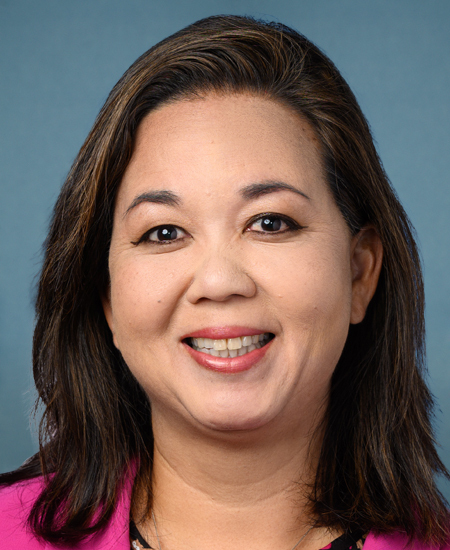
Rep. Jill N. Tokuda
Sponsored bills
Safe Schools Improvement Act This bill requires states to direct their local educational agencies (LEAs) to establish policies that prevent and prohibit bullying and harassment of elementary and secondary school students. In particular, these policies must prohibit bullying and harassment based on race, color, national origin, disability, religion, or sex. Sex includes sexual orientation, gender identity, and sex characteristics (including intersex traits). Further, LEAs must provide (1) students, parents, and educational professionals with annual notice of the conduct prohibited in their disciplinary policies; (2) students and parents with grievance procedures that target such conduct; and (3) the public with annual data on the incidence and frequency of that conduct at the school and LEA level. The Department of Education must conduct and report on an independent biennial evaluation of programs and policies to combat bullying and harassment in elementary and secondary schools. The National Center for Education Statistics must collect state data to determine the incidence and frequency of the conduct prohibited by LEA disciplinary policies.
Maddy summaryThe ARCH Act extends Medicare payment protections for rural hospitals through 2031, specifically prolonging the Medicare-Dependent Hospital (MDH) and Medicare Low-Volume Hospital (LVH) programs that prevent payment cuts for financially vulnerable facilities. It requires the GAO to report on rural hospital classifications - including critical access hospitals, rural emergency hospitals, and others - to analyze overlaps and recommend simplifications. The report must also assess how changing cost-reporting rules might improve financial stability for rural hospitals. This bill directly affects rural hospitals qualifying under MDH or LVH designations, ensuring continued Medicare funding until 2031.
Maddy summaryThis bill amends Section 5(e)(6) of the Food and Nutrition Act of 2008 by removing a reference to "subparagraph (B)" and renumbering the following provisions. It does not change SNAP eligibility rules or benefits; it only adjusts the internal numbering of existing provisions. The change takes effect January 1 following enactment. As a procedural amendment, it directly affects how the law is cited but does not alter policy or impact beneficiaries.
Maddy summaryHR 575, the Increased TSP Access Act of 2025, amends conservation program rules to expand access to third-party providers (TSPs) like agricultural retailers, engineers, and certified crop advisors. It creates new pathways for state agencies and professional organizations to certify TSPs (within 180 days of enactment), requires the USDA to review certifications within 10 business days, and sets payment rates equivalent to direct government services. The bill directly affects agricultural producers who use conservation programs and TSPs seeking certification, while mandating annual transparency reports on certification numbers, funding, and program effectiveness. Key changes include streamlined certification for existing specialists (e.g., certified crop advisors) and rules preventing double-counting of payments from other federal programs.
Maddy summaryThis bill (HJRES 63) would rename the Robert E. Lee Memorial, a National Park Service site in Arlington, Virginia, to "Arlington House National Historic Site." It directly affects the National Park Service, which manages the site, and all federal government documents, maps, and records referencing the location. The key provision updates all official references to the site to the new name and repeals two prior resolutions that established the memorial. As a procedural renaming bill, it does not create new policies or funding but changes the site's official designation.
Maddy summaryHRES 173 is a symbolic resolution, not a bill, calling for federal recognition and support of historically Black Freedmen's Settlements. It honors communities like Sand Branch, Texas (facing water contamination and poverty), Africatown, Alabama (surrounded by pollution), and Mossville, Louisiana (enduring industrial pollution), which were established by formerly enslaved people after emancipation. The resolution urges federal coordination to preserve these communities through documentation, historic preservation, and leveraging existing programs like EPA’s Environmental Justice initiatives and Justice40 funding - without creating new mandates or direct funding. It emphasizes collaboration between federal agencies, states, and nonprofits to address legacy inequities in infrastructure, environmental health, and economic opportunity. The resolution focuses on acknowledgment and strategic support, not new legislation or financial commitments.
Maddy summaryThe RESTORE Act establishes a National Freedom Settlements Preservation Program to identify, document, and support communities established by formerly enslaved African Americans after the Civil War, commonly known as Freedmen's Settlements, Freedom Colonies, or Black Towns. The program authorizes $3 million annually for fiscal years 2026-2031 to provide grants for preservation, research, cultural documentation, and educational programming related to these settlements, with projects requiring consent from private property owners. It creates a registry of identified settlements, including examples like Nicodemus, Kansas; Africatown, Alabama; and Freedmen's Town in Houston, and establishes an Advisory Committee composed of community members, descendants, and experts in African-American history. The program requires consultation with local communities, descendants, and experts before providing funding for preservation efforts. This legislation aims to recognize these historically significant communities and provide resources to preserve their history and support their development.
Maddy summaryHR 1715, the Public Health Funding Restoration Act, restores annual funding for the Prevention and Public Health Fund to $2 billion starting in fiscal year 2026. This bill directly affects federal public health programs, including the CDC’s immunization initiatives and state/local health departments, by reversing prior funding cuts. It amends the Affordable Care Act to set the annual funding level at $2 billion, enabling continued support for evidence-based prevention programs like childhood lead poisoning prevention, tobacco cessation, and immunizations. The restored funding aims to maintain existing programs proven to reduce healthcare costs and improve community health outcomes. This change specifically targets the Prevention and Public Health Fund (Section 4002 of the ACA) without creating new programs.
Maddy summaryThe Social Security Expansion Act increases Social Security benefits for retirees and disabled workers by raising the first bend point percentage from 90% to 95% and adding an 18% increase for individuals eligible after 2025. It extends benefit eligibility for children who are full-time students until age 22 (from age 19 for most children) and establishes a new minimum benefit based on years worked, with higher percentages for longer work histories (ranging from 11.25% for 11 years to 125% for 30+ years). The bill also changes the cost-of-living adjustment to use the Consumer Price Index for Elderly Consumers and adds new taxes on income above $250,000 and investment gains, increasing the tax rate on investment gains from 3.8% to 16.2%. These changes will primarily affect retirees, disabled workers, children of beneficiaries, and high-income earners.