

Maddy summaryHRES 233 is a non-binding resolution supporting the designation of April 2025 as "National Native Plant Month" in the United States. It recognizes native plants - species naturally adapted to specific U.S. regions - as essential for healthy ecosystems, biodiversity, and environmental resilience, highlighting their role in supporting wildlife and sustainable habitats. The resolution does not create new laws or funding but aims to raise public awareness about the ecological and economic benefits of native plants. It directly affects public awareness and educational efforts, encouraging communities to promote native plant conservation. The resolution was introduced by Representatives Case, Neguse, Joyce, Soto, Moylan, and Tokuda and referred to the Committee on Natural Resources.
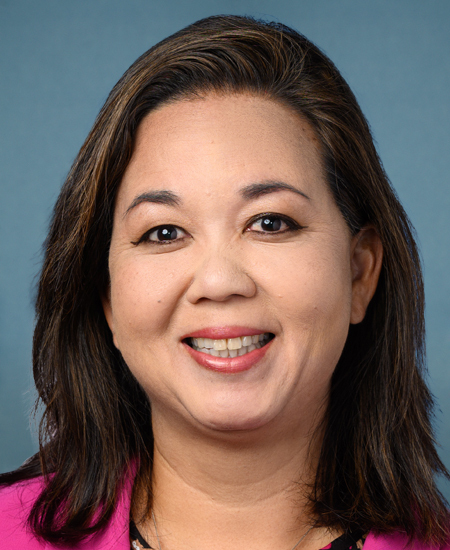
Rep. Jill N. Tokuda
Sponsored bills
Maddy summaryHRES 238 is a non-binding House resolution expressing the House's position that every person has the basic right to emergency health care, including abortion care during medical emergencies. It does not create new laws or alter existing regulations but formally states the House's view that abortion restrictions in emergencies endanger patients' health and lives. The resolution specifically highlights how current abortion bans put pregnant people at risk during life-threatening conditions like hemorrhage or infection, disproportionately impacting Black, Indigenous, people of color, immigrants, and low-income individuals. It serves as a symbolic statement opposing policies that restrict emergency reproductive care access.
Investing in Rural America Act of 2025 This bill allows Farm Credit System (FCS) institutions to make and participate in loans and commitments (and extend other technical and financial assistance) for essential community facility projects as part of the Department of Agriculture's Community Facilities Direct Loan & Grant Program. This program provides funding to develop essential community facilities in rural areas. The FCS financing and technical assistance may be provided in order to make capital available to develop, build, maintain, improve, or provide related equipment or other support for essential community facilities in rural communities (e.g., certain facilities that provide healthcare, community support, public safety, educational, or utility services). Under the bill, the financing provided by an FCS institution may not exceed 15% of the total of all outstanding loans of the institution. Further, an FCS institution must (1) offer at least one non-FCS lending institution an interest in the financing under reasonable terms and conditions acceptable to the borrower, and (2) report the offer to the Farm Credit Administration (FCA). The FCA must submit an annual report to Congress on the activities undertaken by FCS institutions under this bill, including through the partnerships between FCS institutions and other lending institutions. The FCA must post the report on the administration's website.
Maddy summaryHRES 227 is a non-binding resolution expressing the House of Representatives' support for designating March 18, 2025, as "National Agriculture Day" to honor agriculture's role as a vital U.S. industry. It does not create new laws, allocate funds, or impose requirements on any group. The resolution serves as a symbolic gesture to highlight agriculture's economic impact and contributions to the nation. As a procedural resolution, it has no direct policy effect beyond raising awareness.
Maddy summaryThis bill modifies Medicare's physician self-referral rules to improve access for rural communities. It creates a new exemption for "covered rural hospitals" (defined as facilities in rural areas more than 35 miles from another hospital or critical access hospital) from certain restrictions on physicians owning hospitals. The bill also removes a prohibition on expanding existing physician-owned hospitals, allowing such expansions after the law's enactment. These changes directly affect rural hospitals seeking Medicare participation and physicians who own or operate hospitals in underserved areas.
Maddy summaryThis bill closes a tax loophole by explicitly including tar sands oil under the definition of "crude oil" for federal excise tax purposes. It directly affects oil producers who previously avoided excise taxes on tar sands-derived oil by exploiting the existing definition gap. The key mechanism amends the tax code to state that "crude oil" encompasses oil derived from tar sands, ensuring it is taxed identically to conventional crude oil. The change applies to excise taxes under Section 4611 of the Internal Revenue Code, requiring producers to pay these taxes on tar sands oil moving forward. The bill takes effect upon enactment.
Maddy summaryThe Air America Act of 2025 authorizes one-time payments of $40,000 to individuals who worked for Air America or its affiliated companies for at least five years during 1950-1976, or to their surviving spouses, children, or dependents. Additional payments of $8,000 per full year beyond five years are allowed. The program is capped at $60 million total funding, with claims required within two years of final regulations. Payments are a single lump sum with no ongoing benefits, and the bill explicitly states it does not create new entitlements beyond this one-time award.
Maddy summaryHR 2200 requires the Coast Guard to retain enlisted members who have completed 18-20 years of service but are otherwise scheduled for separation or discharge. It directly affects Regular Coast Guard enlisted members and Reserve members serving in active status with 18-19 years of service (or 19-20 years) who face involuntary separation or denied reenlistment. The bill mandates retention until the member reaches 20 years of service or for up to two years (for 18-19 years) or one year (for 19-20 years) after their scheduled separation date, whichever comes first. This applies to members not separated for physical disability or cause, ensuring they can complete their service to qualify for retirement benefits.
Maddy summaryHR 2132, the Marianas Air Service Improvement Act, amends a federal law to specifically exempt the Northern Mariana Islands from certain air service requirements. The bill adds the Northern Mariana Islands to an existing exception in 49 U.S. Code § 41731(c), which already excludes Alaska and Hawaii. This means air service rules that would otherwise apply to all locations in the U.S. do not apply to the Northern Mariana Islands. The bill directly affects air carriers operating in the Northern Mariana Islands by removing these specific regulatory requirements.
Maddy summaryHR 2103, the Protect Postal Performance Act, requires the U.S. Postal Service to hold public hearings and wait 180 days before closing or consolidating any post office, ensuring community input and transparency. It directly affects communities by preventing closures if a post office is the only one within 15 miles or serves 15,000+ residents, and blocks closures of processing centers that would leave entire non-contiguous state regions (with over 100,000 residents) without service. The bill also mandates that the Postal Regulatory Commission review proposed facility changes before implementation and prohibits reducing mail pickup/drop-off frequency through transportation optimization plans without prior approval. These provisions aim to stabilize postal services and maintain access for residents in underserved areas.