

Maddy summaryHRES 400 is a ceremonial resolution recognizing May as Asian American, Native Hawaiian, and Pacific Islander Heritage Month. It formally celebrates the historical contributions of these communities to U.S. history and society, as documented in the resolution’s preamble. The resolution does not create new laws, allocate funding, or change policies - it serves solely as a symbolic acknowledgment by the House of Representatives. It highlights the diversity of these communities and their ongoing impact, referencing their growth, cultural milestones, and historical challenges. This recognition aligns with the existing statutory designation of May for Heritage Month under U.S. Code.
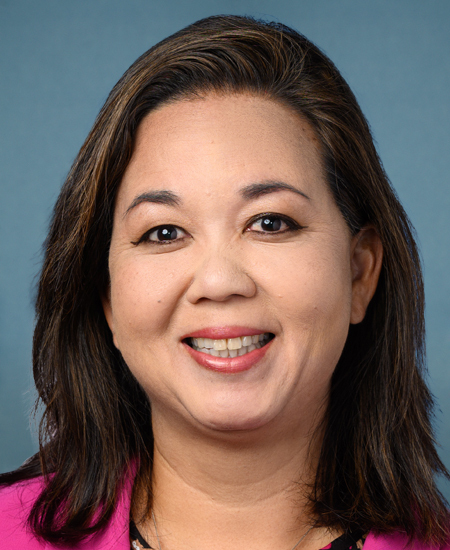
Rep. Jill N. Tokuda
Sponsored bills
Maddy summaryHR 3273, the Child Care Workforce Development Act, provides financial support to early childhood educators and students. It establishes a loan repayment program where educators serving 5 years with qualified childcare providers (like centers receiving Child Care Block Grant funds) can have up to $6,000 annually of their student loans repaid. Additionally, it creates grants of up to $4,000 per academic year for students enrolled in early childhood education programs, requiring them to work in licensed childcare settings for at least one year after graduation (with renewal options). The bill authorizes $25 million annually for loan repayment (2026-2031) and $10 million annually for grants (2026-2030), targeting workforce development in childcare.
Maddy summaryHR 3277, the Ensuring Lasting Smiles Act, requires group health plans and health insurance issuers to cover medically necessary outpatient and inpatient treatments for congenital anomalies or birth defects primarily affecting the eyes, ears, teeth, mouth, or jaw. This includes reconstructive procedures, dental/orthodontic support during treatment, and follow-up care, but excludes purely cosmetic surgery not tied to a medical diagnosis. Cost-sharing (like copays) for these services must not be stricter than for other medical benefits. The law takes effect for plan years beginning January 1, 2026, and mandates insurers to provide notice about this coverage to beneficiaries.
Maddy summaryThe Child Care Infrastructure Act (HR 3274) allocates $10 billion to improve safety and infrastructure at child care facilities, primarily benefiting providers serving low-income families, infants/toddlers, rural communities, and nontraditional-hour programs. It requires states to conduct needs assessments (including pandemic impacts on capacity and costs) and use grants for facility renovations, construction, or safety upgrades, with a 10% state match requirement. Intermediary organizations, such as community development groups, can also receive grants to provide technical assistance and financing for child care facilities. The bill mandates prevailing wage standards for construction work and requires annual reports on how improvements affect access, quality, and pandemic-related challenges, with final outcomes due by 2030.
Maddy summaryThis bill prohibits corporal punishment in schools receiving federal funding, defining it as any physical force causing pain for discipline. It requires schools to notify parents within 24 hours of any corporal punishment incident and mandates states to submit school climate reports detailing efforts to reduce exclusionary discipline practices like suspensions and expulsions. The bill establishes a grant program to help schools implement positive behavioral interventions, such as restorative justice and trauma-informed care, while requiring staff training on these approaches. The bill applies to public schools and other schools receiving federal funds but does not affect private schools or home schools that don't receive federal funding.
Maddy summaryHR 3243, the Therapeutic Fraud Prevention Act of 2025, bans the provision of paid conversion therapy aimed at changing a person's sexual orientation or gender identity, and prohibits advertising such therapy as effective, safe, or without risk. It directly affects LGBTQ+ individuals and their families who might be targeted by these practices, as professionals have determined conversion therapy is ineffective and harmful. The law treats violations as deceptive acts under consumer protection laws, empowering the Federal Trade Commission and state attorneys general to enforce it through civil actions. It explicitly excludes legitimate gender transition support and non-discriminatory counseling from the ban.
Maddy summaryHR 3263, the PATCH Act, modifies Medicare payment rules for physicians in Hawaii. It requires the Medicare program to set a minimum payment adjustment factor of 1.5 for physician services provided in Hawaii starting January 1, 2026, if the standard calculation would result in a lower value. This change directly affects Medicare-reimbursed physicians and healthcare providers operating in Hawaii. The key mechanism is a floor on the "work geographic index," ensuring payments in Hawaii do not fall below this minimum level. The provision applies specifically to services furnished in Hawaii after 2025.
Maddy summaryThe Law Enforcement Officers Equity Act expands federal retirement benefits to include specific non-traditional law enforcement roles, such as IRS tax collection officers, U.S. Postal Inspection Service employees, Department of Veterans Affairs police, and certain U.S. Customs and Border Protection seized property specialists. It directly affects current and future federal workers in these positions who were previously excluded from law enforcement retirement benefits under the Federal Employees Retirement System and Civil Service Retirement System. The bill allows current employees (incumbents) to elect to count prior service toward retirement by paying a deposit covering the difference in retirement contributions, with government contributions made over 10 years. It also temporarily exempts law enforcement officers from mandatory separation for three years after enactment.
Maddy summaryHR 3246, "Violet’s Law," amends the Animal Welfare Act to require federal research facilities to create plans for placing eligible animals (dogs, cats, nonhuman primates, guinea pigs, hamsters, or rabbits) no longer needed for research. It directs federal departments and agencies operating such facilities to develop standards within one year of enactment to facilitate adoption or placement with qualified organizations like animal rescue groups, sanctuaries, or shelters. Animals must be certified by a licensed veterinarian as free of infectious disease or physical issues endangering health before release. This applies directly to all U.S. federal agencies conducting animal research, mandating concrete steps to transition animals out of research settings into permanent care.
Maddy summaryHR 3207, the DEFENSE Act, authorizes state and local law enforcement officers to use drone detection and countermeasures at specific protected venues. It directly affects officers deputized by federal agencies to secure locations like stadiums during large public gatherings, events under flight restrictions, or sites covered by existing federal flight rules. Key provisions require officers to complete mandatory training, establish federal oversight through the Department of Homeland Security and FAA, and limit authorized equipment to a pre-approved list maintained by the Department of Homeland Security. The bill focuses on enhancing security at designated events without creating new federal regulations.