

Maddy summaryHCONRES 50 is a symbolic resolution recognizing the yellow flag with three red stripes - formerly the flag of the Republic of Vietnam (1949-1975) - as a symbol for the Vietnamese-American community in the U.S. It affirms the flag's meaning to over 1.5 million Vietnamese Americans who fled after 1975, representing shared sacrifices with U.S. forces during the Vietnam War and their ongoing commitment to democratic values. The resolution does not create legal obligations or policy changes; it solely serves to acknowledge this flag as a unifying emblem for the community. This is a procedural recognition, not a legislative act with concrete policy effects.
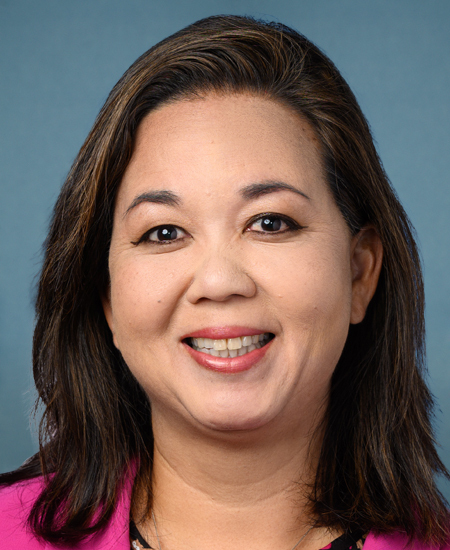
Rep. Jill N. Tokuda
Sponsored bills
Maddy summaryThis resolution condemns the use of federal regulatory agencies (like the FCC) or lawsuits to suppress lawful speech critical of political parties or the President, specifically referencing concerns about tactics mirroring authoritarian practices. It does not create new laws but formally warns that such actions undermine First Amendment protections and democratic norms. The resolution directly affects media organizations, journalists, and public discourse by calling on government agencies to avoid using their power for political retaliation. It reaffirms the House’s commitment to protecting free expression and urges officials to refrain from pressuring media to silence criticism.
Maddy summaryThis resolution designates September 22-28, 2025, as "Asian American and Native American Pacific Islander-Serving Institutions Week" to honor institutions that serve Asian American, Native Hawaiian, and Pacific Islander students. It recognizes these colleges and universities as critical providers of higher education, noting they enroll 46% of AANHPI undergraduates despite comprising only 7% of U.S. institutions. The resolution emphasizes their role in supporting low-income, first-generation students and preserving cultural heritage, while calling for national recognition through community activities during the designated week. It is a symbolic gesture with no funding or policy changes attached.
Maddy summaryThis bill authorizes the posthumous presentation of a Congressional Gold Medal to Welles Remy Crowther, a volunteer firefighter and equities trader who died saving others during the September 11, 2001, attacks. The medal, designed by the Treasury Secretary, will be given to Crowther’s mother, Alison Crowther, following a formal presentation by congressional leaders. The bill also permits the U.S. Mint to sell bronze duplicates of the medal at cost to cover production expenses. It is a purely commemorative measure with no legislative or regulatory impact.
Maddy summaryThis bill requires health plans and insurers to create a clear, timely process for patients or doctors to request exceptions when step therapy protocols (which force patients to try cheaper drugs first) might harm them. It mandates approval for exceptions in six specific cases, such as when prior treatments failed, delaying care risks severe harm, or the required drug causes adverse reactions. Plans must respond within 72 hours (24 hours for emergencies) and cover the requested drug for at least one year if approved. Additionally, health plans must report annual data on exception requests, approvals, denials, and reasons to the government for transparency.
Maddy summaryThe Aviation Funding Stability Act of 2025 ensures continued operation of Federal Aviation Administration (FAA) programs during government funding gaps. It allows the FAA to use unspent funds from the Airport and Airway Trust Fund to maintain critical services - including air traffic control, airport infrastructure, and safety research - at the previous fiscal year's funding level if Congress fails to pass a new budget. This prevents shutdowns for up to 30 days or until a new budget is enacted, with spending limited to prior-year rates and subject to existing program rules. The bill directly affects all FAA operations, keeping airports and air traffic systems running during budget delays.
Maddy summaryHRES 746 is a non-binding resolution passed by the U.S. House of Representatives condemning all political violence - including attacks on elected officials, candidates, and public figures - and rejecting rhetoric that dehumanizes opponents. It specifically urges law enforcement to investigate and prosecute such violence, calls on public officials and media to avoid inflammatory language, and references recent incidents like the 2025 assassination of activist Charlie Kirk and targeted shootings of Minnesota legislators. The resolution does not create new laws but formally expresses the House’s commitment to protecting public servants and promoting peaceful political discourse. It directly affects the House’s public stance and serves as a call to action for officials, media, and communities to foster civil engagement.
Child Care Access Means Parents In Schools Reauthorization Act or the CCAMPIS Reauthorization Act This bill reauthorizes through FY2031 and revises the Child Care Access Means Parents in School Program. The program awards grants to support the participation of eligible low-income parents in postsecondary education through the provision of campus-based child care services. Among other revisions to the program, the bill increases the minimum and maximum grant amounts, allows grant funds to be used for additional purposes (e.g., child care subsidies and support services), and specifies additional grant application requirements.
Maddy summaryThis bill amends the federal tax code to exclude certain overtime pay from taxable income. It directly affects workers who earn overtime under the Fair Labor Standards Act (FLSA) or through specific employer-employee agreements meeting defined conditions (like exceeding 40 hours per week or railway work standards). The key provision defines "qualified overtime compensation" to exclude this pay from federal income tax calculations. The change applies to tax returns filed for 2025 and later. This creates a concrete tax exemption for qualifying overtime earnings.
Maddy summaryThis bill, the Protect Adoptees and American Families Act (PAAF Act), automatically grants U.S. citizenship to certain internationally adopted children who meet specific criteria. It directly affects children adopted by U.S. citizen parents before age 18, who were living in the U.S. under legal custody before turning 18, and who were not already U.S. citizens. The key mechanism provides automatic citizenship for those already residing in the U.S. on the bill's effective date, and for those outside the U.S. upon lawful entry, subject to a criminal background check for visa issuance. It clarifies citizenship eligibility under immigration law without requiring additional naturalization steps for qualifying adoptees.