

Give Kids a Chance Act of 2025 This bill expands the Food and Drug Administration’s (FDA’s) authority with respect to research on rare pediatric diseases, including by permitting the FDA to take enforcement action against drug sponsors that fail to satisfy pediatric study requirements and by reauthorizing programs that support pediatric research. Specifically, the bill modifies requirements relating to molecularly targeted pediatric cancer investigations to permit research on new drugs in combination with active ingredients that have already been approved, provided certain conditions are met; permits the FDA to take enforcement action against drug sponsors that fail to comply with pediatric study requirements, if such sponsors demonstrated a lack of due diligence in satisfying the requirement; renews the FDA’s authority to award priority review vouchers to sponsors of new products intended to treat rare pediatric diseases through September 30, 2029; and reauthorizes through FY2027 certain funding for the National Institutes of Health to support priority pediatric research. The bill also provides statutory authority for the FDA’s interpretation of the orphan drug exclusivity period. The bill specifies, consistent with FDA regulations, that the seven-year market exclusivity period for drugs for rare diseases or conditions (i.e., orphan drugs) prohibits the approval of the same drug for the same approved use or indication with respect to the disease or condition. (In Catalyst Pharmaceuticals, Inc. v. Becerra , a court rejected the FDA’s interpretation and held that orphan drug exclusivity extends to all uses or indications for the disease or condition.)
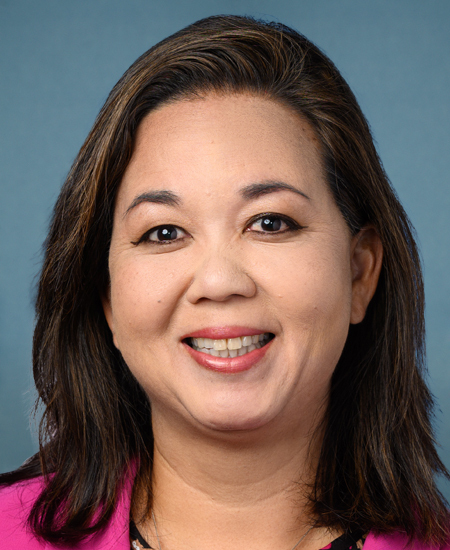
Rep. Jill N. Tokuda
Sponsored bills
Maddy summaryThis bill requires military child and youth programs - including military child development centers, Department of Defense youth programs, and family home day care providers receiving DoD funding - to notify parents or guardians within 24 hours of suspecting child abuse or neglect. It also mandates that these programs report such incidents to the Senate and House Committees on Armed Services, state senators representing the location, and the local House representative within 72 hours. The law directly affects military-connected families and child care providers operating under DoD programs, ensuring faster transparency for both families and oversight bodies. The policy creates a clear timeline for reporting suspected abuse, aiming to improve responsiveness without altering existing child welfare protocols.
Maddy summaryHR 6249, the "Addressing Addiction After Disasters Act," updates federal disaster relief guidelines to explicitly include substance use and alcohol use disorders in crisis counseling services. It amends the Robert T. Stafford Disaster Relief Act to allow FEMA-funded programs to address these issues alongside mental health needs for disaster survivors. The bill requires FEMA to revise application forms and guidance within 180 days to reflect these changes and mandates a GAO report on program duration and compliance with using funds only for disaster-related substance/alcohol issues. This directly affects disaster survivors facing substance use or alcohol challenges by expanding access to covered support services.
Maddy summaryHRES 905 is a non-binding House resolution supporting the designation of November 2025 as "National Homeless Children and Youth Awareness Month." It does not create new programs or funding but formally encourages businesses, governments, schools, and organizations to raise awareness about homelessness affecting children and youth during that month. The resolution cites statistics on homelessness rates among students and youth (e.g., 1.4 million enrolled homeless children in 2022-2023) to underscore the need for greater public attention. It urges these groups to highlight causes, solutions, and prevention efforts during the designated month.
Maddy summaryHRES 906 would change House rules to require a 60% vote of members present and voting to censure, disapprove, or remove any House member, delegate, or resident commissioner from committee assignments. Currently, a simple majority (50%+1) could trigger these actions, but this bill raises the threshold to a supermajority. The change applies directly to all voting members of the House and affects disciplinary procedures for members. This is a procedural rule change that makes it harder to take formal disciplinary actions against House members.
Maddy summaryHRES 909 is a House resolution affirming that immigrant justice and reproductive justice are interconnected and must be addressed together. It calls on the Department of Homeland Security to reinstate protections for pregnant individuals in detention, eliminate the 5-year bar restricting immigrants’ access to federal health programs like Medicaid, and implement transparent oversight of reproductive health care in detention facilities. The resolution also urges Congress to remove barriers to health care access for immigrants and requires federal agencies to report on policies affecting reproductive health care for detained individuals. This resolution directly affects policies toward immigrants in detention, particularly regarding access to abortion, prenatal care, and mental health services, but does not create new laws.
Maddy summaryThe Native Arts and Culture Promotion Act amends the American Indian, Alaska Native, and Native Hawaiian Culture and Art Development Act to update governance for grants supporting Native Hawaiian art and culture. It requires that governing boards for these grants include Native Hawaiians and recognized experts in Native Hawaiian art, with members serving fixed terms. The bill also removes the word "private" from a section of the law, clarifying that such grants are not restricted to private entities. These changes specifically apply to Native Hawaiian cultural programs and do not alter funding or administration for other tribal groups.
Maddy summaryHR 6286, the Indo-Pacific Partner and Ally Tariff Repeal Act, repeals tariffs imposed on 39 specific Indo-Pacific countries and territories through two executive orders. The bill directly affects these nations, including Australia, Japan, India, South Korea, and others, by eliminating tariffs that were applied under Executive Orders 14257 and 14326. Its key provision requires the immediate termination of these tariffs upon the bill's enactment. The legislation targets only the listed countries and does not alter tariffs on other nations.
Maddy summaryHRES 899 is a symbolic House resolution recognizing the Transgender Day of Remembrance and memorializing transgender people killed by violence in 2024-2025. It directly affects transgender individuals, particularly transgender women of color, by acknowledging the epidemic of violence against them - citing 27 U.S. victims (including names like Rick Alastor Newman and Kyla Jane Walker) and 241 global cases in 2025. The resolution’s key provisions include formally recognizing the violence epidemic, memorializing specific lives lost, and affirming the need for solutions to protect transgender people. It does not create new laws but expresses congressional support for addressing systemic violence and discrimination faced by transgender communities.
Maddy summaryHR 6212, the Good Samaritan Menstrual Products Act, protects donors and nonprofits from liability when providing menstrual products in good faith. It shields people, manufacturers, distributors, and nonprofits from civil or criminal liability for the condition of "apparently usable" donated products (those meeting all safety standards but not necessarily marketable). The law applies to products like tampons, cups, and liners distributed to individuals in need through nonprofits. Liability protection does not apply if gross negligence or intentional misconduct causes injury or death.