

Maddy summaryHR 6731, the "Restore Trust in Government Act," requires Members of Congress, the President/Vice President, and their spouses or dependent children to divest certain financial investments during federal service. It defines "covered investments" broadly (including stocks, commodities, and derivatives) but excludes Treasury bonds, municipal bonds, family farm interests, and some Alaska Native Settlement stock. Covered individuals must sell holdings within 90-180 days of taking office or enacting the law, with limited exceptions for qualified blind trusts or spouses’ occupational trading. Violations incur a 10% fee on the investment value and require returning profits, paid to the Treasury. Ethics offices enforce these rules, publish penalty details, and issue divestiture certificates.
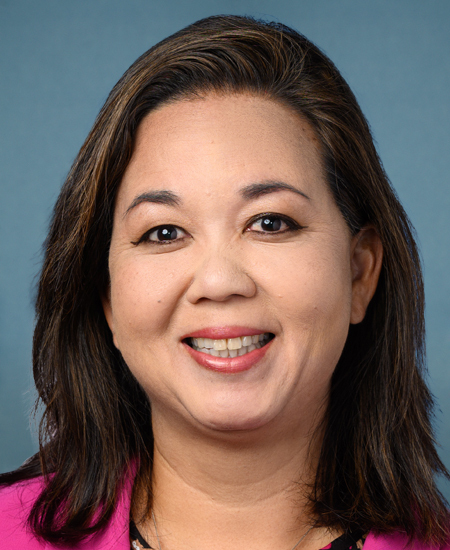
Rep. Jill N. Tokuda
Sponsored bills
Maddy summaryThe EFFECTIVE Food Procurement Act would require the U.S. Department of Agriculture to change how it buys food for programs like school meals and food banks. The bill directs USDA to prioritize purchasing foods that support beginning farmers, socially disadvantaged producers, and environmentally sustainable practices, while emphasizing worker well-being and climate-friendly food production. USDA would need to report annually on how much it spends on these priority food categories and track greenhouse gas emissions from its food purchases. The bill also creates a pilot program for "best value" procurement that considers more than just cost, and provides grants to help small and minority farmers meet USDA vendor requirements. These changes aim to make USDA's $20 billion+ annual food procurement more equitable and environmentally sustainable.
Maddy summaryThe Protect America's Workforce Act cancels an executive order issued on March 27, 2025, that excluded certain groups from federal labor-management relations programs, making it legally unenforceable. It also ensures that all collective bargaining agreements between federal agencies and labor unions, which were active as of March 26, 2025, remain fully effective until their agreed terms expire. This directly affects federal agencies, labor unions, and the employees covered by these agreements. The bill prevents federal funds from being used to implement the canceled executive order while preserving existing labor agreements.
Maddy summaryThe Zero Food Waste Act sets a goal to reduce food waste by 50% by 2035 compared to 2015 levels. It authorizes the Environmental Protection Agency (EPA) to award competitive grants to states, local governments, tribes, and nonprofits for projects that prevent, rescue, upcycle, or recycle food waste - such as developing waste-reduction plans, collecting data on waste generation, and implementing pricing policies to discourage landfill disposal. The bill prioritizes funding for communities of color, low-income areas, and Tribal communities disproportionately affected by environmental harm. It requires grantees to report on progress and allocates $650 million annually from 2026 to 2035 to support these efforts, with the EPA publishing yearly effectiveness reports.
Maddy summaryThe Workforce of the Future Act of 2025 requires federal agencies to produce reports analyzing artificial intelligence's impact on the workforce, including data on affected industries, demographic impacts, and necessary skills. It authorizes $160 million in Department of Education grants to expand emerging and advanced technology education in schools, with a focus on underserved communities and students from low-income backgrounds. The bill also allocates $90 million in Department of Labor grants to support workforce training for workers most affected by AI, particularly those in high-impact industries. Both programs require detailed reporting on demographic data and will be evaluated for effectiveness. The legislation aims to prepare workers and students for an AI-driven economy through education, training, and equitable access to technology skills.
Maddy summaryThis bill increases federal student loan limits for graduate and professional students. Starting July 1, 2026, it sets a $50,000 annual limit and a $200,000 total aggregate limit (beyond undergraduate borrowing) for unsubsidized Federal Direct Stafford loans. These changes directly affect graduate and professional students pursuing advanced degrees who rely on federal loans for education costs. The provisions aim to provide higher borrowing capacity for these students' educational expenses under the Higher Education Act.
Maddy summaryHR 6565, the Reuniting Families Act, would significantly reform family-based immigration by reclassifying spouses, permanent partners, and minor children of legal permanent residents as "immediate relatives," eliminating current visa backlogs for these family members. The bill creates a new legal definition of "permanent partner" to provide equal treatment for same-sex partners in immigration processes, expanding eligibility for family-based visas. It increases the worldwide level of family-sponsored immigrant visas and adjusts allocation numbers to reduce processing delays, while also providing specific relief for orphans, widows, widowers, and certain Filipino veterans. The bill also expands refugee family reunification provisions and increases diversity visa numbers from 55,000 to 80,000. These changes would directly affect family members seeking to reunite with U.S. citizens or legal permanent residents through family-based immigration pathways.
Maddy summaryThis bill prohibits Department of Homeland Security (DHS) officers from arresting or detaining immigrants at immigration court facilities during hearings or while arriving/departing for hearings, except with a judicial warrant. It applies to all pending immigration cases, appeals, and motions to reopen, covering anyone whose removal order isn't final. Exceptions allow arrests only to prevent imminent threats to life, safety, or national security. The bill also requires DHS to report scheduled check-in arrests to the Inspector General and mandates annual oversight reports to Congress on compliance.
Maddy summaryThe Military in Law Enforcement Accountability Act requires the President to submit detailed justification to Congress before the military provides support to civilian law enforcement, including specific budget, timeline, and funding details, with a 30-day limit on such support unless Congress approves a longer period through a specific joint resolution process. It prohibits Department of Defense personnel (including military members) from holding civilian law enforcement positions concurrently, with limited exceptions for reserve members who must recuse during active duty. The bill also removes the military's authorization to deploy for "civil disturbances" without the new approval process and establishes a private right for individuals or governments to sue the federal government for violations. This directly affects the Department of Defense, military support to local police agencies, and DoD personnel's dual employment policies.
Maddy summaryThe Expanding Cybersecurity Workforce Act of 2025 establishes a new program under CISA to promote cybersecurity careers to underrepresented groups, including racial and ethnic minorities, veterans, formerly incarcerated individuals, people with disabilities, older adults (40+), and those from low-income or nontraditional educational backgrounds (like community colleges or HBCUs). The program requires CISA to tailor outreach to regional needs, partner with schools, unions, and community organizations, and report annually on workforce impact. It authorizes $20 million annually for fiscal years 2026-2031 to support these efforts, aiming to diversify the cybersecurity workforce through targeted recruitment and training.