

Maddy summaryHR 7518 amends the 1990 Food, Agriculture, Conservation, and Trade Act to establish minimum staffing requirements for two federal forestry research institutes. It mandates that the Institute of Tropical Forestry in Puerto Rico maintain a staff of at least 50 individuals, and the Institute of Pacific Islands Forestry must have at least 30 staff members, both with adequate resources. These provisions require the Secretary of Agriculture to ensure sufficient staffing to advance scientific research, demonstration, and knowledge exchange related to tropical and Pacific Island forestry. The bill directly affects these two federally funded research institutes and their operational capacity.
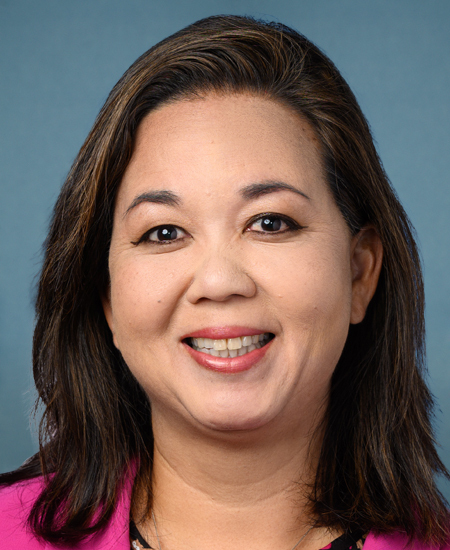
Rep. Jill N. Tokuda
Sponsored bills
Maddy summaryThis bill creates new funding opportunities for rural health facilities (like hospitals, clinics, and long-term care centers) in areas with populations under 50,000. It allows these facilities to use existing Rural Development Agency funds to refinance debt, update telehealth/equipment, or cover operating costs - provided the assistance preserves health access and improves the facility’s financial health. Eligibility requires the facility to be in a rural area or a persistent poverty area (defined as a 20%+ poverty rate for 30 years), and the Secretary may waive certain requirements for insolvent facilities in distressed communities. The law amends existing farm and rural development programs to directly support rural health infrastructure without creating new funding streams.
Maddy summaryHR 7455 amends the Emergency Food Assistance Act of 1983 to allow certain eligible states to receive their federal food assistance funds as cash instead of physical commodities. This change would let states directly purchase food from commercial markets using these funds, rather than receiving commodities through the federal system. The bill affects states that meet the definition of "eligible State" under the 2018 Farm Bill (Agriculture Improvement Act of 2018). The key provision replaces the current process where the federal government buys and distributes food with a system where states use cash for direct procurement.
Maddy summaryThe Opportunities in Organic Act establishes a new federal program to support farmers and ranchers transitioning to organic certification and expanding organic operations. It provides cost-share payments for organic certification (up to $1,500 per producer, with higher amounts allowed for socially disadvantaged farmers or in high-cost regions) and funds eligible nonprofits to deliver technical assistance, transition support, and supply chain development. The program specifically targets socially disadvantaged farmers, organic producers, and farms in vulnerable or under-resourced areas, with annual funding starting at $50 million for 2027-2028 and increasing to $100 million annually by 2030.
Maddy summaryThe Energy Bills Relief Act aims to lower household energy costs and accelerate the development of low-cost, clean energy by modifying federal tax credits, expanding weatherization programs, and streamlining permitting processes. Key provisions include restoring tax incentives for renewable energy projects, increasing funding for low-income heating assistance, and requiring federal agencies to treat wind, solar, and storage projects with the same procedural fairness as oil and gas projects. The bill also establishes new incentives for upgrading the electricity grid, such as tax credits for transmission lines and grants for wildfire prevention measures, while creating mechanisms to ensure utilities serve public interests and protect consumers from price volatility.
Maddy summaryThis bill requires the Department of Veterans Affairs (VA) to cover abortion care, counseling, and related medication as part of standard hospital and medical services for eligible veterans and certain dependents. It amends VA healthcare law to explicitly include these services under existing coverage for veterans qualifying under section 1703 and dependents eligible under section 1781(a). The policy directly affects veterans and their dependents enrolled in VA healthcare programs by expanding covered benefits to include abortion-related care. This is a concrete policy change to VA healthcare benefits, not a broader abortion law.
Governing Unaccredited Representatives Defrauding VA Benefits Act or the GUARD VA Benefits Act This bill imposes fines on individuals for soliciting, contracting for, charging, or receiving any unauthorized fee or compensation with respect to the preparation, presentation, or prosecution of any claim for Department of Veterans Affairs benefits. The attempted commission of such offenses is also punishable by fine.
Maddy summaryThis bill establishes a new excise tax on crude oil extracted or imported by large oil companies and uses the revenue to provide rebates to eligible consumers. The tax would be imposed on companies that extract or import over 300,000 barrels of crude oil per day, at a rate of 50% of the difference between the current Brent crude oil price and a 2025 baseline price, adjusted for inflation. All revenue from this tax would be deposited into a new "Protect Consumers from Gas Hikes Fund." This fund would then be used to provide refundable tax credits, or rebates, to eligible individuals, with the rebate amount determined by the Secretary based on fund revenues and the number of eligible individuals. These rebates would be phased out for individuals with adjusted gross incomes exceeding certain thresholds, such as $150,000 for joint filers.
Maddy summaryHR 2294 reauthorizes the Integrated Coastal and Ocean Observation System Act of 2009, extending funding and updating governance for the nation's ocean and coastal observation network. It changes references from "Council" to "Committee" throughout the law and adds requirements for federal agencies to collaborate with regional coastal observing systems on data sharing. The bill specifically directs agencies to conduct operational oceanography measurements and establishes $56 million annually for fiscal years 2026 through 2030 to support this system. This bill directly affects federal agencies managing ocean observation programs and regional coastal data networks.
Maddy summaryHCONRES 78 is a symbolic resolution designating March 10, 2026, as "Abortion Provider Appreciation Day" to honor abortion providers and staff. It recognizes their work amid rising violence, clinic closures, and abortion restrictions following the Dobbs decision, citing threats and challenges faced by providers. The resolution expresses congressional support for providers' safety and access to abortion care, condemning policies that restrict access. It does not create new laws or alter existing policies - it solely affirms Congress’s stance through a symbolic gesture. This is a procedural resolution focused on recognition, not policy change.