

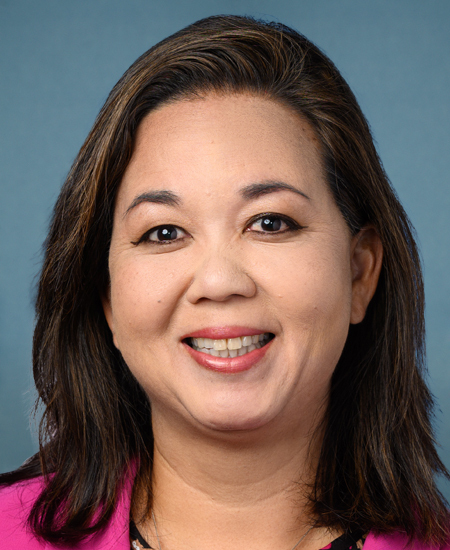
Photo of Jill N. Tokuda
D United States House · District 2 · Hawaii On the 2026 ballot

Rep. Jill N. Tokuda

Compare
Total votes
1,879
all sessions
Attendance
99%
13 missed
Higher than 92% of chamber peers
With party
98%
of cast votes
Higher than 91% of chamber peers
Bipartisan score
1%
crosses aisle rarely
Lower than 92% of chamber peers
Sponsored
1,821
bills & resolutions
Higher than 96% of chamber peers
Committees
6
assignments
1,821 bills and resolutions

Sponsored bills

Total
1,821
Primary
78
Co-sponsor
1,743
This page
1,821
matching current filters
Co-sponsor HR 4867
In committee · Indiana House · Co-sponsor
Veterans Members Business Loan Act

Maddy summaryThis bill expands eligibility for business loans at credit unions to include veterans. It amends the Federal Credit Union Act to define "member business loan" as including loans made to veterans, using the standard definition of "veteran" from Title 38 of U.S. Code. Credit unions offering these loans will now be able to serve veteran business owners under the same terms as other qualifying borrowers. The policy change directly affects veterans seeking business financing and credit unions providing such loans.

In committee Jul 25, 2023 1 co-sponsor
Co-sponsor HR 4870
In committee · Indiana House · Co-sponsor
Wall Street Tax Act of 2023

Maddy summaryHR 4870, the Wall Street Tax Act of 2023, imposes a 0.1% tax on most securities transactions occurring on U.S. exchanges or involving U.S. persons. It directly affects financial institutions, brokers, and investors participating in covered transactions like stock, bond, and derivative trades. The tax applies to the fair market value of transactions (excluding initial security issuances and short-term debt under 100 days), with payment responsibility falling on U.S. exchanges, brokers, or U.S. parties depending on the transaction type. Exceptions include certain real property contracts, insurance products, and derivatives used in normal business operations. The tax takes effect for transactions after December 31, 2023.

In committee Jul 25, 2023 1 co-sponsor
Co-sponsor HR 4889
In committee · Indiana House · Co-sponsor
Raise the Wage Act of 2023

Maddy summaryHR 4889, the Raise the Wage Act of 2023, would gradually increase the federal minimum wage for most workers to $15.50 per hour by 2027, with specific annual targets: $9.50 starting in 2023, rising to $11.00 after one year, $12.50 after two years, and $15.50 after four years. It would also phase out the separate lower minimum wage for tipped employees (starting at $6.00/hour) by aligning their pay with the regular minimum wage by 2028, while requiring employers to let workers keep all tips. The bill includes similar phased increases for workers under 20 and transitions toward fairer wages for workers with disabilities under special certificates, which would sunset after 2028. Future annual increases after 2028 would tie the minimum wage to the median hourly wage of all workers.

In committee Jul 25, 2023 1 co-sponsor
Co-sponsor HR 4157
In committee · Indiana House · Co-sponsor
Not Just a Number Act

Maddy summaryHR 4157, the "Not Just a Number Act," requires the Department of Veterans Affairs (VA) to produce annual reports on veteran suicide rates and their connection to VA healthcare and benefits. The reports must break down suicide rates by age, gender, and race, and examine how engagement with VA services (like Vet Centers, healthcare enrollment, benefits claims, and housing loans) correlates with suicide trends. The bill also mandates a VA toolkit for state/local coroners to improve veteran suicide death reporting, and a study on creating a dedicated VA suicide prevention office. These measures aim to standardize data collection and identify effective prevention strategies, directly affecting VA operations, congressional oversight, and veteran care systems.

In committee Jul 25, 2023 1 co-sponsor
Co-sponsor HR 4840
In committee · Indiana House · Co-sponsor
Uyghur Forced Labor Disclosure Act

Uyghur Forced Labor Disclosure Act This bill requires an issuer of securities to publicly disclose whether its supply or production chain involves China's Xinjiang Uyghur Autonomous Region or specified forced labor sources. Issuers must provide documentation of supply and product chain entities and independent verification of such documentation. The Securities and Exchange Commission (SEC) must annually assess and report on compliance with this bill. The Government Accountability Office must periodically report on the effectiveness of the SEC’s oversight of the certification requirements under the bill.

In committee Jul 24, 2023 1 co-sponsor
Co-sponsor HR 4796
In committee · Indiana House · Co-sponsor
Reproductive Health Patient Navigator Act of 2023

Maddy summaryHR 4796, the Reproductive Health Patient Navigator Act of 2023, establishes a federal grant program to fund organizations that help individuals access abortion services. Eligible entities - such as abortion funds, community groups, or local governments - would receive grants to provide services like connecting people to providers, coordinating travel/financing costs, offering culturally appropriate information, and ensuring data confidentiality. The bill includes strong legal protections, prohibiting states from restricting or penalizing navigators for assisting people seeking abortion services, even in states where abortion is illegal. It also allows affected navigators to sue states that violate these protections. The program is funded for fiscal years 2023 through 2027.

In committee Jul 21, 2023 1 co-sponsor
Co-sponsor HR 4757
In committee · Indiana House · Co-sponsor
CARGO Act of 2023

Cease Animal Research Grants Overseas Act of 2023 or the CARGO Act of 2023 This bill prohibits the National Institutes of Health from awarding support for any research that uses live animals unless the research occurs in the United States (including U.S. territories and possessions).

In committee Jul 21, 2023 1 co-sponsor
Co-sponsor HRES 608
In committee · Indiana House · Co-sponsor
Recognizing the importance of diversity, equity, and inclusion efforts in higher education.

Maddy summaryHRES 608 is a non-binding House resolution recognizing the value of diversity, equity, and inclusion (DEI) efforts at colleges and universities. It affirms that DEI initiatives help create supportive learning environments where all students, faculty, and staff thrive, and specifically supports programs like implicit bias training and cultural competence resources. The resolution emphasizes that DEI efforts strengthen institutions’ ability to recruit diverse talent and align with academic freedom principles. It also notes concerns about state-level efforts to restrict DEI programs and states that such restrictions threaten campus inclusivity. As a symbolic resolution, it does not create new laws or funding but expresses congressional support for DEI work in higher education.

In committee Jul 20, 2023 1 co-sponsor
Co-sponsor HR 4812
In committee · Indiana House · Co-sponsor
Food for Thought Act of 2023

Maddy summaryHR 4812, the Food for Thought Act of 2023, provides federal grants to eligible colleges and universities to offer free on-campus meals to low-income students. The bill targets institutions with high Pell Grant enrollment (at least 30% of undergrads), prioritizing community colleges, minority-serving institutions, and those in areas with high need. Participating schools must provide 1-10 free meals weekly to students facing food insecurity, with priority given to those with greatest financial need, and must report on student outcomes like retention and graduation rates. Grants cover meal costs, campus food pantries, and SNAP enrollment support, with funds allocated for 5 years and requiring detailed reporting on program impact.

In committee Jul 20, 2023 1 co-sponsor
Co-sponsor HR 4780
In committee · Indiana House · Co-sponsor
Language Access to Gun Violence Prevention Strategies Act of 2023

Maddy summaryThis bill requires the Department of Justice and Health and Human Services to translate key gun violence prevention materials - including extreme risk protection orders and safe storage resources - into the 10 most common non-English languages in the U.S. (like Spanish, Mandarin, and Korean) for limited English proficient communities. It mandates that community-based organizations with ties to these language groups review translations for cultural appropriateness before publication. The bill also prioritizes grant applications that include targeted outreach plans for limited English proficient populations when funding gun violence prevention programs. These changes aim to improve access to evidence-based safety strategies for communities where language barriers might otherwise limit participation.

In committee Jul 20, 2023 1 co-sponsor
Showing 1,321 to 1,330 of 1,821 bills