

Maddy summaryHR 8061, the Crime Victims Fund Stabilization Act of 2024, ensures stable funding for the Crime Victims Fund by directing certain False Claims Act collections into it from 2024 through 2029. Specifically, it adds a provision requiring that amounts collected under the False Claims Act (excluding whistleblower rewards and government reimbursement for damages) be deposited into the fund during this period. This directly affects crime victims who rely on the fund for services like counseling and emergency aid, as it prevents potential shortfalls in funding. The bill makes a concrete policy change by redirecting specific federal civil penalties into the fund, rather than altering the fund's existing purposes or eligibility rules.
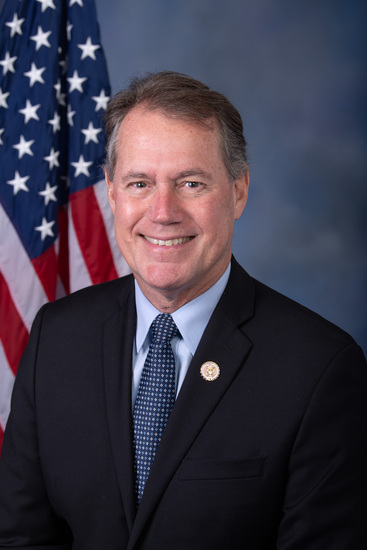
Rep. Ed Case
Sponsored bills
Maddy summaryHRES 1151 is a symbolic resolution recognizing the Interstate Compact on Educational Opportunity for Military Children and designating April 2024 as "Month of the Military Child." It directly affects military-connected children (over 1.5 million in the U.S.) who face frequent school transitions due to parental service. The resolution expresses congressional support for the Compact - which helps streamline educational transitions for military students - and encourages nationwide recognition through events like "Purple Up!" to honor these children. As a non-binding resolution, it does not create new policies or funding but aims to raise awareness of military-connected students' educational challenges.
Maddy summaryThe Cultural Resource Challenge Act of 2024 requires the National Park Service (NPS) to strengthen the management and preservation of cultural resources within national parks and historic sites. It creates a grant program to fund projects enhancing cultural resource resilience (e.g., climate adaptation, digital documentation), prioritizing work that supports Native American, minority, and underrepresented communities, and includes a $20 million Career Academy for NPS staff training on climate impacts, cultural competency, and community engagement. Eligible recipients include tribal governments, states, nonprofits, and educational institutions, with grants covering up to 80% of project costs (waivable for tribal projects under $10,000). The bill mandates annual progress reports to Congress and a comprehensive "State of our Cultural Resources" report within four years, authorizing $250 million over six years (2025-2030) for implementation.
Maddy summaryThe South Pacific Tuna Treaty Act of 2023 amends the South Pacific Tuna Act of 1988 to update regulations governing U.S. tuna fishing in the South Pacific region. It revises key definitions such as "Closed Area" and "Fishing vessel," clarifies prohibited activities including unauthorized fishing in closed areas, and updates licensing procedures for vessels operating under the treaty. The bill strengthens enforcement mechanisms, modifies reporting requirements for fishing vessels, and establishes new provisions for technical assistance to Pacific Island nations to help them manage fisheries resources. This legislation directly affects U.S. fishing vessels operating in the South Pacific, Pacific Island nations with fishing rights in their waters, and U.S. agencies responsible for treaty implementation.
Maddy summaryThe STAGE Act establishes a federal grant program to support professional nonprofit theaters. Eligible theaters (nonprofits producing live performances with fair wages, 3+ years of programming, and financial need or community focus) can receive grants covering payroll, facility repairs (prioritizing accessibility), marketing, and workforce training. Grants max out at $16 million per entity or 20% of its prior year's expenses, with $1 billion annually allocated for 2024-2028. The bill also mandates a federal study on sustaining the nonprofit arts sector, including input from artists and community stakeholders.
Maddy summaryHRES 1109 is a symbolic resolution commemorating the 1913 Woman Suffrage Procession in Washington, DC, where suffragists led by Alice Paul and Inez Milholland marched to demand voting rights for women. It honors the participants' courage during a protest that drew 500,000 spectators despite violent opposition, highlighting how this event advanced the national push for the 19th Amendment. The resolution does not create new laws but reaffirms support for voting rights equality, connecting the 1913 march to ongoing efforts to protect democratic access. It specifically acknowledges the intersectional struggles of women of color in the suffrage movement. As a commemorative resolution, it has no binding policy effect.
Maddy summaryHR 7790, the Women and Underrepresented Minorities in STEM Booster Act of 2024, authorizes $15 million annually (2024-2028) through the National Science Foundation to fund grants for programs increasing participation of women, underrepresented racial/ethnic groups (including Black, Hispanic, Native American, and specific Asian subgroups), LGBTQ+ individuals, and people with disabilities in STEM fields. The grants support concrete activities like mentoring programs, STEM internships, K-12 outreach, and faculty recruitment initiatives designed to address documented disparities in STEM degree completion and career retention. The bill directly affects eligible institutions (e.g., universities, nonprofits) that apply for competitive funding to implement these targeted programs. It focuses on measurable policy changes through federal funding for evidence-based retention strategies, not on outcome predictions.
Maddy summaryHR 6727 establishes the United States Foundation for International Conservation, a nonprofit organization that will provide grants to support long-term management of protected and conserved areas in eligible countries. The Foundation requires a 2:1 cost match from other sources, demands host country and community consent through binding agreements, and prioritizes areas with high biodiversity or species of significant importance. It will be governed by a Board of Directors including government officials and private sector experts, operate for 10 years with $1 million authorized for 2024 and $100 million annually from 2025-2035, and must follow international conservation standards while prohibiting funding for countries supporting terrorism or violating human rights.
Maddy summaryThis bill establishes a federal grant program to fund projects restoring native kelp forests, directly affecting eligible entities like fishing industry members, tribes, universities, nonprofits, and state/local governments. It requires projects to address the greatest kelp declines, focus on ecosystem resilience (including natural predator-prey relationships), integrate Indigenous knowledge, and avoid commercial harvesting. The program allocates $5 million annually (2024-2028), with at least $750,000 reserved for tribal projects, and mandates that federal funds cover up to 85% of project costs (with possible waivers). Grants prioritize areas identified in tribal or government restoration plans and require monitoring plans to measure project effectiveness.
Maddy summaryThis non-binding resolution supports designating April 2024 as "National Native Plant Month" to raise public awareness about native plants. It highlights their ecological benefits, including preventing erosion, supporting wildlife (like pollinators and birds), and restoring ecosystems. The resolution does not create new laws or funding but formally recognizes native plants' role in environmental resilience and U.S. natural heritage.