

Beaches Environmental Assessment and Coastal Health Act of 2025 or the BEACH Act of 2025 This bill reauthorizes through FY2029 and expands an existing program of the Environmental Protection Agency (EPA) that awards grants to states and local governments to (1) monitor the water quality of coastal recreational waters adjacent to beaches or similar points of access that are used by the public; and (2) notify the public, local governments, and the EPA when the water is not safe for recreational activities. Specifically, the bill expands the program to allow the EPA to award grants for identifying sources of contamination (i.e., pathogens) for coastal recreation waters. It also allows grants to be used for monitoring and notification of contamination in (1) shallow waters upstream from recreational waters, and (2) recreational waters on beaches.
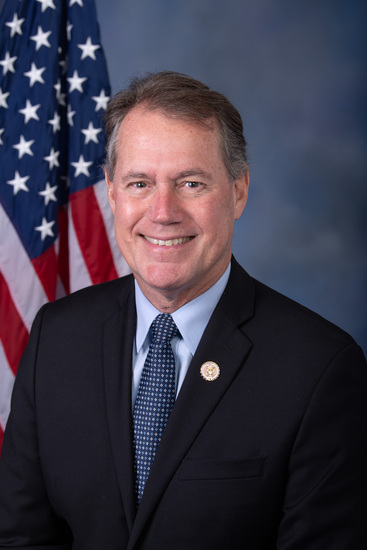
Rep. Ed Case
Sponsored bills
Boundary Waters Wilderness Protection and Pollution Prevention Act This bill protects and preserves approximately 225,504 acres of federal land and waters in a specified area in the Rainy River Watershed of Superior National Forest in Minnesota from certain mining, such as sulfide-ore copper mining. (The area is upstream from the Boundary Waters Canoe Area Wilderness.) Specifically, the bill withdraws those acres from entry, appropriation, and disposal under the public land laws; location, entry, and patent under the mining laws; and operation of the mineral leasing, mineral materials, and geothermal leasing laws. However, the Forest Service is authorized to permit the removal of sand, granite, iron ore, and taconite from national forest system lands within such area if the removal is not detrimental to the water quality, air quality, and health of forest habitat within the Rainy River Watershed. Land or interest in land within such area that is acquired by the United States must be immediately withdrawn in accordance with this bill.
Maddy summaryThe BLUE Pacific Act establishes a comprehensive U.S. strategy for engagement with Pacific Island nations, requiring the President to submit a detailed "Strategy for Pacific Islands Partnership" every four years to Congress. The bill authorizes $270 million annually from 2026 through 2033 to fund programs addressing public health, education, economic development, climate resilience, and security capacity building across 13 Pacific Island countries. Key provisions include creating a senior official to manage U.S. relations with the Freely Associated States (Marshall Islands, Federated States of Micronesia, and Palau), establishing an Ambassador's Self-Help Small Grants Program, and requiring coordination with regional organizations like the Pacific Islands Forum. The legislation also mandates annual reports on implementation progress, security challenges, diplomatic presence, and alignment with regional development goals. This comprehensive approach aims to strengthen U.S. partnerships with Pacific Island nations while supporting their priorities in areas such as disaster resilience, climate adaptation, and economic growth.
Maddy summaryHRES 48 is a ceremonial resolution honoring Dr. Martin Luther King, Jr., by commemorating his 96th birthday on January 20, 2025. The resolution affirms his teachings on diversity, equality, and nonviolence, and specifically condemns hate, discrimination, and harassment targeting Black Americans, Indigenous peoples, Jewish communities, Asian-American/Pacific Islander groups, Muslim communities, Hispanic/Latino communities, LGBTQ+ individuals, and others. It calls on all people to uphold Dr. King’s values of justice, tolerance, and peace. As a symbolic gesture, this resolution has no legal effect but expresses the House’s commitment to these principles.
Maddy summaryThe Inaugural Fund Integrity Act regulates donations to official presidential inaugural committees. It prohibits these committees from accepting money from corporations, foreign nationals, or donations made under another person's name. Individuals can donate up to $50,000 annually (adjusted for inflation), and committees must disclose all donations over $1,000 within 24 hours, plus detailed final reports showing all spending over $200. Unused funds may still be transferred to tax-exempt charities. This applies to inaugural committees organizing the 2029 and later presidential inaugurations.
Maddy summaryThis bill requires pre-travel inspections at airports, ports, and postal facilities for high-risk invasive species and agricultural materials moving to or from Hawaii. It mandates visual, x-ray, and canine inspections before travel begins for all people, baggage, and cargo destined for Hawaii, directly affecting travelers, shippers, and cargo carriers. Hawaii’s government will help develop a published list of items subject to inspection within 180 days of enactment. The law aims to prevent invasive species from entering Hawaii by screening materials before they arrive.
Maddy summaryHR 486, the Young Americans Financial Literacy Act, authorizes $27.5 million to $55 million annually through 2029 to fund competitive grants for centers of excellence focused on financial literacy education for individuals aged 8-24. These centers, established by eligible institutions like schools, nonprofits, or financial organizations, must develop research-based programs covering budgeting, debt management, student loan guidance, and avoiding pitfalls like predatory lending. The bill specifically requires programs to address at-risk populations, include evidence-based teaching methods, and serve groups such as high school graduates, college students, young families, and military personnel. It mandates annual reporting to Congress on grant recipients and the populations they serve, with funding ending in 2029.
Maddy summaryThis bill amends the Robert T. Stafford Disaster Relief Act to prioritize disaster resilience funding for vulnerable communities. It defines "environmental justice communities" (communities of color, low-income, or Tribal areas facing higher environmental risks) and "small impoverished communities" (under 50,000 people, economically disadvantaged), requiring FEMA to prioritize these groups for assistance. The bill increases federal funding coverage to 90% for mitigation projects in these communities (up from 75%) and mandates that projects account for future climate risks in design. It also creates a new federal database to track disaster spending and requires FEMA to provide outreach support to help eligible communities apply for funding.
Maddy summaryHR 380, the Affordable Shipping for All Act, prevents shipping companies (including the USPS) from charging higher fees to ship products to Alaska, Hawaii, Puerto Rico, Guam, and other U.S. territories than to locations within the contiguous 48 states and DC. It requires shipping services to include all noncontiguous areas in their standard shipping policies and prohibits excluding these areas. The bill exempts high-value items over $10,000 from these requirements. This directly affects consumers and businesses in noncontiguous areas by ensuring they pay the same shipping rates as mainland customers for standard products.
Maddy summaryThe LNG Public Interest Determination Act of 2025 requires the Secretary of Energy to approve natural gas exports only if they meet a public interest standard. This standard mandates three specific assessments: climate impact (including effects on global warming and clean energy investment), economic impact on U.S. consumers (with focus on low-income households and businesses), and environmental justice (assessing burdens on vulnerable communities). The Secretary must complete these assessments within one year of receiving environmental data and make a public finding. The bill also requires public participation in the process and treats export approvals as major federal actions under environmental law.