

Maddy summaryThis bill reauthorizes the Dr. Lorna Breen Health Care Provider Protection Act, extending mental health support programs for healthcare professionals through 2030 (previously ending in 2024). It requires funded programs to specifically address reducing administrative burdens on healthcare workers while continuing to promote access to mental health and substance use disorder services. The legislation directly affects healthcare providers across the U.S. who may access these federally supported resources. Key provisions include extending funding periods and mandating that grant recipients focus on easing workplace administrative tasks, alongside maintaining existing awareness initiatives. The bill does not create new programs but continues and refines existing mental health support for the healthcare workforce.
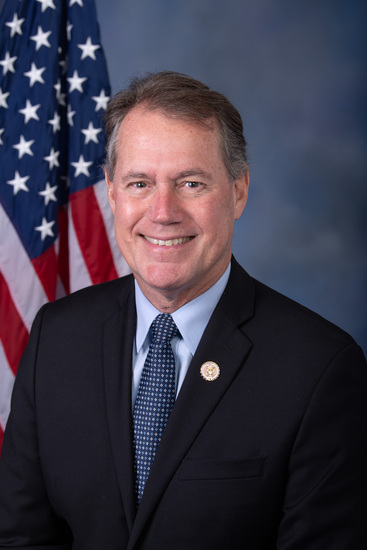
Rep. Ed Case
Sponsored bills
Maddy summaryThe Noncontiguous Shipping Reasonable Rate Act of 2024 establishes a new standard for determining reasonable shipping rates in domestic ocean trade between noncontiguous U.S. states, such as Hawaii or Alaska and the contiguous United States. It defines a reasonable rate as one falling within 10 percent of a comparable international ocean rate index recognized by the Federal Maritime Commission. This change directly affects shipping companies operating these routes and the Federal Maritime Commission, which will use this metric to evaluate rate reasonableness. The bill does not create new regulations but provides a specific, measurable benchmark for assessing rates in this specific shipping context.
Maddy summaryHR 664, the American Seabed Protection Act, prohibits U.S. federal authorization for commercial mining of minerals on the deep seabed and Outer Continental Shelf, affecting mining companies and developers seeking permits. It bans exploration, development, and production of hardrock minerals in these areas, with exceptions only for scientific research. The bill requires the Secretary of Commerce to commission a National Academies study within 90 days to assess environmental impacts - including effects on ecosystems, carbon sequestration, fisheries, and indigenous communities - and evaluate alternatives like mineral recycling. The study must be submitted to Congress, focusing on concrete data rather than future policy. This is a substantive policy change banning seabed mining activities while mandating scientific review.
Maddy summaryThis bill creates an exemption allowing foreign-registered freight vessels (over 1,000 gross tons, foreign-built, with U.S. crew) to transport goods between U.S. territories (like Hawaii or Alaska) and the mainland without complying with standard U.S. coastwise trade rules. It requires these vessels to hold a U.S. Coast Guard certificate of documentation and meet specific registration criteria. The bill also mandates that all vessels - U.S. or foreign - operating in U.S. coastwise trade must follow minimum U.S. labor and environmental standards. This directly affects foreign shipping companies seeking to serve U.S. territory routes while maintaining compliance with U.S. regulations.
Maddy summaryHR 663 directs the U.S. government to oppose deep seabed mining permits and exploration internationally. It requires the President to instruct U.S. representatives in global organizations to advocate for a moratorium on such mining and to block financial support for it. The bill mandates that no U.S. support for seabed mining can resume until the International Seabed Authority establishes binding regulations proven to protect marine ecosystems through scientific consensus. This affects U.S. policy in international ocean governance forums, requiring certification that regulations are scientifically sound and environmentally protective before any U.S. approval. The bill focuses on procedural requirements for international regulatory frameworks, not domestic mining activities.
Maddy summaryHR 665, the Noncontiguous Shipping Competition Act, modifies U.S. coastwise shipping laws to allow certain noncontiguous trade routes (like Hawaii to California) to operate without the usual requirement that only U.S.-built, U.S.-owned vessels serve those routes. It exempts such shipping unless at least three separate vessel operators (not under common ownership) each transport at least 20% of the goods on the route. This directly affects shipping companies operating on noncontiguous routes and the existing coastwise-qualified vessel operators who must meet these specific volume and ownership conditions to maintain their exclusive right. The bill creates a clearer pathway for new competition on these routes by establishing objective criteria for when the coastwise law applies.
Medicare Patient Access and Practice Stabilization Act of 2025 This bill increases certain payment adjustments under the Medicare physician fee schedule for services furnished between April 1, 2025, and January 1, 2026.
Maddy summaryThe Fighting Budget Waste Act requires the President and the Office of Management and Budget (OMB) to consider the most recent Government Accountability Office (GAO) report on reducing government waste when preparing the annual federal budget. Specifically, it mandates review of the GAO's findings about cutting fragmentation, duplication, and overlap in federal programs - such as the report titled *Additional Opportunities to Reduce Fragmentation, Overlap, and Duplication and Achieve Billions of Dollars in Financial Benefits* - to identify potential savings. The OMB must also submit a separate report to Congress detailing how it incorporated the GAO's recommendations into the budget submission. This law aims to make the budget process more transparent by formally integrating the GAO's waste-reduction analysis into federal fiscal planning.
Maddy summaryHCONRES 4 is a symbolic resolution expressing Congress's support for tax-exempt fraternal benefit societies (like mutual aid organizations). It recognizes these groups, which have over 7 million members nationwide, as historically and currently providing critical community benefits - including life/health insurance, charitable work, and volunteer services - valued at over $3.8 billion annually. The resolution affirms that their tax-exempt status under Section 501(c)(8) of the Internal Revenue Code remains beneficial and should continue to be promoted. This is a non-binding expression of congressional sentiment, not a policy change.
Maddy summaryThis resolution expresses the House of Representatives' position that Congress should take steps to prevent the privatization of the United States Postal Service (USPS), ensuring it remains a federal independent agency. It highlights USPS’s constitutional role, self-sustaining nature (relying on service revenue, not taxpayer funds), and critical functions - serving 168 million addresses daily, supporting rural communities, and underpinning e-commerce. The resolution opposes privatization, noting it would raise prices, reduce services, and harm the $1.9 trillion mailing industry. As a non-binding resolution, it reflects the House’s stance but does not create new law or policy.