

Maddy summaryThis resolution expresses the U.S. House of Representatives' support for designating February 2025 as "Hawaiian Language Month" or "Ōlelo Hawai‘i Month." It does not create new laws or funding but aligns with existing federal and state efforts to preserve the Hawaiian language, referencing the 1978 state constitutional recognition and the 2022 Native American Language Resource Center Act. The resolution urges the public and organizations to celebrate the month through activities promoting the language’s use and revitalization. As a non-binding resolution, it directly affects no specific group but symbolically supports ongoing cultural preservation efforts.
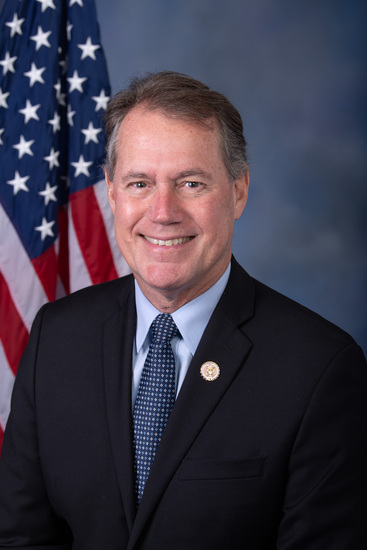
Rep. Ed Case
Sponsored bills
Maddy summaryThe Aquatic Biodiversity Preservation Act of 2025 directs the Secretary of Commerce to establish a program mapping the genetic code (genome) of priority aquatic species, including endangered fish, species linked to harmful algal blooms, and culturally significant species identified by tribes or Native Hawaiian organizations. Covered entities like federal agencies, states, tribes, universities, and nonprofits will collect samples, sequence genomes to high standards, and catalog data. All sequenced genomes must be made publicly available within 360 days (except for tribal-led projects, which retain control over data sharing), with $2 million annually allocated for 2025-2031 to fund this effort. The law aims to support conservation, management, and enforcement by creating a shared genetic database for scientists and policymakers.
Maddy summaryThe Office of Gun Violence Prevention Act of 2025 would create a new office within the Department of Justice to coordinate federal efforts on reducing gun violence. The office, led by a Director appointed by the Attorney General, would integrate existing DOJ programs, evaluate data gaps, and develop evidence-based recommendations for Congress and the President. It would also establish an advisory council including survivors of gun violence, public health officials, and community representatives to guide its work. The office would produce annual reports detailing gun violence trends and policy proposals, while collaborating with agencies like Health and Human Services and the FBI.
United States-Israel Defense Partnership Act of 2025 This bill requires or authorizes certain actions to increase defense-related cooperation between the United States and Israel. Specifically, the bill requires the Department of Defense (DOD) to establish a cooperative program, with the concurrence of Israel's Ministry of Defense (MOD), to develop and deploy advanced technologies for countering unmanned systems that threaten the United States and Israel; establish in Israel an office of the Defense Innovation Unit (an organization that focuses on rapidly fielding and scaling commercial technology across the U.S. military); and seek to engage Israel's MOD on the ascension of Israel into the national technology and industrial base (currently defined in law as the persons and organizations engaged in research, development, production, integration, services, or information technology activities conducted within the United States, the United Kingdom, Australia, New Zealand, and Canada). The bill authorizes DOD, upon request of Israel's MOD, to jointly conduct research, development, test, and evaluation (RDT&E) of emerging technologies such as artificial intelligence and robotics to meet defense challenges. Additionally, the bill extends the authority for DOD to (1) carry out RDT&E on a joint basis with Israel to establish anti-tunnel and counter unmanned aerial systems capabilities through 2028, and (2) transfer defense articles intended for use as reserve stocks for Israel through January 1, 2029.
Maddy summaryHR 1196 prohibits using federal funds to eliminate the U.S. Agency for International Development (USAID) as an independent agency, as defined by law. It requires the Secretary of State to certify annual compliance with this restriction to the House Foreign Affairs and Senate Foreign Relations committees. The bill directly affects USAID's operational status and U.S. foreign aid programs by preventing congressional or executive actions that would dismantle or merge the agency, maintaining its role in U.S. international development efforts.
Maddy summaryThis bill restricts access to Treasury payment systems (including the Bureau of the Fiscal Service) to only Treasury employees with a "fully successful" performance rating and at least one year of civil service, or contractors/outsiders with security clearances, required privacy/cybersecurity training, ethics agreements, and no conflicts of interest. It treats non-government users accessing these systems as government employees for ethics rules and defines specific actions (like stopping payments) as "personal and substantial participation" in government matters. The Treasury Inspector General must investigate any unauthorized access within 30 days and report to Congress, detailing the breach, security risks, and any halted payments. The bill directly affects Treasury staff, contractors, and any external entities accessing federal payment systems.
Maddy summaryHR 303, the Retired Pay Restoration Act, expands eligibility for military retirees with service-connected disabilities to receive both full retired pay and veterans' disability compensation without reduction. It specifically extends concurrent receipt authority to retirees with disability ratings below 50% (previously limited to 100% or combat-related ratings). The bill amends Title 10, U.S. Code, to define "qualified retirees" as those entitled to both retired pay (meeting service requirements) and veterans' disability compensation, removing the offset for this group. The changes apply to payments starting January 1, 2021, for affected retirees.
Maddy summaryThis proposed bill (HR 220) would expand VA healthcare benefits to cover infertility treatments like in vitro fertilization (IVF) and fertility preservation services for veterans with infertility or at risk of infertility (e.g., due to medical treatments), and their partners. It limits VA coverage to three successful IVF cycles or ten attempts, requires consent from veterans, partners, and donors, and allows use of donated eggs or embryos. Partners would receive travel reimbursement as if they were veterans, and temporary rules during implementation will immediately allow partners to access care without marriage requirements. The bill clarifies VA isn’t required to cover maternity care beyond existing rules and defers full implementation until VA issues final regulations within one year of enactment.
Maddy summaryThis bill requires the Comptroller General to study and report on menopause care provided by the Department of Veterans Affairs (VA) to women veterans experiencing perimenopause, menopause, or genitourinary syndrome of menopause. The study will examine current VA protocols for diagnosis, treatment, provider training, veteran access to care, outreach efforts, and quality of care, including veteran feedback. The VA Secretary must then develop a strategic plan within six months of the report's release to improve menopause care access and quality for women veterans under VA healthcare programs.
Maddy summaryHR 1138, the Payment Choice Act of 2025, requires most retail businesses to accept cash for in-person purchases up to $500 per transaction and prohibits charging higher prices for cash payments compared to other methods. Businesses may temporarily refuse cash only due to system failures, insufficient change, or if they offer a prepaid card conversion device meeting strict conditions (no fees, no minimum deposit, no expiration). The bill allows businesses a 5-year period to phase in accepting $50 bills or larger, after which the Treasury Secretary must mandate acceptance of $1-$20 bills. Consumers can send a 45-day notice to businesses for violations before pursuing legal action, with potential damages of at least $250 per violation. The law does not override stricter state cash acceptance protections.