

Maddy summaryThis bill, HR 2102 (Major Richard Star Act), allows veterans with combat-related disabilities to receive both full military retired pay and veterans' disability compensation simultaneously, without the previous offset that reduced retired pay. It directly affects veterans already eligible for both benefits due to combat-related injuries, removing the requirement that their retired pay be reduced by the disability compensation amount. The key provision amends Title 10 and Title 38 to eliminate the offset rule (sections 5304 and 5305 of Title 38) for these veterans. The change applies to payments starting after the bill’s enactment date, effective for all qualifying veterans. This is a policy change to increase financial support for affected veterans, not a new benefit.
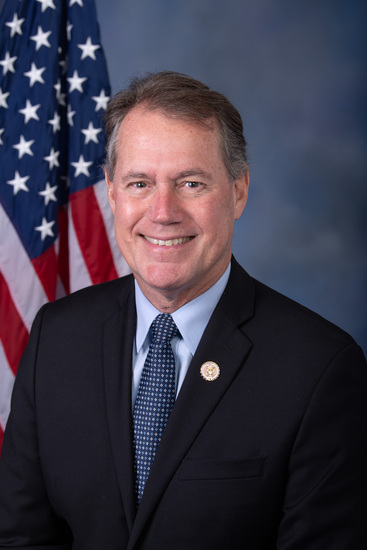
Rep. Ed Case
Sponsored bills
Maddy summaryThis bill increases loan limits for farmers under the Farm Service Agency. It raises farm ownership loan caps from $600,000/$1.75 million to $850,000/$3.5 million (for direct/guaranteed loans) and operating loan caps from $400,000/$1.75 million to $750,000/$3 million, effective 2025. It also creates a refinancing program allowing distressed guaranteed loans to convert to direct loans if borrowers prove problems can be fixed and the farm can return to financial stability. Additionally, it doubles the microloan limit from $50,000 to $100,000 and updates inflation calculations for loan adjustments using USDA land value data instead of previous metrics.
Maddy summaryHRES 292 is a non-binding House resolution supporting "Financial Literacy Month" to raise awareness about personal finance education. It references statistics showing widespread financial literacy gaps, including 14.2% of U.S. households being unbanked or underbanked, only 42% of adults budgeting, and just 28 states requiring high school economics courses. The resolution calls on federal, state, local, school, nonprofit, and business entities to observe Financial Literacy Month with programs and activities. It does not create new laws or policies but aims to highlight the importance of financial education for managing money, credit, and debt.
Federal Firearm Licensee Act This bill establishes new security requirements and expands recordkeeping and reporting requirements for federally licensed dealers, importers, and manufacturers of firearms (i.e., federal firearms licensees, or FFLs). The bill also broadens the authority of the Bureau of Alcohol, Tobacco, Firearms and Explosives (ATF) to administer federal firearms laws and enforce violations. Specifically, bill requires FFLs to implement and comply with a plan to secure their business premises, conduct quarterly physical checks of their business inventories, maintain video surveillance of the area where firearms are sold or transferred, and initiate firearms-related background checks for employees. Additionally, the bill requires FFLs to report to the ATF any inventory firearm that is lost, stolen, or unaccounted for and to notify the ATF about default-proceed transactions (i.e., allowable firearm transfers to an unlicensed person prior to the completion of a background check when the submitted background check remains incomplete after three business days). Finally, the bill removes limits on the ATF's authority to conduct activities related to the administration of federal firearms laws. It enhances the ATF's inspection authority, including by removing the limit on the number of annual compliance inspections (currently, one), requiring inspections of high-risk FFLs, and authorizing an additional 650 investigators. Finally, the bill directs the ATF to deny an application for a federal firearms license if it would endanger public safety or if the applicant is unlikely to comply with the law.
Maddy summaryThis bill authorizes $250 million annually for four years to help schools on federally impacted lands (like tribal reservations and military bases) improve aging infrastructure. It creates two grant types: formula grants for schools with no bond capacity and competitive grants prioritizing schools with urgent safety issues like unsafe buildings or lack of clean water. Local schools must contribute 10-25% of project costs based on their "learning opportunity threshold," with the highest-priority schools receiving full federal funding. Funds can be used for construction, renovation, and repair to meet safety standards and improve learning environments. The bill addresses the significant infrastructure challenges reported by 65% of schools with facilities in poor condition.
Maddy summaryHR 2559, the Taiwan Allies Fund Act, authorizes $40 million annually (2026-2028) from existing foreign aid funds to support countries maintaining or strengthening unofficial ties with Taiwan, particularly those facing economic or diplomatic pressure from China. The bill directs funds to help eligible countries diversify supply chains, counter Chinese propaganda, develop health initiatives as alternatives to China's "Health Silk Road," and advance Taiwan's participation in international organizations. Countries receiving funds cannot get more than $5 million per year, and the State Department must coordinate with Taiwan and report annually on fund usage and effectiveness. This is a targeted financial assistance program, not a policy change affecting Taiwan's status or U.S. diplomatic recognition.
Workplace Violence Prevention for Health Care and Social Service Workers Act This bill requires the Department of Labor to address workplace violence in health care, social service, and similar sectors. Specifically, Labor must issue an occupational safety and health standard that requires certain employers to take actions to protect workers and other personnel from workplace violence. The standard applies to employers in the health care sector, in the social service sector, and in sectors that conduct activities similar to those in the health care and social service sectors. Among other elements, the standard must require each employer to (1) develop a workplace violence prevention plan, (2) promptly investigate incidents of workplace violence, and (3) provide relevant training and education to employees. The bill requires certain hospitals and skilled nursing facilities to comply with this standard as a condition of Medicare participation.
Maddy summaryHR 2577, the PLAN for School Safety Act of 2025, establishes a federal grant program to create statewide or regional School Safety Development Centers. These centers, funded through $25 million annually (2026-2030), will provide schools - especially those in rural, Tribal, or low-resourced communities - with free, customized consulting to develop or improve evidence-based school safety and mental health plans. Centers must offer tailored consultations, help schools access federal/state funding, and provide training, while prohibiting the use of funds for firearm training or hiring school staff. The bill directly affects public schools and their communities by supporting data-driven safety planning without altering existing civil rights or safety laws.
Sanctioning Russia Act of 2025 This bill imposes penalties on certain persons (individuals and entities) if the President determines that the Russian government or a person acting at Russia's direction is involved with (1) refusing to negotiate a peace agreement with Ukraine; (2) violating a negotiated peace agreement; (3) initiating another invasion of Ukraine; or (4) overthrowing, dismantling, or seeking to subvert the Ukrainian government. If the President makes such a determination, the bill requires certain actions including the President must impose visa- and property-blocking sanctions on specified persons such as the Russian president, certain Russian military commanders, and any foreign person that knowingly provides defense items to the Russian armed forces; the President must increase the rate of duty on all goods and services imported from Russia into the United States to at least 500% relative to the value of such goods and services; the President must increase the rate of duty on all goods and services imported into the United States from countries that knowingly engage in the exchange of Russian-origin uranium and petroleum products to at least 500% relative to the value of such goods and services; the Department of the Treasury must impose property-blocking sanctions on any financial institution organized under Russian law and owned wholly or partly by Russia, and any financial institution that engages in transactions with those entities; and the Department of Commerce must prohibit the export, reexport, or in-country transfer to or in Russia of any U.S.-produced energy or energy product.
Maddy summaryThis symbolic resolution (HCONRES 23) expresses Congress's support for International Transgender Day of Visibility, observed annually on March 31. It encourages Americans to recognize and celebrate transgender community achievements while acknowledging ongoing challenges like discrimination in employment, healthcare, and public accommodations. The resolution does not create new laws or policies but formally endorses the day's purpose through non-binding statements of support and recognition. It directly affects the broader public by promoting awareness and respect for transgender individuals' rights and contributions.