

Maddy summaryHR 4250, the SOLES Act, adjusts Medicare payments for outpatient services at sole community hospitals located only in Alaska or Hawaii. If a hospital’s Medicare payment for outpatient services is less than 94% of its reasonable costs, the bill requires the government to increase the payment to cover the shortfall. The bill explicitly states this adjustment won’t affect patient copayments or count toward budget neutrality requirements. Regulations implementing the changes must be finalized within six months of the bill’s enactment.
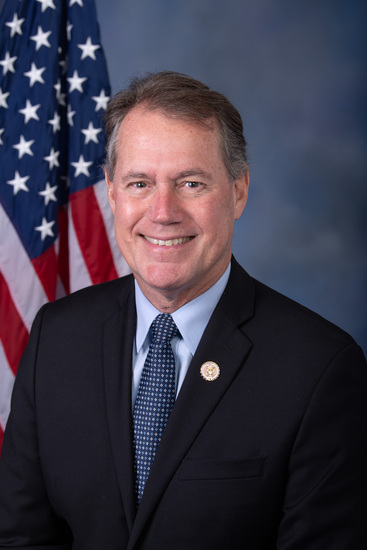
Rep. Ed Case
Sponsored bills
Maddy summaryHRES 550 is a non-binding House resolution recognizing June 2025 as LGBTQIA+ Pride Month. It formally encourages all U.S. citizens to celebrate Pride Month to learn about LGBTQIA+ history, including the Stonewall Inn and Compton's Cafeteria uprisings. The resolution affirms that LGBTQIA+ rights are human rights and emphasizes the ongoing struggle for equality. It has no legal effect but serves as a symbolic statement of support for the LGBTQIA+ community and its history.
Maddy summaryHR 4230, the Appropriations Compliance and Training Act, requires federal employees in high-level roles - including those at GS-11 or higher, political appointees, and Senior Executive Service positions - to complete annual training on federal appropriations law. The training must cover key topics like the Antideficiency Act, the Purpose Statute, proper fund usage, and penalties for violations, and must be approved by the Office of Management and Budget. Noncompliance results in loss of financial decision-making authority and IT access until training is completed, with agencies required to report compliance statistics annually and publish them publicly. This bill directly affects over 100,000 federal employees in covered positions by mandating standardized training to ensure proper handling of government funds.
Maddy summaryThis resolution (HRES 549) is a non-binding House measure expressing support for designating June 26 as "LGBTQI+ Equality Day." It commemorates three landmark Supreme Court rulings on June 26 (2003, 2013, and 2015) that ended criminalization of same-sex intimacy, struck down marriage discrimination, and established marriage equality. The resolution encourages public celebration of this day to honor these milestones and educate about ongoing discrimination faced by LGBTQI+ communities. It also acknowledges the need for future legislation to address discrimination in areas like employment, housing, and public accommodations. As a symbolic resolution, it does not create new legal requirements but formally recognizes these historical court decisions.
Maddy summaryThe CONNECT for Health Act of 2025 expands Medicare telehealth coverage by removing geographic restrictions that limited where patients could receive care, expanding the types of health care providers who can offer telehealth services, and eliminating the requirement for an in-person visit before receiving telemental health services. The bill includes specific provisions to support telehealth use for Native American health facilities, rural health clinics, and Federally Qualified Health Centers. It requires the Centers for Medicare & Medicaid Services to collect and publish data on telehealth usage and impacts, and to develop resources to improve accessibility for people with disabilities and limited English proficiency. Program integrity measures are added to monitor telehealth billing practices and prevent fraud while maintaining coverage for telehealth services during public health emergencies.
Maddy summaryThe Preventing Pretrial Gun Purchases Act would prohibit firearm sales to individuals subject to a court order (released before trial) that specifically bans them from possessing or purchasing guns. It amends federal gun law to add such court orders as a new reason for barring firearm transfers, updating background check systems to require states to report these orders to the national database. The bill allocates $25 million annually from 2026 to 2030 to help states and tribes report these orders, ensuring gun dealers can check eligibility during background checks. This directly affects people under such court orders and gun dealers processing transfers.
Maddy summaryHR 4152, the Safe Storage Saves Lives Act, requires gun sellers to offer a compatible gun lock with every firearm sale. It directly affects licensed gun retailers, who must make such locks available at the point of purchase. The bill amends federal law to mandate that sellers provide a secure storage device compatible with the firearm, with violations subject to $1,000 civil penalties. Funds from these penalties must be used for distributing free/reduced-cost locks or public awareness campaigns about safe storage.
Maddy summaryThis bill amends the Older Americans Act of 1965 to better serve LGBTQI older adults (ages 60+). It adds specific definitions for "LGBTQI" and "HIV" in the law, redesignates "minority" to explicitly include LGBTQI individuals, and creates an Office of LGBTQI Inclusion within the Administration on Aging. The bill establishes a National Resource Center on LGBTQI Aging to provide training, technical assistance, and educational resources to organizations serving this community. It also requires the collection and analysis of data on discrimination against LGBTQI older adults in long-term care settings.
Maddy summaryThis bill makes the Environmental Protection Agency's existing April 2024 rule on PFAS limits in drinking water legally binding. It codifies the EPA's "PFAS National Primary Drinking Water Regulation" (89 Fed. Reg. 32532), which sets enforceable limits for specific PFAS chemicals in public water systems. The rule directly affects municipal water providers and communities relying on public water sources by requiring them to meet these new contaminant standards. The bill does not create new standards but formally adopts the EPA's previously issued rule into law.
Maddy summaryThe PRIDE Act of 2025 updates the Internal Revenue Code by replacing gender-specific terms like "husband and wife" with gender-neutral terms such as "married couple" or "spouse" across over 30 tax code provisions. This change affects all married couples filing federal taxes and the IRS, as it modernizes tax law language to be inclusive of all married individuals regardless of gender. The bill makes specific textual amendments to sections dealing with filing status, deductions, credits, and estate tax provisions without creating new tax benefits. It ensures tax law language does not assume the gender of spouses, making the tax code more equitable for all married couples. This is a language update to existing tax law, not a change in tax policy or benefits.