

Making Essentials Available and Lawful (MEAL) Act of 2021 This bill repeals a lifetime ban that prohibits individuals convicted of certain offenses related to the possession, use, or distribution of a controlled substance from receiving Supplemental Nutrition Assistance Program (SNAP) benefits or assistance under programs funded by Temporary Assistance for Needy Families (TANF) block grants. Any state law that imposes conditions on eligibility for SNAP benefits or TANF assistance based on an individual's conviction of such an offense shall have no force or effect. In addition, individuals who are incarcerated and scheduled to be released within 30 days shall qualify as individual households for purposes of SNAP eligibility. Under current law, unless specifically excepted, individuals residing in institutions do not constitute a household.
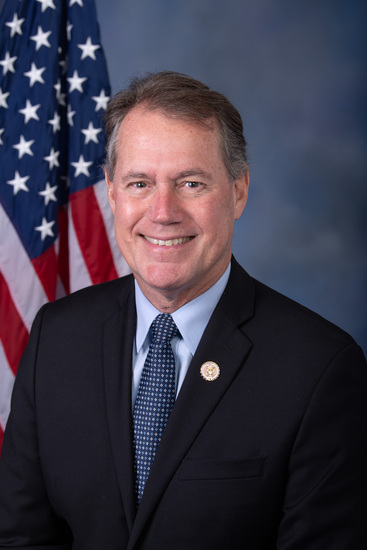
Rep. Ed Case
Sponsored bills
This resolution honors the suppliers of the National Aeronautics and Space Administration (NASA) for the work they are doing on the Artemis missions.
Food and Nutrition Education in Schools Act of 202 1 This bill directs the Department of Agriculture (USDA) to establish a Food and Nutrition Education in Schools Pilot Program to award grants to local educational agencies for (1) projects that hire qualified, full-time food and nutrition educators to carry out programs in schools that have the goal of improving student health and nutrition; and (2) projects that fund school gardens or other evidence-based interventions relating to student health and nutrition, aligned with the latest school nutrition standards, to create hands-on learning opportunities for students. In awarding grants under the program, USDA must prioritize projects that serve schools or districts (1) in which not less than 40% of students qualify for free or reduced-price meals, or (2) that include neighborhoods with high rates of childhood obesity or other diet-related diseases. Additionally, it must give priority to projects that provide programming in summer months and those that are joint partnership projects.
Sgt. Ketchum Rural Veterans Mental Health Act of 2021 This bill requires the Department of Veterans Affairs (VA), during FY2022, to establish and maintain three new centers of the Rural Access Network for Growth Enhancement (RANGE) Program in areas with interest from personnel and a need for additional mental health care for rural veterans. The RANGE Program serves veterans in rural areas who are experiencing mental illness. The bill requires the Government Accountability Office to conduct a study and report on whether the VA has sufficient resources to serve rural veterans who need mental health care that is more intensive than traditional outpatient therapy.
This resolution urges the President to facilitate private medical supply donations and to deliver urgently needed medical supplies, including oxygen generator plants, to India and countries neighboring India that are facing the spread of COVID-19.
Tax Deadline Simplification Act This bill requires individual estimated income tax to be paid on a quarterly basis.
Rebuilding Communities After Disasters Act This bill requires the Small Business Administration (SBA) to increase the loan limits for the disaster loan program and to communicate certain information about the program following disasters. Specifically, the bill raises from $40,000 to $75,000 the loan amount for repair or replacement of household and personal effects and from $200,000 to $400,000 the loan amount for repair or replacement of a primary residence. Further, the bill requires the SBA to communicate through radio, television, print, and web-based outlets all relevant information needed by disaster loan applicants if a disaster is declared or the SBA declares eligibility for additional disaster assistance. (Currently, the SBA is only required to endeavor to communicate such information.) The SBA must submit a report on the disaster loan program that includes information such as the number and dollar value of program loans and the average estimated dollar value of damage sustained by borrowers.
Merit Systems Protection Board Empowerment Act of 2021 This bill reauthorizes the Merit Systems Protection Board through FY2026 and modifies certain requirements relating to the administration of cases involving whistleblowers. Specifically, it requires cases involving alleged retaliation against whistleblowers to be heard by the board, an administrative law judge, or a designated board employee who has received training regarding the protections afforded whistleblowers under law.
Advancing FASD Research, Services, and Prevention Act or the FASD Respect Act This bill expands and establishes programs for fetal alcohol spectrum disorders (FASD). Specifically, it directs the Department of Health and Human Services, the National Institutes of Health, the National Center on Birth Defects and Developmental Disabilities, and the Health Resources and Services Administration to carry out and coordinate research, surveillance, and related activities to diagnose, prevent, and treat FASD. Furthermore, the bill establishes various grant programs to support FASD coalitions and develop systems of care; provide services for individuals affected by FASD and other conditions related to prenatal substance exposure; identify and implement best practices for educating children with FASD; and establish centers for excellence to build relevant capacity for preventing, treating, and responding to the needs of individuals with FASD. The bill also directs the Department of Education and the Department of Justice to develop and disseminate trainings and best practices related to FASD in schools and correctional facilities, respectively.
Honoring Organizations Nationally for Ethics, Sustainability, and Trust Act or the HONEST Enterprise Act This bill establishes the Compassionate Capitalist Award to be presented to organizations that substantially benefit the well-being of their employees, stakeholders, and communities with respect to the areas of environmental stewardship, governance, social responsibility, and worker empowerment. The bill also establishes the Compassionate Capitalist Award Fund in the Department of the Treasury—composed of application fees charged to submit an application for the award and any gifts that the Department of Commerce may solicit for this purpose—to carry out the bill's provisions.