

Prevent Recording of Individuals with Video and Audio Technologies when not Enabled Act or the PRIVATE Act This bill generally prohibits collecting, transmitting, disclosing, or otherwise using data from a camera or microphone of an internet-connected device. A device manufacturer or software application developer may not use such data unless the use is (1) reasonably required for the device's functionality, and (2) limited to instances when the individual is actively operating the device. For voice-activated functionality, the bill also prohibits data use before the functionality is activated. Additionally, individuals must expressly and affirmatively consent to data use and may revoke this consent. To obtain consent, manufacturers and developers must provide individuals with a brief notice that describes the data use and meets other requirements. They must also maintain a separate privacy policy that details how the entity specifically uses data from a device's camera or microphone. The Federal Trade Commission (FTC) must (1) issue guidance and sample language for brief notices, and (2) enforce the bill's prohibitions as an unfair or deceptive act or practice. The bill provides a safe harbor from such enforcement if a manufacturer or developer obtains FTC approval for the requisite brief notice and privacy policy.
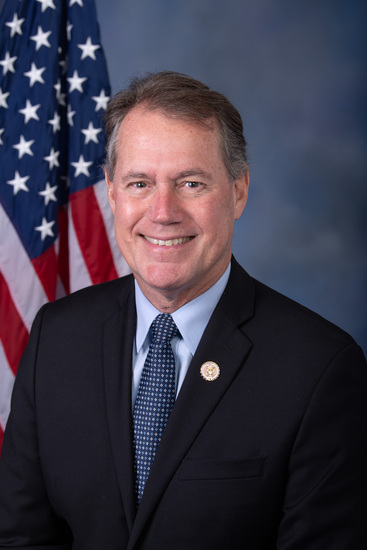
Rep. Ed Case
Sponsored bills
Be Ready to Assist Veterans in Extremis Act or the BRAVE Act This bill requires the Department of Veterans Affairs (VA) to establish a patient outreach system under which it must ensure that veterans who are enrolled in the VA health care system and have experienced a traumatic or highly stressful event may elect to receive information and resources relating to mental health and available mental health care services. The VA must coordinate the system with the Transition Assistance Program of the Department of Defense.
Coffee Plant Health Initiative Amendments Act This bill expands the research and extension grant program for the coffee plant health initiative. Under current law, the Department of Agriculture (USDA) may provide competitive grants under the initiative to support research and extension activities to combat the insect known as the coffee berry borer (Hypothenemus hampei). Specifically, the bill authorizes USDA to provide competitive grants for developing and disseminating science-based tools and treatments to combat plant pests and noxious weeds that impact coffee plants; establishing an area-wide integrated pest management program in areas affected by, or at risk of being affected by, plant pests or noxious weeds that impact coffee plants; surveying and collecting data on coffee plant production and health; investigating coffee plant biology, immunology, ecology, genomics, and bioinformatics; and conducting research on various factors that may contribute to or be associated with coffee plant immune systems and other serious threats to coffee plants.
Macadamia Tree Health Initiative Amendments Act This bill expands the research and extension grant program for the macadamia tree health initiative. Under current law, the Department of Agriculture (USDA) may provide competitive grants under the initiative to support research and extension activities to combat the insect known as the macadamia felted coccid (Eriococcus ironsidei). Specifically, the bill authorizes USDA to provide competitive grants for developing and disseminating science-based tools and treatments to combat plant pests and noxious weeds that impact macadamia trees; establishing an area-wide integrated pest management program in areas affected by, or at risk of being affected by, the invasive plant pests or noxious weeds; surveying and collecting data on macadamia tree production and health; investigating macadamia tree biology, immunology, ecology, genomics, and bioinformatics; and conducting research on various factors that may contribute to or be associated with macadamia tree immune systems and other serious threats to macadamia trees.
EB-5 Reform and Integrity Act of 2021 This bill reauthorizes the EB-5 Regional Center program through FY2026 and makes various changes to the program, such as imposing various oversight requirements. (EB-5 visas provide permanent resident status to qualified alien investors. A regional center allows EB-5 aliens to pool investments to meet various investment and job creation requirements.) Oversight-related provisions include requiring each center to (1) notify the Department of Homeland Security (DHS) of proposed changes to the center's structure, (2) maintain certain records and make such records available to DHS for audits, (3) obtain approval for each particular investment offering, and (4) annually report to DHS. The bill prohibits certain individuals and entities from involvement in a center, such as (1) a person who had committed a violation involving fraud in the previous 10 years, (2) a non-U.S. national not admitted for permanent residence, or (3) a foreign government official. DHS shall deny petitions, such as a petition to certify a regional center or to classify an alien as an alien investor, if approval would threaten U.S. national interest. The bill provides various enforcement authority to DHS and U.S. Citizenship and Immigration Services, including the ability to permanently bar an individual from participating in the regional center program. The bill establishes the EB-5 Integrity Fund to fund program enforcement activities. The bill contains various provisions related to EB-5 petitions, such as a provision authorizing DHS to extend an alien's conditional permanent residence status.
Bipartisan Border Solutions Act of 2021 This bill establishes regional processing centers for conducting immigration-related activities and addresses other related issues. The Department of Homeland Security (DHS) shall establish at least four regional processing centers along the southern border in high-traffic Border Patrol sectors. These centers shall conduct processing activities such as criminal history checks, medical screenings, asylum interviews and credible fear determinations, and short-term detention of individuals. The bill imposes various requirements, such as requiring the centers to (1) allow nongovernmental entities access to detained individuals to provide humanitarian or legal assistance, and (2) provide detained aliens access to legal counsel for certain asylum proceedings. The bill also requires DHS and the Department of Justice (DOJ) to develop pilot programs to improve asylum decisions, credible fear determinations, access to counsel, and case management of aliens awaiting asylum hearings or decisions. DOJ shall, to the greatest extent practicable, prioritize removal cases involving aliens apprehended while entering the United States during an irregular migration influx. Before placing an unaccompanied alien child with an individual, the Department of Health and Human Services must conduct a criminal background check of each adult member of that individual's household. An alien child may not be placed in a household where an individual has been convicted of certain crimes, including offenses involving sex or domestic violence. The bill also makes it a crime to make a materially false statement or knowingly use a false document to obtain custody of an unaccompanied alien child.
Keep Americans Safe Act This bill establishes a new criminal offense for the import, sale, manufacture, transfer, or possession of a large capacity ammunition feeding device (LCAFD). The bill does not prohibit certain conduct with respect to an LCAFD, including the following: importation, sale, manufacture, transfer, or possession related to certain law enforcement efforts, or authorized tests or experiments; importation, sale, transfer, or possession related to securing nuclear materials; and possession by a retired law enforcement officer. The bill permits continued possession of, but prohibits sale or transfer of, a grandfathered LCAFD. Newly manufactured LCAFDs must display serial number identification and the date of manufacture. Additionally, the bill allows a state or local government to use Edward Byrne Memorial Justice Assistance Grant Program funds to compensate individuals who surrender an LCAFD under a buy-back program.
Law Enforcement Protection Act of 2021 This bill includes armor-piercing, concealable weapons in the definition of firearm under the National Firearms Act.
Gun Records Restoration and Preservation Act This bill amends several appropriations laws to remove limitations on the authority of the Bureau of Alcohol, Tobacco, Firearms and Explosives to conduct activities related to the administration of federal firearms laws. Specifically, the bill removes provisions that limit the use of firearms tracing data, limit the disclosure of data under the Freedom of Information Act, prohibit imposing a requirement that gun dealers conduct a physical inventory, prohibit consolidating or centralizing records maintained by federal firearm licensees (e.g., gun dealers), and require national instant criminal background check records to be destroyed within 24 hours.
Equal Access to Abortion Coverage in Health Insurance Act of 2021 or the EACH Act of 2021 This bill requires federal health care programs to provide coverage for abortion services and requires federal facilities to provide access to those services. The bill also permits qualified health plans to use funds attributable to premium tax credits and reduced cost sharing assistance to pay for abortion services.