

Guam Excess Land Return Act This bill allows excess federal lands in Guam to be transferred to the original landowners or their heirs if such prior ownership can be verified in the official records maintained by the government of Guam. The government of Guam must establish a process for such transfers.
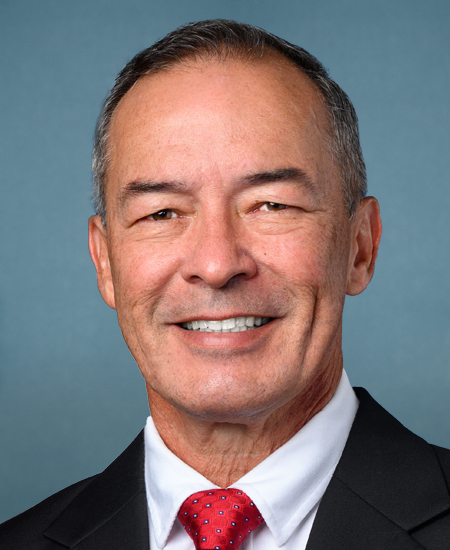
Rep. James C. Moylan
Sponsored bills
Maddy summaryHR 560, the Northern Marianas Population Stabilization Act, amends immigration rules for the Northern Mariana Islands (CNMI) to clarify who qualifies as a "long-term legal resident." It adds two specific categories to the definition: (1) workers admitted as Commonwealth Only Transitional Workers in 2015 who maintained status through 2018, and (2) investors currently classified as CNMI-only nonimmigrants under immigration law. These changes directly affect certain workers and investors already residing in the CNMI under these specific visa categories. The bill does not create new programs but ensures these groups meet the continuous residence requirement for long-term resident status under existing law.
Maddy summaryHR 567, the SALVAGE Act, streamlines the removal of dead trees after wildfires on federal lands by skipping standard environmental reviews for smaller operations (max 10,000 acres). It requires land managers to follow stream buffer rules, create reforestation plans, and complete 75% reforestation within 5 years of a disaster. The bill also shortens public input to 60 days total (30 days for comments, 15 for objections, 15 for agency response) and prohibits court delays on approved projects. It does not apply to wilderness areas, roadless zones, or lands where timber harvesting is already banned. This directly affects U.S. Forest Service and Bureau of Land Management operations on National Forest System lands and public lands impacted by wildfires.
Maddy summaryHR 189, the "Action Versus No Action Act," requires federal agencies (like the Department of Agriculture or Interior) to limit environmental reviews for certain forest management projects to only two options: proceeding with the project or taking no action. It applies specifically to projects on lands suitable for timber production that meet one of four criteria, such as being developed through a collaborative process or covered by a community wildfire protection plan. The bill mandates that agencies analyze only these two alternatives, including detailed assessments of how "no action" would impact forest health, wildfire risk, habitat, and economic factors. This change streamlines environmental reviews but restricts consideration of other potential management approaches.
Maddy summaryHR 1088, the Shirley Chisholm Congressional Gold Medal Act, authorizes a posthumous Congressional Gold Medal to honor Congresswoman Shirley Chisholm, the first African-American woman elected to Congress (1968) and the first Black candidate for a major party's presidential nomination (1972). The bill directs the Treasury Secretary to design and strike a gold medal featuring Chisholm's image, which will be presented by Congress and then permanently displayed at the Smithsonian Institution. Duplicate bronze medals may be sold to the public to cover production costs, with proceeds deposited into the U.S. Mint fund. This bill commemorates Chisholm's legacy and achievements without creating new laws or affecting any current policies.
Maddy summaryHR 949, the Insular Area Medicaid Parity Act, removes federal funding caps on Medicaid for U.S. territories, directly affecting Puerto Rico, the U.S. Virgin Islands, Guam, the Northern Mariana Islands, and American Samoa. The bill amends the Social Security Act to eliminate the existing limit on federal Medicaid funding for these territories, allowing them to receive full federal matching funds like states. This change takes effect for fiscal year 2023, ending the previous restriction that required territories to fund a portion of their Medicaid costs themselves. The policy change ensures these territories can access the same level of federal Medicaid support as states.
Maddy summaryThis bill authorizes a single Congressional Gold Medal to honor all U.S. Army Dustoff crews who served during the Vietnam War (1962-1973). It recognizes their critical role in evacuating nearly 900,000 wounded personnel, including U.S., South Vietnamese, and allied forces, under extreme combat conditions. The medal, designed with input from the Secretary of Defense, will be presented to the U.S. Army Medical Department Museum for permanent display. Duplicate bronze medals may be sold to cover costs, but the primary action is the commemorative recognition of these crews' service.
This bill authorizes the President to invite each U.S. territory to provide and furnish no more than two statues for placement in National Statuary Hall. These statues may be of U.S. citizens or persons who, though not citizens of the United States, owe permanent allegiance to the United States.
Maddy summaryThis bill amends the Food and Nutrition Act to allow Puerto Rico to transition from its current block grant nutrition assistance program to the federal Supplemental Nutrition Assistance Program (SNAP), aligning it with how states like Hawaii and Guam operate. Puerto Rico must submit a transition plan to the U.S. Department of Agriculture within 60 days, which the agency must review and approve within 180 days. The bill extends Puerto Rico’s existing block grant funding for up to five years or until the transition is complete, whichever comes first, and requires annual progress reports to Congress. This change directly affects Puerto Rico residents currently receiving nutrition assistance under the block grant, potentially providing them with benefits consistent with the SNAP program.
Maddy summaryHR 976, the TCJA Permanency Act, makes permanent many tax provisions from the 2017 Tax Cuts and Jobs Act (TCJA) that were scheduled to expire after 2025. The bill affects individual taxpayers by keeping lower tax rates, higher standard deductions, increased child tax credits, and other key changes permanently. Key provisions include permanent modifications to income tax brackets, repeal of personal exemptions, limits on state and local tax deductions, and increased estate and gift tax exemptions. These changes would prevent the tax code from reverting to pre-TCJA rates and rules for millions of taxpayers.