

Maddy summaryHRES 547 is a resolution seeking to expunge the January 13, 2021, impeachment resolution against former President Donald Trump from the U.S. House of Representatives' official records. It argues the impeachment was based on incomplete facts, lacked due process (including no hearings or opportunity for the President to respond), and was rushed, with the Senate trial occurring after Trump left office. This procedural resolution does not change legal status or current law but aims to remove the impeachment from the House's historical record.
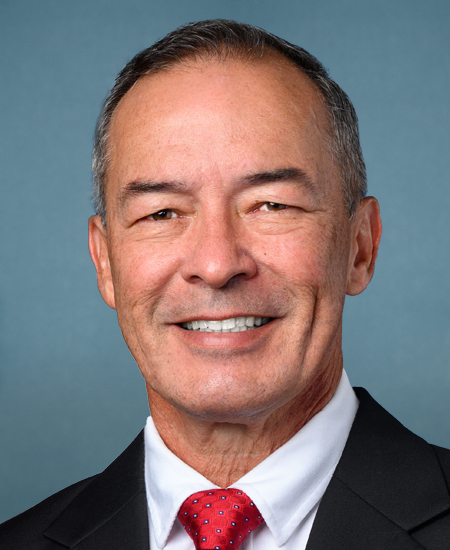
Rep. James C. Moylan
Sponsored bills
Maddy summaryThis bill appropriates $11.5 billion from unobligated Treasury funds for fiscal year 2023 to replenish the Disaster Relief Fund. The funds directly support disaster relief efforts under the Robert T. Stafford Disaster Relief Act for major disasters declared by the federal government. The bill designates these funds as an emergency requirement under budget rules, allowing them to bypass standard budget scoring procedures. It does not create new policy or alter eligibility for disaster assistance - only provides funding to maintain existing relief programs.
Maddy summaryThis bill establishes the John Lewis Civil Rights Fellowship Program within the Fulbright exchange system to honor civil rights leader John Lewis and advance U.S. foreign policy through global civil rights education. It creates a new fellowship for U.S. early- to mid-career professionals, selecting at least 25 annually for 10-month programs to conduct research or intern with approved organizations in countries participating in Fulbright exchanges. Fellows must complete a work plan, attend an orientation in Washington, DC, and present findings at an annual summit, with the State Department covering costs for travel, lodging, and expenses. The program requires annual reports on participant demographics and program effectiveness, and expires seven years after enactment.
Maddy summaryHR 1640, the Save Our Gas Stoves Act, prevents the Department of Energy from implementing energy efficiency standards for gas stoves that would make them unavailable in the U.S. market. It amends federal law to require that any new standard for gas stoves must not result in the unavailability of gas stove types, directly affecting gas stove manufacturers and consumers who rely on these appliances. The bill specifically blocks the implementation of the 2023 proposed rule (Energy Conservation Program: Energy Conservation Standards for Consumer Conventional Cooking Products) and any similar rule. This is a policy change focused on maintaining the availability of gas stoves by altering the criteria for energy standard approval.
This bill extends the tax credit for expenditures to provide access to disabled individuals to U.S. possessions and makes such credit refundable for bona fide residents of Puerto Rico. The bill permits Puerto Rican residents a refundable tax credit for 21% of amounts otherwise allowable as a tax deduction for expenditures to remove architectural and transportation barriers to the handicapped and elderly. It also requires payment to U.S. possessions for taxable years beginning after December 31, 2022, of an amount equal to the their losses due to the application of the credits and deductions by this bill.
Maddy summaryHR 3873 establishes "Ocean Innovation Clusters" in coastal and Great Lakes regions to foster collaboration among businesses, academic institutions, and government entities for sustainable ocean-related industries (the "Blue Economy"). The bill designates at least seven clusters, prioritizing those serving diverse, underserved communities and promoting economic resilience in areas like fishing, tourism, and renewable energy. It authorizes $50 million annually (2024-2029) for grants to support cluster operations and build physical collaboration centers focused on workforce development, sustainable seafood supply chains, and ocean energy innovation. These clusters aim to create jobs and support small businesses through shared resources, partnerships, and targeted economic growth initiatives.
Maddy summaryThis resolution (HRES 443) is a symbolic gesture by the U.S. House of Representatives supporting National Poppy Day, observed on the Friday before Memorial Day. It formally endorses the tradition of wearing red poppies to honor veterans who died serving in the U.S. Armed Forces, referencing the poppy’s historical symbolism from World War I. The resolution encourages all U.S. citizens, residents, and visitors to wear a poppy that day as a sign of appreciation for military service. It does not create new laws, programs, or obligations - it is purely a statement of recognition.
Corporal Fernando Ruiz Baltazar Posthumous Citizenship Act of 2023 This bill extends posthumous citizenship to an otherwise qualified noncitizen who enlisted, reenlisted, extended enlistment, or was inducted into the U.S. Armed Forces in the Philippines and died as a result of such active duty service during the period beginning September 1, 1939, and ending December 31, 1946. The executive department under which an individual served must determine whether the individual satisfied the requirements for posthumous citizenship under this bill. Specified naturalization and other posthumous benefit provisions shall not apply to the surviving spouse, child, or parent of such an individual.
Maddy summaryThis bill creates a new tax credit for expenses related to "qualified access technology for the blind" under the Internal Revenue Code. It allows taxpayers to claim a credit of up to $2,000 per year (adjusted for inflation) for costs paid for hardware, software, or IT that converts visual information into formats usable by blind individuals, covering the taxpayer, their spouse, or a dependent who is blind. The credit is limited to $2,000 over any three consecutive tax years per blind individual and expires after 2028. It directly affects blind individuals and their families who purchase qualifying assistive technology. The credit cannot be claimed for expenses already covered by other tax deductions or credits.
Maddy summaryThis bill creates a new Department of Homeland Security (DHS) joint task force specifically focused on stopping opioid trafficking at the border, particularly fentanyl and synthetic opioids. It allows DHS to partner directly with private sector organizations (like pharmaceutical or logistics companies) to temporarily assign their employees to the task force, with the private companies covering all costs - without requiring standard federal advisory committee processes. The bill also requires DHS to collaborate with other federal, state, local, tribal, and international agencies on this effort and to report annually on resource gaps and how well the task force is coordinating with others. The primary effect is to enhance DHS's border security operations targeting opioid smuggling through new private-sector partnerships and interagency coordination.