

Maddy summaryThis bill directs the U.S. Treasury to mint commemorative coins marking the Marine Corps' 250th anniversary in 2025. It authorizes three coin types: $5 gold coins (max 50,000), $1 silver coins (max 400,000), and half-dollar coins (max 750,000), with surcharges of $35, $10, and $5 respectively. The surcharge proceeds will fund the Marine Corps Heritage Center's educational programs, with no net cost to taxpayers as the Treasury must recover all minting costs through the surcharges. The coins can only be issued during 2025, and the Treasury must ensure all costs are covered before distributing funds to the Heritage Foundation.
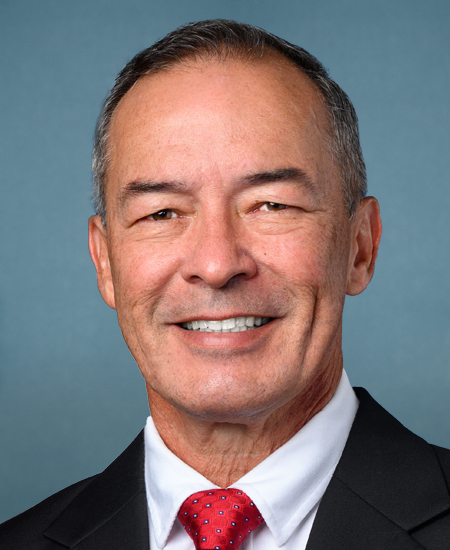
Rep. James C. Moylan
Sponsored bills
Maddy summaryThis bill amends the Wilderness Act to explicitly permit U.S. Customs and Border Protection (CBP) to access wilderness areas for border security purposes. It allows CBP to conduct specific activities including building roads and barriers, using motor vehicles and aircraft, conducting patrols, and deploying technology within designated wilderness areas. The bill requires CBP to carry out these activities "to the extent possible" in a way that protects the wilderness character of the land. The direct effect is on wilderness areas (such as national parks and protected lands) and CBP's operational authority within them.
Maddy summaryHR 4157, the "Not Just a Number Act," requires the Department of Veterans Affairs (VA) to produce annual reports on veteran suicide rates and their connection to VA healthcare and benefits. The reports must break down suicide rates by age, gender, and race, and examine how engagement with VA services (like Vet Centers, healthcare enrollment, benefits claims, and housing loans) correlates with suicide trends. The bill also mandates a VA toolkit for state/local coroners to improve veteran suicide death reporting, and a study on creating a dedicated VA suicide prevention office. These measures aim to standardize data collection and identify effective prevention strategies, directly affecting VA operations, congressional oversight, and veteran care systems.
Maddy summaryHR 4700, the Fair Shipping for Non-Contiguous Areas Act of 2023, prohibits private shipping companies from charging higher fees to ship goods to Alaska, Hawaii, or U.S. territories than they charge for identical shipments within the contiguous U.S. (48 states plus D.C.). It also requires these companies to include non-contiguous areas in their shipping policies and not exclude them from service. The bill exempts the U.S. Postal Service and shipments of consumer or producer goods valued over $10,000. This directly affects residents and businesses in non-contiguous areas who currently face higher shipping costs for everyday items. The law aims to standardize shipping fees for these regions without altering existing rates for very high-value goods.
Maddy summaryThis bill modifies federal sentencing for youth under 18 who were trafficked, abused, or assaulted before committing a violent offense. It allows courts to sentence below statutory minimums and suspend portions of sentences to account for trauma, applying only to cases with clear evidence of prior victimization under specific laws (like sex trafficking). The law directs the U.S. Sentencing Commission to update guidelines to align with these changes, effective only for convictions after the bill’s enactment. It directly affects juvenile offenders with documented prior victimization, focusing on trauma-informed sentencing rather than standard penalties.
Maddy summaryHR 4708, the H-2 Improvements to Relieve Employers Act, streamlines U.S. visa processes for agricultural (H-2A) and non-agricultural (H-2B) workers. It extends the validity of employer certifications and petitions for these visas from one year to three years, reducing administrative burdens. The bill also allows interview waivers for workers renewing status within four years of their previous visa expiration. Additionally, it requires the Department of Labor to publish seasonal employment data on its website at an employer's request, enhancing transparency for seasonal hiring. These changes directly affect U.S. employers seeking temporary foreign workers and the workers themselves.
Maddy summaryThis bill requires the Department of Veterans Affairs (VA) to reimburse veterans for travel expenses at the same rate used for government employees traveling on official business. It directly affects veterans receiving VA medical care who travel using personal vehicles, ensuring their mileage reimbursement matches the federal standard set by the General Services Administration. The key change aligns the VA's reimbursement rate with the existing federal government rate (currently 41.5 cents per mile), eliminating the previous fixed rate and requiring annual updates to reflect current government standards.
Maddy summaryThis bill, HR 1282 (Major Richard Star Act), expands benefits for certain military retirees by allowing them to receive both veterans' disability compensation and military retirement pay simultaneously. It specifically affects combat-related disabled retirees under Chapter 61 of the military retirement system who have fewer than 20 years of service. The key change removes the automatic reduction of military retirement pay when these retirees also receive disability compensation, as amended in Section 1413a(b)(3) of Title 10. Technical updates to the law’s structure and effective date (starting after enactment) complete the provisions.
Maddy summaryThis bill prohibits entities controlled by Iran, North Korea, China, or Russia from purchasing or leasing agricultural land in the United States, including both public land managed by federal agencies and private land. It also bars such entities from participating in most U.S. Department of Agriculture programs (with exceptions for food safety, health, and labor safety initiatives). The bill expands reporting requirements to include leases and security interests in foreign land ownership, mandates public online disclosure of foreign ownership data with specific details, and imposes penalties like liens on land for violations. Additionally, it requires annual reports to Congress on risks of foreign ownership, enforcement effectiveness, and foreign investment motives.
Maddy summaryHRES 580 is a symbolic resolution expressing the House's support for designating "Journeyman Lineworkers Recognition Day." It honors lineworkers who work in hazardous conditions (such as at heights near live wires) and respond to disasters like hurricanes and wildfires, while recognizing their contributions and the legacy of Henry Miller, an early electrical worker who died on the job. The resolution has no legal effect - it solely encourages public recognition and reflection on these workers' service.