

Maddy summaryHRES 831 is a symbolic congressional resolution supporting October as "National Domestic Violence Awareness Month." It does not create new laws or allocate funding, but formally expresses the House of Representatives' support for the goals of raising awareness about domestic violence. The resolution urges Congress to continue highlighting domestic violence's impact and backing programs that prevent and address it. It directly affects public awareness efforts and serves as a non-binding statement of congressional support for victims and advocacy organizations.
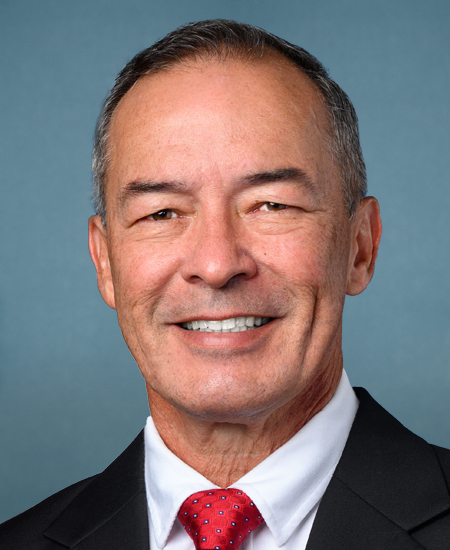
Rep. James C. Moylan
Sponsored bills
Maddy summaryThis bill requires the Department of Defense (DoD) to request state or EPA permit modifications for military facilities to mandate quarterly testing of PFAS chemicals in stormwater runoff and implement controls to reduce discharges. It directly affects DoD facilities, which use PFAS-containing firefighting foams, and the states or EPA issuing their stormwater permits. Key provisions include a one-year deadline for permit revisions (requiring quarterly PFAS monitoring and best management practices) and dedicating at least 1% of annual PFAS remediation funds for stormwater testing at military sites. The bill aims to reduce PFAS pollution from military operations into waterways through enforceable monitoring and control measures.
Maddy summaryThe Rape Kit Backlog Progress Act of 2023 requires states and local governments receiving federal crime-fighting grants to conduct comprehensive inventories of all sexual assault kits (both tested and untested) and report key details to the Attorney General. It mandates that jurisdictions document victim consent for testing, upload DNA results to the national CODIS database, establish electronic tracking systems for victims, and implement victim notification protocols. States must submit these reports annually to maintain eligibility for federal grants, with the Attorney General publishing a public annual report on backlog status and compliance. This law directly affects state/local law enforcement agencies and prosecutors handling sexual assault cases, aiming to improve transparency and accountability in processing evidence.
Maddy summaryHRES 787 is a procedural resolution that elects Representative Patrick T. McHenry (R-NC) as Speaker pro tempore of the U.S. House of Representatives. This appointment is temporary, lasting until November 17, 2023, or until a new Speaker is elected, whichever occurs first. The resolution does not change substantive laws but establishes a temporary presiding officer for House proceedings during leadership transitions. It directly affects House operations and leadership continuity, with no impact on constituent policies or federal programs.
Maddy summaryHRES 771 is a non-binding resolution expressing the U.S. House of Representatives' support for Israel following Hamas' October 7, 2023, attack. It condemns Hamas' actions, affirms Israel's right to self-defense, and calls for the immediate release of hostages. The resolution also urges enforcement of existing laws restricting aid to terrorists and sanctions against Iran for supporting Hamas. It does not create new policies or allocate funds, as it is a symbolic statement of congressional support.
This resolution expresses unwavering support for Israel and a readiness to consider urgent requests for additional assistance to Israel to defend its people and sovereignty. The resolution also states that (1) Israel is entitled to act in self-defense against Hamas, the Palestinian Islamic Jihad, and associated forces, as well as their state sponsors; and (2) the cross-border attacks and kidnappings against Israel constitute acts of international terrorism and aggression.
Maddy summaryThis bill requires the Department of Defense to report on at-home child care programs for military families, including program changes and challenges military spouses face with licensing or relocation. It also mandates a feasibility study to standardize licensing requirements, remove barriers to program expansion, and support military spouse employment in these roles. The report and study must be submitted to congressional committees within 39 months and 180 days after the report, respectively. The bill directly affects military spouses seeking child care employment by addressing systemic hurdles in accessing these jobs.
Maddy summaryHR 6001 designates Niger, Mali, Burkina Faso, and Chad as "qualified hazardous duty areas" for tax purposes, treating military service there as if performed in a combat zone. This bill directly affects members of the U.S. Armed Forces serving in those countries, granting them access to specific tax benefits previously reserved for combat zones. Key provisions include excluding combat pay from income tax, providing death benefit protections, and allowing tax filing extensions similar to those for service in active combat zones. The change applies to military members eligible for hostile fire pay under Section 310 of Title 37, U.S. Code, during the period such eligibility exists. The bill takes effect upon enactment.
Maddy summaryThe Streamlining Federal Grants Act of 2023 requires federal agencies to simplify grant application and reporting processes, with a focus on improving access for underserved communities, rural areas, and historically excluded organizations like faith-based groups. Key mechanisms include designating senior agency officials for grants, creating a Grants Council to coordinate improvements, and mandating plain-language notices of funding opportunities under 500 words. Agencies must develop annual plans to streamline procedures, ensure language accessibility for limited-English speakers, and report progress to Congress. The bill directly affects federal agencies managing grants and their recipients, aiming to reduce administrative burdens while expanding equitable access to federal funding.
Maddy summaryHR 5931 requires the U.S. Department of Defense to provide Congress with a briefing within 180 days of the bill's enactment. The briefing must detail Chinese activities in Africa that the Defense Department identifies as threatening U.S. national security, along with the department's plan to counter those actions. This bill directly affects the Department of Defense, Congress, and U.S. national security policy regarding Africa. It is a procedural measure focused on information gathering, not on creating new regulations or funding. The bill does not specify the content of the briefing or the nature of the Chinese activities, only mandating the delivery of the information to Congress.