

Maddy summaryHR 537 authorizes a Congressional Gold Medal to honor 60 diplomats who saved Jewish lives during the Holocaust by issuing visas and passports against their governments' orders, risking expulsion and personal danger. The medal will be presented to the next of kin of these diplomats, alongside representatives from their home countries, and permanently displayed at the United States Holocaust Memorial Museum. The bill also permits the sale of bronze duplicates to cover production costs, with proceeds going to the U.S. Mint. This legislation recognizes the diplomats' humanitarian actions without creating new government programs or altering existing laws.
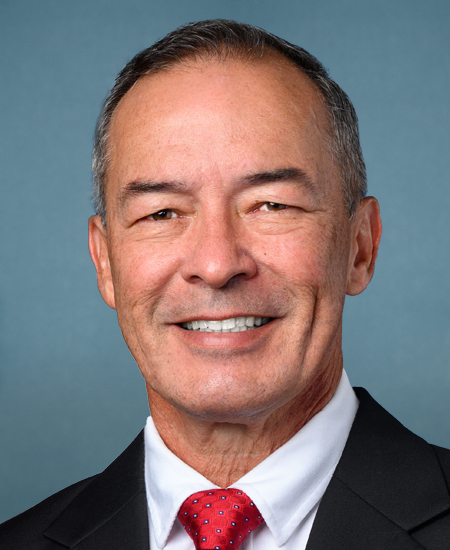
Rep. James C. Moylan
Sponsored bills
Maddy summaryHRES 1290 is a symbolic resolution recognizing June 12, 2024, as "Philippines Independence Day" to commemorate the 126th anniversary of the Philippines' independence from Spain on June 12, 1898. It honors the historical significance of this date and reaffirms the longstanding U.S.-Philippines relationship, including support for Filipino American contributions and cooperation. The resolution has no legal effect or policy changes - it is purely a commemorative gesture by the U.S. House of Representatives.
Maddy summaryThe Do or Dye Act bans specific artificial food color additives from use in food products. It deems Red No. 40, Yellow No. 5, Yellow No. 6, and any substantially similar dyes "unsafe" under federal law, making any food containing them adulterated. This directly affects food manufacturers and producers who currently use these dyes in products like candies, beverages, and processed foods. The bill changes the legal status of these additives, requiring manufacturers to reformulate products to comply with the new ban.
Maddy summaryHR 8688, the Stop Spoonfuls of Fake Sugar Act of 2024, would amend the Federal Food, Drug, and Cosmetic Act to classify human food containing high-fructose corn syrup as "adulterated" and therefore prohibited from sale. This would directly affect food manufacturers and retailers selling products with high-fructose corn syrup, requiring them to reformulate or remove this ingredient. The key provision adds a new subsection (j) to Section 402, making any human food containing high-fructose corn syrup illegal for sale, with the rule taking effect one year after the bill becomes law. The bill focuses on a specific ingredient change in food safety regulation, not broader dietary policy.
Maddy summaryThe VA Appeals Reform Act of 2024 improves the veterans' appeals process by making it more transparent and efficient for veterans seeking benefits. It requires the VA to provide veterans with key documents (like their claims file, contact information for adjudicators, and evidence) within 90 days of request, and establishes new deadlines for processing claims. The bill also creates clearer procedures for higher-level reviews, defines "clear and unmistakable error" more precisely, and limits attorney fees for filing appeals to $200 or 20% of the initial payment, whichever is less. Additionally, it mandates an electronic case management system for veterans' appeals and changes how the Court of Appeals for Veterans Claims reviews decisions. These changes directly affect veterans filing appeals for benefits and VA employees processing those appeals.
Maddy summaryHR 8466 extends the Affordable Connectivity Program (ACP) through 2024 with $6 billion in funding, directly affecting low-income households receiving subsidized broadband internet. It strengthens eligibility verification by requiring use of the National Verifier, limiting eligibility to households with school meal program participation (not just provider programs), and mandating collection of partial Social Security numbers for verification. The bill adds new antifraud controls and performance measures for the FCC, requiring a report on program effectiveness within a year. It also allows households switching providers to maintain benefits only if they've used the current service for at least 180 days.
Maddy summaryThis bill creates a 40% tax credit for businesses investing in new or upgraded facilities manufacturing critical supply chain items like pharmaceuticals, semiconductors, medical devices, and medical countermeasures. The credit applies to tangible equipment (like machinery) placed in service after December 31, 2024, for facilities primarily producing these designated goods. It specifically targets U.S. manufacturers of nationally vital products, excluding facilities already claiming other tax credits (like electricity production credits). The credit aims to incentivize domestic production of items deemed essential for public health, national security, and economic resilience.
Maddy summaryHR 8474 establishes new, tiered monthly incentive pay rates for military personnel performing explosive ordnance disposal (EOD) duty in the Army, Navy, Marine Corps, Air Force, or Space Force. It provides increased pay based on years of continuous EOD service, ranging from $125 for under 2 years up to $1,000 for 10+ years (with reduced rates after 17 years), and applies to both active duty and reserve component members performing EOD duty under orders. The bill directly affects service members holding EOD duty designators who perform this specialized work on a career basis. The pay rates take effect six months after the bill's enactment, with specific annual thresholds defined in the legislation.
Maddy summaryHR 8473, the *Total Army Analysis Explosive Ordnance Disposal Domestic Response Act of 2024*, requires the U.S. Army Secretary to report to Congress if specific domestic security missions are excluded from the Army’s force structure planning (Total Army Analysis). These missions include supporting civilian emergencies (Defense Support of Civil Authorities), protecting high-value personnel (Very Important Personnel Protection Support Activity), and related forces. The report must explain why a mission was excluded and analyze the resulting risk to homeland security. This bill adds transparency to military planning for domestic emergency response, ensuring Congress is informed about potential gaps in readiness.
Maddy summaryThis bill designates the Deputy Under Secretary of the Army as the principal official responsible for the Army's explosive ordnance disposal (EOD) operations. It requires this official to oversee strategic planning, funding, personnel management, and support for EOD activities across military and civilian contexts. The bill mandates annual congressional briefings on EOD funding needs and personnel levels. It directly affects the Army's EOD enterprise by clarifying leadership structure and reporting requirements, without changing funding levels or operational policies. (HR 8476, Title: Department of the Army’s Explosive Ordnance Disposal Enterprise Act of 2024)