

Maddy summaryHRES 1056 is a non-binding House resolution recognizing recent trilateral cooperation among the United States, Japan, and South Korea. It formally acknowledges specific collaborative efforts, including resumed summitry, joint military exercises, shared missile warning systems, economic partnerships, and coordinated responses to regional challenges like North Korea and crises in Sudan and Israel. The resolution does not create new policies or funding but expresses congressional support for strengthening this alliance framework. It highlights the importance of continued cooperation across diplomatic, security, and economic domains to promote stability in the Western Pacific. The resolution was introduced by multiple House members and referred to the Foreign Affairs Committee.
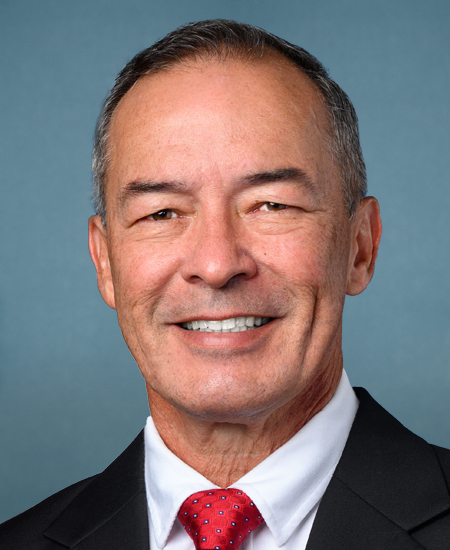
Rep. James C. Moylan
Sponsored bills
Maddy summaryHR 8312, the Combat Veterans Pre-Enrollment Act of 2024, creates a 3-year pilot program allowing eligible combat veterans to pre-enroll in the VA healthcare system before separating from active duty. It directly affects service members who would qualify for VA healthcare upon separation and meet specific combat-related service criteria under existing law. The bill establishes a mechanism during the 180 days before separation, requiring coordination between VA, Defense, and Homeland Security to facilitate pre-enrollment. The program includes reporting requirements for participation rates, demographics, and a GAO evaluation of effectiveness after the pilot ends in 2027.
Maddy summaryThis bill requires the Department of Defense to pay prime contractors 5% of the value of subcontracts awarded to qualifying small businesses in Guam, American Samoa, and the Northern Mariana Islands. To qualify, a business must be at least 51% owned by U.S. citizens, have its main office in one of these territories, and employ at least 50% of its staff there. Prime contractors must apply for the payment after entering such subcontracts, and annual reports will track participation, economic impact, and recommendations for improvement. The policy applies to new contracts starting from the bill's enactment date.
Maddy summaryHR 7850, the *Eliminating Access Barriers to Conservation Act*, modifies payment rules in a federal conservation program to better serve farmers and landowners in high-cost areas. It amends the Food Security Act to allow the Secretary to waive payment limits for contracts in Alaska, Hawaii, American Samoa, Guam, the Northern Mariana Islands, Puerto Rico, and the U.S. Virgin Islands. This waiver authority directly affects agricultural producers in these territories and high-cost regions who previously faced payment restrictions under the program. The key provision removes a barrier by enabling tailored financial support for conservation efforts in geographically or economically challenging locations.
Maddy summaryHR 7015, the CAREERS Act, expands federal funding for workforce training programs to better serve rural communities. It modifies eligibility to include career and technical education schools and requires training programs to align with specific rural industry sectors like broadband, healthcare, agriculture, manufacturing, and water services. The bill mandates grantees to report on employment outcomes for participants and addresses rural workforce challenges such as worker displacement and youth migration. This directly affects rural workforce development boards, training providers, and workers in designated rural industries seeking job skills and career pathways.
Maddy summaryThis bill amends a provision in U.S. law (49 U.S. Code § 41731) to expand eligibility for essential air service (EAS) subsidies. It adds Guam and the Northern Mariana Islands to the list of territories already covered under the exception, alongside Alaska and Hawaii. The change directly affects air carriers providing essential air service to these territories, ensuring they qualify for the same EAS program benefits as Alaska and Hawaii. This is a technical adjustment to the eligibility criteria, not a new policy.
Maddy summaryHR 9050 creates a new grant program under the U.S. Code to help veterans living in highly rural areas access medical care. The bill authorizes $3 million annually (2025-2030) for grants up to $50,000 each to state veterans agencies or recognized veterans service organizations. These grants can cover transportation costs for veterans traveling to Department of Veterans Affairs medical facilities, with "highly rural" defined as areas with fewer than seven people per square mile or specific U.S. territories like Guam or Puerto Rico (excluding San Juan). The program requires no matching funds from grant recipients and directly benefits veterans in remote locations who face transportation barriers to care.
Maddy summaryHRES 1412 is a formal congressional resolution condemning the People’s Republic of China Coast Guard for specific actions against multiple nations. It cites recent incidents, including harassment of Malaysian oil projects, an attack on Philippine soldiers, standoffs near Japan’s Senkaku Islands, and the interception of a Taiwanese fishing vessel. The resolution demands China respect international maritime law, calls for global condemnation of its actions, and urges the U.S. to strengthen alliances with partners like Japan and the Philippines while holding Chinese officials accountable. As a symbolic resolution (not a binding law), it expresses U.S. policy stance but does not impose new legal requirements.
Maddy summaryHR 9243, the Aviation Medication Transparency Act of 2024, requires the Federal Aviation Administration (FAA) to create and maintain a publicly accessible online list of medications safe for pilots and air traffic controllers (airmen) to take while holding medical certifications. The list must be developed with input from pilots, controllers, and other stakeholders, include "Do Not Issue" medications, specify duty limitations for new medications, and be distributed when airmen first apply for certification. The FAA must publish the initial list within one year of the bill's enactment and update it annually thereafter. This law directly affects airmen seeking or holding medical certifications by providing clear, accessible information about medication safety for aviation duties.
Maddy summaryThe SWIM Act of 2024 creates a new tax deduction for basic water safety and swimming instruction expenses. It allows taxpayers to deduct up to $500 per year ($1,000 for joint returns or heads of household) for qualifying lessons focused on water safety and competency - not competitive swimming. Expenses include lesson fees and up to $100 per item for necessary equipment. The deduction applies to expenses paid for individuals participating in these specific safety-focused programs. This change affects taxpayers with children or dependents enrolled in approved basic swimming and water safety courses.