

Maddy summaryHR 7130, the FAIR Labels Act of 2024, requires clear labeling for plant-based and lab-grown products marketed as meat or poultry. It mandates that products not containing actual meat or poultry - such as plant-based "burgers" or "chicken" alternatives - must prominently display "imitation" or "cell-cultured" on labels, alongside disclaimers stating they do not contain meat or poultry. This applies to all such products sold in interstate commerce, with no exceptions allowed. The bill also specifically requires "cell-cultured" or "lab-grown" labeling for meat grown from animal cells outside a live animal, while clarifying that existing meat inspection rules still apply to conventional meat products.
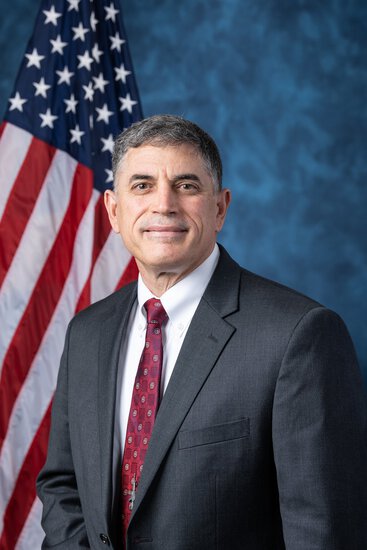
Rep. Andrew S. Clyde
Sponsored bills
Maddy summaryThis resolution aims to block a rule issued by the National Highway Traffic Safety Administration (NHTSA) that sets new fuel efficiency standards for passenger cars, light trucks (starting in 2027), and heavy-duty pickup trucks/vans (starting in 2030). If passed, it would prevent this specific rule from taking effect by disapproving it under a congressional review process. The rule directly affects vehicle manufacturers by requiring them to meet these updated fuel economy targets for future model years. This is a procedural resolution, not a new law, focused solely on halting the implementation of the existing NHTSA rule.
Maddy summaryThe Respect State Housing Laws Act amends the CARES Act by removing subsection (c) of Section 4024, which governed notice requirements for housing assistance programs. This change eliminates a specific federal notice provision that applied to tenants and landlords receiving CARES Act housing aid. The bill directly affects the administrative process for housing assistance under the CARES Act, streamlining or removing a requirement for notice delivery. It modifies an existing provision without creating new policy or altering broader housing protections.
Maddy summaryHJRES 165 is a congressional resolution seeking to block a Department of Education rule issued in April 2024 that updated protections against sex discrimination in schools receiving federal funding. The resolution aims to disapprove this specific rule (published as 89 Fed. Reg. 33474), which would have required schools to address sex-based discrimination in educational programs. If passed, the rule would no longer be in effect, meaning schools would not need to comply with its requirements. This resolution directly affects all schools and educational programs receiving federal financial assistance, as it targets the implementation of the new nondiscrimination standard.
Maddy summaryThe SAVE Act (HR 8281) requires U.S. citizens to provide documentary proof of citizenship when registering to vote in federal elections. It defines acceptable proof as documents like passports, REAL ID-compliant IDs, military IDs, or birth certificates, and mandates that states verify citizenship using information from government agencies like DHS and Social Security. States must establish processes for voters without required documentation to provide an attestation under penalty of perjury. The law also requires states to remove noncitizens from voter rolls when verified evidence shows they're not citizens. This bill directly affects all applicants registering to vote in federal elections and state election officials who must implement these requirements.
Maddy summaryHR 9034, the Secret Service Accountability Act, would prevent federal funds from being used for the salary or expenses of Secret Service Director Kimberly Cheatle. This bill directly affects the current director by blocking all federal funding for her compensation and related costs. The key provision prohibits any federal money from covering her salary or expenses, regardless of other laws. This is a funding restriction targeting the director's position, not a change to the Secret Service's operations or public policies.
Maddy summaryHJRES 164 is a congressional resolution seeking to block a rule issued by the Department of Commerce regarding firearms license requirements. It directly targets the rule published in the Federal Register (89 Fed. Reg. 34680), which would have revised licensing procedures for firearms dealers. If passed, the resolution would prevent this rule from taking effect by invoking the congressional disapproval process under federal law. The bill does not create new regulations but aims to halt an existing rule affecting gun license applicants and dealers.
Maddy summaryThis bill prohibits federal funding for elementary and secondary schools that partner with Chinese government-funded programs, including Confucius Institutes, Confucius Classrooms, or other entities receiving support from China's government (e.g., through teaching materials, personnel, or funds). It directly affects schools with these specific ties to the People's Republic of China. The prohibition takes effect one year after enactment, with the Education Secretary required to notify schools and provide compliance guidance within 90 days of enactment. The policy change blocks federal education funds for schools meeting the defined criteria, without altering existing educational content or curriculum standards.
Maddy summaryThis bill amends federal law to clarify that veterans may lawfully carry firearms on Department of Veterans Affairs (VA) property, provided it complies with applicable state and local laws. It updates Title 18, U.S. Code, to explicitly include veterans' lawful firearm carrying on VA property as an exception to certain restrictions. The bill also adds a new provision to Title 38 confirming that such lawful possession does not violate VA regulations or penalties. It directly affects veterans using VA facilities (like hospitals or offices) and ensures VA policies align with state firearm laws where permitted. The change focuses on clarifying existing legal boundaries without altering state gun laws or expanding firearm access.
Maddy summaryHR 8838, the Free Speech Defense Act, prohibits federal agencies from directing or influencing social media companies to remove content, label posts as "misinformation," share user data, or engage in content moderation. It bans federal funding for entities that classify content, restricts agencies from accepting free social media advertising (except for immediate public safety threats), and terminates existing public-private partnerships for content monitoring. The bill applies to all federal agencies and social media companies as defined by the legislation, aiming to prevent government interference in online content decisions. Key provisions include banning agency directives to suspend accounts, suppress content, or share user demographics with platforms, with penalties for violations.