

Maximum Pressure Act This bill expands sanctions and economic penalties on Iran. It also restricts the President from unilaterally lifting or waiving the sanctions or penalties and increases congressional oversight of them. Specifically, the bill requires the President to impose visa- and asset-blocking sanctions. Additionally, it modifies existing sanctions, including by (1) providing statutory authority for executive orders imposing sanctions; (2) applying sanctions to additional sectors of Iran's economy; and (3) broadening sanctionable conduct to cover, for example, assisting Iran with the acquisition of ballistic missiles and the complicity of Iranian officials in human rights violations in specified countries. The bill also requires reporting on licenses that authorize activities subject to sanctions. The bill prohibits U.S. representatives at the International Monetary Fund from voting to allow Iran's access to special drawing rights (a currency support tool) and places restrictions on financial transactions with Iran. The restrictions include requiring domestic financial institutions to implement special measures with respect to foreign financial institutions that conduct significant transactions connected to the Instrument in Support of Trade Exchanges (a European mechanism that bypasses U.S. sanctions when carrying out trade with Iran). The Department of State must maintain the Islamic Revolutionary Guard Corps' designation as a terrorist organization and must designate Ansharallah (or Houthis), which operates in Syria, as a foreign terrorist organization. The bill also requires reports on U.S. sanctions concerning Iran, the status of Iran's nuclear weapons program, and other matters.
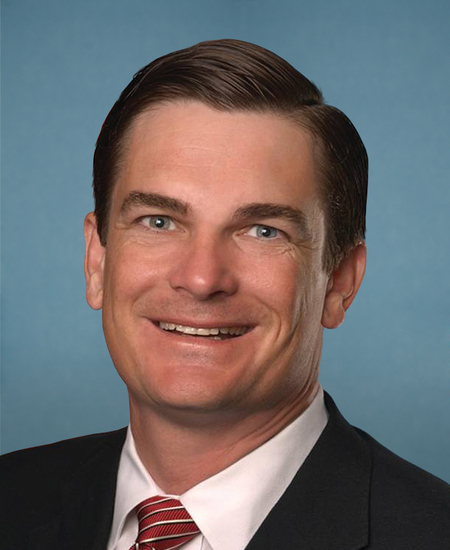
Rep. Austin Scott
Sponsored bills
Drug Cartel Terrorist Designation Act This bill directs the Department of State to designate the Reynosa/Los Metros faction of the Gulf Cartel and the Cartel Del Noreste faction of Los Zetas as foreign terrorist organizations and to submit a detailed report on those drug cartels and any other cartels it may identify. Based on this report, the State Department must designate as a foreign terrorist organization any such identified cartel (or faction thereof) that meets certain criteria for designation as a foreign terrorist organization.
Competition in Professional Baseball Act This bill removes the limited exemption from the antitrust laws for professional baseball clubs. For purposes of this bill, the term antitrust laws means laws to protect against unlawful restraints and monopolies (Clayton Act) and to protect against unfair methods of competition (Federal Trade Commission Act).
Protect Our Police Act This bill provides statutory authority for Executive Order 13809, which was issued on August 28, 2017. The order revoked a 2015 executive order establishing an interagency working group to recommend improvements to the process through which state, local, and tribal law enforcement agencies acquire controlled equipment (e.g., firearms or military-style equipment) from the federal government.
COVID-19 Border Protection (CBP) Act This bill requires the Department of Homeland Security (DHS) to devise and implement a strategy to ensure that no alien with COVID-19 (i.e., coronavirus disease 2019) in DHS or Department of Health and Human Services custody may be released into the community during a public health emergency related to COVID-19. Funds previously provided to the Department of State for supporting international efforts to help migrants and refugees respond to COVID-19 shall be transferred to DHS to implement this strategy.
Prohibiting IRS Financial Surveillance Act This bill prohibits the Department of the Treasury from requiring a financial institution to report the transfers into and out of a financial account. This prohibition does not apply to laws or regulations in effect on October 1, 2021.
Israel Relations Normalization Act of 2021 This bill requires the Department of State to take certain actions promoting the normalization of relations between Israel, Arab states, and other relevant countries and regions. Specifically, the State Department must develop a strategy on expanding and strengthening the Abraham Accords (the term used to refer collectively to agreements between Israel and the United Arab Emirates and between Israel and Bahrain marking the public normalization of relations between the two Arab countries and Israel). The strategy must include a description of how the U.S. government will encourage further normalization of relations with Israel. In addition, the State Department must report on options for U.S. international efforts to promote the strengthening of ties between Israel, Arab states, and other relevant countries and regions. The State Department must also report on the status of the normalization of relations with Israel, including information on (1) laws that punish individuals for people-to-people relations with Israelis (i.e., anti-normalization laws), and (2) evidence of steps taken by Arab governments toward permitting or encouraging normalized relations between their citizens or residents and Israeli citizens.
Working Dog Commemorative Coin Act This bill directs the Department of the Treasury to mint and issue 50,000 $5 gold coins, 500,000 $1 silver coins, and 750,000 half-dollar clad coins in commemoration of the service that working dogs provide to society. The designs of the coins minted under this bill shall be emblematic of the contributions of working dogs to society, including in detection, military service, therapy and assistance. Treasury may issue coins only during the one-year period beginning on January 1, 2023. All sales of coins shall include a surcharge, which shall be paid to America's VetDogs for general expenses associated with the fulfillment of its mission.
Truth in Employment Act of 2021 This bill specifies that the prohibitions against unfair labor practices by employers do not require an employer to employ any person who seeks or has sought employment with the employer in furtherance of other employment or agency status.
This resolution opposes the enactment of any federal law that voids state laws that prohibit employers from requiring workers to join a union as a condition of employment.