

American Energy Independence from Russia Act This bill addresses U.S. energy security, the production of oil and gas, and the importation and exportation of oil and gas. Specifically, the President must submit an energy security plan that (1) evaluates U.S. crude oil, petroleum products, and natural gas imports and exports; (2) assesses the energy security risks of such imports; and (3) includes strategies to encourage increased domestic production of crude oil, petroleum products, and natural gas to offset Russian imports. The bill also approves the TransCanada Keystone Pipeline in Phillips County, Montana for the import of oil from Canada to the United States. In addition, the bill grants the Federal Energy Regulatory Commission the authority to approve or deny applications for facilities to export natural gas from the United States to foreign countries or import natural gas from foreign countries. The President and federal agencies must obtain congressional approval before (1) prohibiting or substantially delaying certain new energy mineral leases or permits on federal lands, or (2) withdrawing certain federal lands from mineral and geothermal leasing activities. The Department of the Interior must resume issuing oil and gas leases on federal lands and offshore submerged lands in the Outer Continental Shelf as specified under the bill. Finally, the bill limits the drawdown of petroleum in the Strategic Petroleum Reserve until the Department of Energy develops a plan to increase the percentage of federal lands leased for oil and gas production.
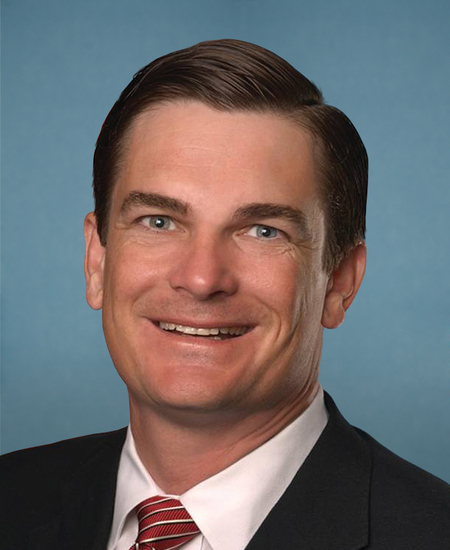
Rep. Austin Scott
Sponsored bills
This resolution expresses that the House of Representatives does not recognize Russia as the inheritor of the Union of Soviet Socialist Republics' seat as a permanent member on the U.N. Security Council, and encourages the Biden Administration to take all necessary action at the United Nations to remove Russia from its position as a permanent member of the Security Council.
This joint resolution nullifies the rule titled Medicare and Medicaid Programs; Omnibus COVID-19 Health Care Staff Vaccination , which was issued by the Centers for Medicare & Medicaid Services on November 5, 2021. The rule requires health care providers, as a condition of Medicare and Medicaid participation, to ensure that staff are fully vaccinated against COVID-19.
This resolution supports the designation of a National FFA Week. It also (1) recognizes the important role of the National FFA Organization (Future Farmers of America) in developing the next generation of leaders who will change the world, and (2) celebrates 70 years of the National FFA Organization's membership magazine.
This bill requires the Food and Drug Administration (FDA) to report to Congress on barriers to the domestic manufacturing of imported active pharmaceutical ingredients, finished drug products, and devices that are critical to public health. The report must recommend strategies to overcome such barriers. The FDA may, to the extent appropriate, implement the strategies.
Stop Funding Our Adversaries Act of 2022 This bill prohibits federal agencies from conducting or supporting, either directly or indirectly, research that will be conducted by China's government, the Chinese Communist Party, or any agent, instrumentality, or entity belonging to or controlled by either entity.
This bill designates the National Museum of the Mighty Eighth Air Force located at 175 Bourne Avenue, Pooler, Georgia (or any successor location), as the official National Museum of the Mighty Eighth Air Force of the United States.
Blockchain Solutions for Small Businesses Act This bill requires the Small Business Administration to study the current and potential uses of blockchain technology (i.e., the technology that supports digital currencies such as Bitcoin) in making loans to qualified small businesses.
Teamwork for Employees and Managers Act of 2022 This bill authorizes employers and employees to establish voluntary employee involvement organizations to address matters of mutual interest within the workplace (e.g., productivity, compensation, benefits, recruitment, and retention). Employee involvement organizations are not considered labor organizations under federal labor laws, and they do not constitute an unfair labor practice by an employer provided the employees are not already represented by a labor organization.
This resolution congratulates the University of Georgia Bulldogs for an exemplary season and winning the 2022 National Collegiate Athletic Association College Football Playoff National Championship game.