

Maddy summaryHR 152, titled the "Hearing Protection Act," actually addresses firearm silencers (suppressors), not hearing protection. The bill removes federal registration requirements for silencers by directing the Attorney General to destroy all existing silencer records within 365 days. It also preempts state laws that tax, register, or impose recordkeeping requirements on silencers, making such state rules unenforceable. Additionally, the bill updates tax codes to include silencers as taxable items and clarifies their definition in firearm laws.
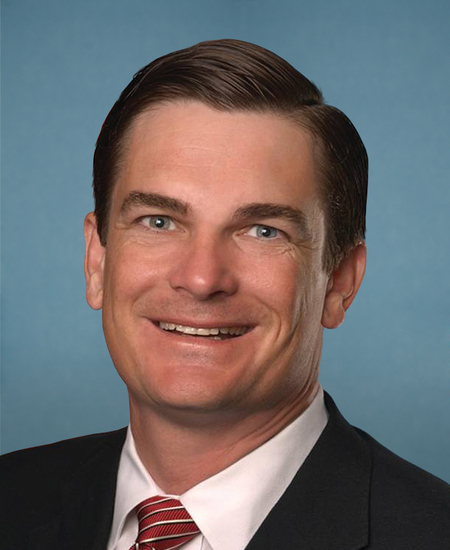
Rep. Austin Scott
Sponsored bills
Maddy summaryHJRES 142 is a congressional disapproval resolution targeting a Department of Labor rule issued on April 25, 2024. It seeks to block the "Retirement Security Rule: Definition of an Investment Advice Fiduciary" (89 Fed. Reg. 32122), which defined standards for financial advisors handling retirement accounts. If passed, this resolution would make the Labor Department's rule ineffective, directly affecting retirement plan advisors and financial institutions subject to the regulation. The bill uses a specific procedural mechanism under Title 5, U.S. Code, to nullify the rule without creating new law.
Maddy summaryHR 1586, the Forest Protection and Wildland Firefighter Safety Act of 2023, exempts certain fire suppression activities from requiring permits under the Clean Water Act. It directly affects federal agencies like the Forest Service, National Park Service, and Bureau of Land Management, as well as state, local, and tribal governments conducting wildfire response. The bill's key provision removes the need for a Section 402 permit under the Clean Water Act when these covered entities discharge fire retardants, chemicals, or water for fire control or prevention. This change streamlines firefighting operations by eliminating a specific permitting step during active wildfire events.
Maddy summaryThis bill extends funding for the existing Public Health Service Act program focused on raising public awareness about Alzheimer's disease and related dementias. It authorizes $33 million annually for fiscal years 2025 through 2029 to support public health education and outreach initiatives. The program directly affects public health organizations and community groups that develop and distribute educational materials about Alzheimer's prevention, diagnosis, and care. The key provision is the multi-year funding extension, ensuring continued support for nationwide awareness efforts without altering the program's core structure.
Maddy summaryHRES 1612 is a procedural resolution that sets the rules for the House to consider three separate bills. It authorizes debate and voting on H.R. 7673 (which would limit energy efficiency standards for clothes washers), S. 4199 (which would add federal judges), and H.R. 5009 (which reauthorizes wildlife conservation programs). The resolution waives objections to consideration, limits debate time to one hour per bill, and specifies how amendments may be offered. It does not change policy itself but streamlines the legislative process for these bills.
Maddy summaryHR 8704 establishes a $10 million grant program administered by the National Fish and Wildlife Foundation to reduce harmful interactions between ocean users (like fishermen, tourism operators, and shipping companies) and North Atlantic right whales and other large cetaceans. The program funds research on avoidance technologies, awareness campaigns about existing whale protections, and infrastructure to share management information. Eligible recipients include states, nonprofits, businesses in maritime sectors, and tribal governments, with priority given to projects that reduce whale harm, involve collaboration among ocean users, and support U.S. small businesses. The bill also freezes existing vessel strike reduction rules until 2030 and requires biennial reports on grant effectiveness.
Maddy summaryThe Working Dog Commemorative Coin Act (HR 807) directs the U.S. Treasury to mint three types of commemorative coins honoring working dogs' service: $5 gold coins, $1 silver coins, and half-dollar coins with specific weight and composition requirements. Each coin will carry a surcharge ($35 for $5 coins, $10 for $1 coins, $5 for half-dollars) that will be paid directly to America's VetDogs to support their programs providing service dogs for veterans, the disabled, and others. The coins will be issued in 2027 with designs reflecting working dogs' roles in military, detection, therapy, and assistance work. The legislation specifies that all surcharge revenue must fund America's VetDogs' operations without creating new government programs. This is a commemorative measure focused on honoring working dogs' contributions through coin sales, with all surcharge funds going to a specific nonprofit organization.
Maddy summaryHRES 837 is a non-binding resolution passed by the U.S. House of Representatives on November 1, 2023, reaffirming U.S. commitment to the Philippines. It specifically calls for invoking the U.S.-Philippines Mutual Defense Treaty if Philippine assets (including Coast Guard vessels) are attacked in the South China Sea, urges joint U.S.-Philippines patrols in the region, and objects to China's disputed territorial claims. The resolution does not create new laws or funding but expresses congressional support for existing defense agreements and diplomatic positions. It directly addresses U.S. foreign policy toward the Philippines and the South China Sea disputes.
Maddy summaryHRES 1582 is a non-binding House resolution honoring the seven individuals who died in the October 19, 2024, gangway collapse on Sapelo Island, Georgia, during the Gullah Geechee Cultural Day celebration. It specifically names the victims - Isaiah Thomas, Carlotta McIntosh, Jacqueline Crews Carter, Cynthia Alynn Gibbs, Queen Welch, William Lee Johnson, Jr., and Charles League Houston - and extends condolences to their families, the Gullah Geechee community, and those injured. The resolution also expresses hope for the recovery of the wounded and thanks first responders. As a commemorative resolution, it contains no policy changes or legislative mechanisms.
Maddy summary# Summary of Veterans' Affairs Bill This comprehensive legislation (likely the 2024 version of the "Senator Elizabeth Dole 21st Century Veterans Healthcare and Benefits Improvement Act") addresses multiple aspects of veterans' benefits and services across several key areas: ## Key Provisions 1. **Healthcare Modernization** - Requires machine-readable format for disability benefit questionnaires - Mandates modernization of electronic health record systems - Improves telehealth access for homeless veterans - Establishes new standards for health information technology 2. **Disability Benefits** - Modernizes disability benefit questionnaires - Implements automatic processing for certain temporary disability ratings - Prohibits non-licensed health care professionals from performing medical disability examinations - Requires provision of agent/attorney contact information to health care professionals 3. **Homelessness Support** - Increases per diem payments for homeless veterans' services - Authorizes use of funds for food, shelter, transportation, and communication technology - Creates a strategic plan for homeless veteran services - Expands access to telehealth services for homeless veterans 4. **Native American Veteran Housing** - Expands direct housing loans for Native American veterans - Creates a Native community development financial institution relending program - Requires adequate personnel dedicated to Native American veteran housing - Expands outreach programs for Native American veterans 5. **Burial and Memorial Affairs** - Expands burial allowances for veterans who die at home while receiving hospice care - Updates definitions of surviving spouse 6. **Employment and Training** - Improves reemployment rights for veterans - Creates Warrior Training Advancement Course - Establishes pilot program for veterans in conservation and resource management positions 7. **Transparency and Accountability** - Requires 90-day notice before implementing policy changes - Improves transparency of educational institutions serving veterans - Establishes new reporting requirements for various programs The bill contains numerous technical corrections, updates to existing statutes, and new provisions designed to improve veterans' access to benefits, healthcare, housing, and employment opportunities, with particular attention to underserved veteran populations including Native American veterans, homeless veterans, and veterans with disabilities.