

Maddy summaryThis bill requires drug manufacturers to pay rebates to Medicare when their "selected drugs" (cancer and complex therapies subject to negotiated maximum fair prices) are used. Manufacturers must calculate rebates based on the difference between current Medicare payment rates (ASP+6) and new negotiated rates (MFP+6), covering the gap for beneficiaries. This lowers patient coinsurance from the current 20% of ASP+6 to 20% of MFP+6 for these specific drugs during the negotiated price period. The rebates are paid to the Medicare trust fund and apply to Medicare Part B beneficiaries using these drugs, directly affecting drug manufacturers and patients covered under Medicare Part B.
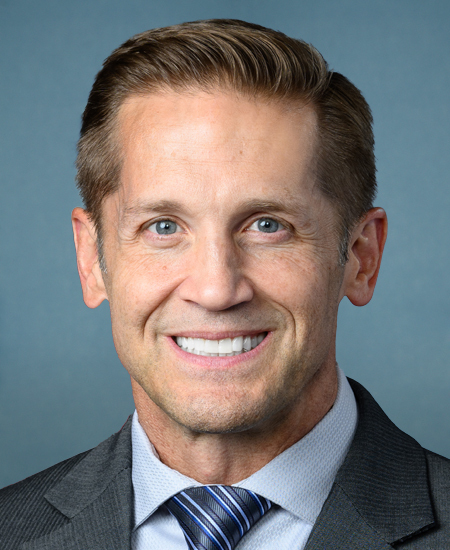
Rep. Richard McCormick
Sponsored bills
Maddy summaryHRES 559 is a non-binding House resolution recognizing the severe humanitarian crisis in the Democratic Republic of the Congo (DRC), where over 6.8 million people have been displaced and millions face starvation. It calls for U.S. support of diplomatic efforts like the Luanda and Nairobi peace processes, sanctions against armed groups (including M23 and ADF), and reforms to combat corruption and conflict mineral exploitation. The resolution directly affects DRC civilians enduring violence and displacement, as well as U.S. and international partners working on peacebuilding and mineral supply chain accountability.
Maddy summaryHRES 551 is a symbolic House resolution supporting the designation of "National Stop SuiSilence Day" on September 25th, during Suicide Prevention Month. It does not create new laws or policies but aims to reduce suicide stigma by encouraging open discussion about suicide prevention. The resolution cites statistics showing suicide as a leading cause of death (over 45,000 annual U.S. deaths) and emphasizes that talking about suicide can help save lives. It recognizes this day as a tool to engage communities and governments in suicide prevention efforts.
Maddy summaryThis bill creates a new designation for foreign countries that unlawfully detain U.S. citizens, allowing the State Department to label such nations as "State Sponsors of Unlawful or Wrongful Detention" based on specific criteria like failing to release detained Americans within 30 days or showing complicity. Designations require congressional approval within six months or expire automatically, and the State Department must submit detailed reports to Congress about the rationale, actions taken to prevent detentions, and potential sanctions. The law mandates annual briefings to Congress on targeted countries (including Iran, Russia, and Venezuela) and requires the department to review existing tools like visa restrictions, aid cuts, and sanctions to deter future detentions. It does not alter how detentions are legally determined but establishes a formal process to address them diplomatically.
Maddy summaryHR 4153, the STRONG Act, increases maximum loan limits for two key Small Business Administration (SBA) programs. It raises the cap for standard 7(a) loans from $3.75 million to $7.5 million (and the threshold for higher amounts from $5 million to $10 million), and doubles the cap for development company loans from $5 million to $10 million (for both standard and higher thresholds). These changes directly affect small businesses seeking SBA financing by allowing them to access larger loans for growth, expansion, or recovery. The bill modifies specific provisions in the Small Business Act and Small Business Investment Act to expand access to capital.
Maddy summaryHRES 545 is a symbolic resolution designating June 28 as "Guam War Survivors Remembrance Day" to honor CHamoru survivors of Imperial Japanese occupation during World War II. It directly affects CHamoru survivors and descendants who endured forced labor, imprisonment, and atrocities while maintaining loyalty to the U.S. during 1941-1944. The resolution calls for the House to support this designation and urges the public to observe the day through ceremonies honoring survivors' courage and sacrifices. It does not create new policies, funding, or legal obligations but focuses solely on commemoration and recognition of historical events.
Maddy summaryHRES 544 is a symbolic resolution designating June 2025 as "National Men’s Health Month." It does not create new laws or allocate funds but supports raising public awareness about preventable health issues affecting men. The resolution cites statistics on health disparities (like higher prostate cancer rates for Black men and lower health screenings among men) and references the existing annual observance of National Men’s Health Week (since 1994). It requests the President issue a proclamation encouraging communities, health organizations, and the public to observe the month with awareness events focused on early detection and preventive care. This resolution directly affects public awareness efforts, not specific individuals or policies.
Maddy summaryHRES 541 is a symbolic resolution supporting the designation of July 21, 2025, as "Guam Liberation Day" to commemorate the 1944 U.S. military liberation of Guam from Japanese occupation during World War II. It honors the 3-year occupation endured by the CHamoru people, the forced marches to Manenggon camp, and the U.S. forces who fought in the July 21, 1944, amphibious landing at Asan Bay. The resolution calls for the House to support this designation and encourages the President to issue a proclamation urging nationwide observance. It directly affects Guam’s cultural recognition and historical remembrance, not policy implementation. As a commemorative resolution, it has no binding effect but aims to symbolically honor this historical event.
Maddy summaryThe GOLDEN DOME Act of 2025 establishes a comprehensive homeland missile defense system designed to protect U.S. citizens and critical infrastructure from ballistic, hypersonic, cruise, and unmanned system threats. The bill creates a new Golden Dome Direct Report Program Manager with significant authority to accelerate development, testing, and deployment of integrated missile defense capabilities across all domains (land, sea, air, space, and cyberspace). It requires a holistic strategy with all-domain awareness, mandates accelerated testing schedules including live-fire exercises, and allocates specific funding for components like space-based sensors, interceptors, and command and control systems. The legislation also includes provisions to protect the space industrial base and secure critical supply chains for missile defense systems.
Maddy summaryHR 4067, the Protect the First Amendment Act, blocks federal funding for two specific organizations: NewsGuard Technologies and Global Disinformation Index. The bill prohibits the government from using funds to contract with or grant money to these entities, or to nonprofit groups engaging in "covered behavior." Covered behavior is defined as rating the credibility of news outlets or information sources based on their lawful speech, such as labeling content as misinformation or disinformation. This directly affects how these companies operate by cutting off potential federal financial support for their credibility-rating services. The law focuses on restricting government funding for this specific activity, not on regulating the content or speech of news outlets themselves.