

Maddy summaryHR 4215 establishes strict timelines for processing U.S. defense export licenses under the Arms Export Control Act. It requires the State Department to create a priority list of countries and end-users needing expedited approvals (45 days), while setting a 60-day deadline for all other applications. The bill mandates semi-annual reports to Congress detailing any delays in meeting these timelines, including specific reasons and planned resolutions. This directly affects defense exporters, foreign governments purchasing military equipment, and the State and Defense Departments responsible for licensing decisions. The law aims to streamline commercial defense exports without altering the underlying regulatory framework.
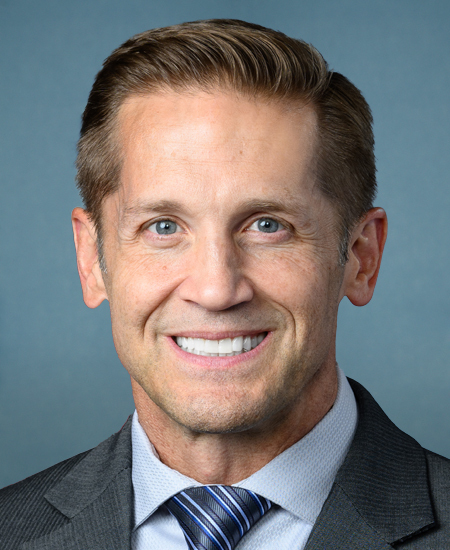
Rep. Richard McCormick
Sponsored bills
Maddy summaryHR 2643, the Haiti Criminal Collusion Transparency Act of 2025, requires the U.S. State Department to submit annual reports for five years detailing ties between Haitian criminal gangs and political/economic elites, including specific gang leaders, their operations, and how elites exploit these relationships. The bill mandates that the President impose automatic sanctions - including freezing assets and barring entry to the U.S. - against foreign individuals identified in these reports within 90 days of the report’s submission. These sanctions apply to Haitian officials and business leaders linked to gangs, with limited exceptions for humanitarian aid. The law expires five years after enactment, focusing on transparency and targeted U.S. actions to address collusion threatening Haitian stability and U.S. interests.
Maddy summaryHR 5075, the GRACE Act, requires schools receiving federal education funds to allow religious exemptions from vaccination requirements without requiring documentation. It directly affects K-12 public schools and school agencies that receive federal funding, as they must permit students (or their parents/guardians for minors under 18) to skip vaccinations based on religious belief. The key provision mandates that schools cannot demand proof of a religious belief to grant such exemptions. This changes how schools handle vaccination policies for enrollment, attendance, and school activities when receiving federal education dollars.
Maddy summaryHJRES 116 is a ceremonial resolution honoring 13 U.S. service members who died in the August 26, 2021, Abbey Gate bombing at Kabul's airport. It designates a National Day of Remembrance for those who perished during the Afghanistan withdrawal, expresses condolences to their families, and commemorates their service. The resolution does not create new policies or funding but formally recognizes their sacrifice and the role they played in saving lives during the evacuation. It directly affects the Gold Star families of the named service members and the broader public through this national acknowledgment.
Maddy summaryHRES 652 is a ceremonial resolution recognizing six Fort Stewart, Georgia, soldiers for their actions during an August 6, 2025, shooting incident. It specifically honors First Sgt. Joshua Arnold, Master Sgt. Justin Thomas, Staff Sgt. Melissa Taylor, Staff Sgt. Robert Pacheco, Sgt. Aaron Turner, and Sgt. Eve Rodarte for subduing a gunman and preventing further harm. The resolution expresses gratitude for their actions, extends well-wishes to the injured, and acknowledges their service. As a non-binding resolution, it does not create new laws or policies but serves as a formal tribute.
Maddy summaryHRES 636 is a symbolic House resolution condemning a July 28, 2025, shooting in New York City that killed three civilians and NYPD Officer Didarul Islam, alongside security officer Aland Etienne. It honors the victims, commends the NYPD's response, and condemns violence against law enforcement. The resolution does not create new laws or policies but formally expresses the House's stance against such violence and supports law enforcement. It was introduced by Representatives Stefanik, Tenney, and others and referred to the Oversight Committee.
Maddy summaryHR 4871, the COVID-19 Military Backpay Act of 2025, allows military members discharged for non-compliance with the 2021 Department of Defense COVID-19 vaccination mandate to seek legal remedies. It provides a pathway for affected service members (active/reserve, National Guard) to file civil actions in the Court of Federal Claims, arguing their discharges were involuntary. If successful, the court can award compensation for missed inactive-duty training, retroactively count service time toward retirement (including 20-year or 18-year milestones), restore retirement benefits, and deem members eligible for reenlistment with two additional years of service. The bill specifically restores benefits like retirement pay and medical care that were lost due to the discharge, without reducing compensation for civilian employment earned afterward.
Maddy summaryHR 4863, the Fairness for Khobar Act of 2025, provides lump sum catch-up payments to victims of the 1983 Beirut barracks bombing and 1996 Khobar Towers bombing who were previously denied compensation due to confusing Department of Justice guidance. The bill requires the Special Master to authorize these payments to individuals who relied on outdated guidance stating they could not apply for lump sum payments if already eligible for regular distributions. Victims can prove their reliance through documentation, sworn statements, or other methods approved by the Special Master. Payments will be made from a reserve fund or the main compensation fund, ensuring those who were wrongly excluded can now receive full compensation they were entitled to under the law.
Maddy summaryHR 4793, the SOS Act, requires the government to add a specific graph to annual reports about Social Security trust funds. The graph must compare two different funding assumptions: the amount assumed under current law (based on dedicated funding sources) versus the amount assumed under the Balanced Budget Act of 1985. This bill does not change Social Security payments or benefits; it only modifies how the government reports on trust fund finances. The requirement applies to reports prepared by the Congressional Budget Office and Treasury Department, affecting the transparency of federal budget documentation.
Maddy summaryThe LIFT Act of 2025 streamlines regulations for drone and eVTOL (electric air taxi) operations in the U.S. It requires the Transportation Secretary to create new safety rules enabling routine drone flights beyond visual range (BVLOS) within six months and use AI to speed up approval requests for drone waivers. The bill also establishes a 3-year pilot program giving grants to state, local, tribal, and territorial governments to test eVTOL operations - prioritizing projects using U.S.-manufactured drone technology and focusing on applications like medical response and cargo transport. This directly affects drone operators, local governments implementing air mobility projects, and U.S. drone manufacturers by accelerating regulatory approvals and funding for safe integration into national airspace.