

Maddy summaryHRES 1306 is a non-binding resolution expressing congressional support for designating June 21, 2024, as National ASK (Asking Saves Kids) Day. It encourages parents to ask visitors' homes, "Is there a gun in your house?" and "Is it locked and unloaded?" to promote safe gun storage around children. The resolution specifically supports the ASK Campaign, a national initiative run by the Brady Campaign since 2000 that focuses on preventing accidental child firearm injuries through simple safety conversations. This resolution does not create new laws but formally endorses an existing public health awareness effort.
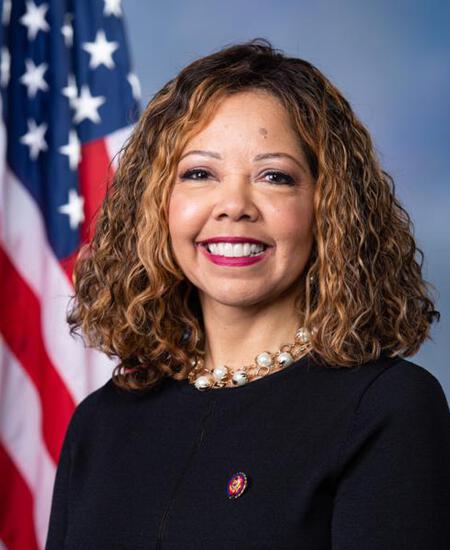
Rep. Lucy McBath
Sponsored bills
Maddy summaryHR 8691, the Restoring Justice for Workers Act, prohibits employers from requiring workers to sign arbitration agreements before any dispute arises (predispute agreements) or retaliating against workers who refuse them. It also sets strict requirements for postdispute arbitration agreements, mandating written consent after a 45-day waiting period, clear disclosure of workers' rights, and proof the agreement wasn't forced. The bill directly affects all workers (including independent contractors) and employers covered under the Fair Labor Standards Act, ensuring collective claims and concerted activity cannot be barred through forced arbitration. Key provisions make predispute arbitration agreements void and require voluntary, informed postdispute agreements with specific safeguards.
Maddy summaryHRES 1282 is a procedural resolution that sets the rules for the House to immediately consider H.R. 3018, a bill proposing to authorize extreme risk protection orders. It waives points of order against H.R. 3018 and its provisions, limits debate to one hour equally divided between the Judiciary Committee's chair and ranking member, and moves the bill directly to a vote without amendments. This resolution does not change the substance of H.R. 3018 but streamlines its legislative process.
Maddy summaryHRES 1279 is a non-binding House resolution expressing support for designating June 2024 as "Black Music Month." It honors Black musicians, creators, and communities whose contributions have shaped American music across genres like blues, jazz, hip-hop, and gospel. The resolution calls on all Americans to recognize the month through actions that elevate Black music's artistry, promote diversity, and spread awareness of its historical impact. It does not create new laws or allocate funding, but serves as a symbolic gesture to celebrate Black music's cultural significance. The resolution was introduced by multiple House members and refers to Black music's role in American history and the civil rights movement.
Maddy summaryThis resolution (HRES 1271) is a symbolic gesture expressing the House's support for designating June 7, 2024, as "National Gun Violence Awareness Day" and June 2024 as "National Gun Violence Awareness Month." It does not create new laws or policies but urges the public to wear orange, raise awareness about gun violence, and focus on community safety during summer months when such incidents often increase. The resolution references statistics on gun-related deaths and honors victims like Hadiya Pendleton, who was killed in 2013. It directly affects the public by calling on individuals and communities to participate in awareness activities. This is a non-binding, commemorative measure with no direct legal impact on legislation or regulations.
Maddy summaryThis bill, the GOSAFE Act, prohibits the sale, manufacture, transfer, and possession of gas-operated semi-automatic firearms and large capacity ammunition feeding devices (those holding more than 10 rounds). It defines "gas-operated" firearms as those using gas from fired cartridges to cycle the action, and requires the Attorney General to maintain a list of prohibited firearms. Manufacturers must seek approval for new semi-automatic firearms before selling them to civilians, and the bill creates a fund to support buy-back programs for prohibited firearms and devices. Violations could result in fines up to $5,000 or 12 months in jail, with harsher penalties for those who commit other federal crimes while in possession of prohibited firearms.
Maddy summaryThe George Floyd Justice in Policing Act of 2024 establishes a National Police Misconduct Registry to track complaints and disciplinary actions against officers, requiring all federal, state, and local law enforcement agencies to report use-of-force incidents with racial, gender, and age data. It bans chokeholds and carotid holds in police encounters, prohibits no-knock warrants in drug cases, and reforms qualified immunity to make it harder for officers to avoid accountability for misconduct. The bill mandates body cameras for federal officers, requires independent investigations of officer-involved shootings, and creates new data collection systems to monitor racial profiling and use-of-force patterns. It also includes provisions for civilian oversight boards, improved officer training on de-escalation and implicit bias, and restrictions on military equipment transfers to local police departments. This law affects all law enforcement agencies receiving federal funding under programs like Byrne and COPS grants.
Maddy summaryHR 895, the Combating Organized Retail Crime Act of 2023, expands federal law to better prosecute organized retail theft by amending sections 2314 and 2315 of Title 18. It clarifies that crimes involving stolen goods valued at $5,000 or more over 12 months - including retail theft - can be prosecuted under existing federal statutes, and broadens definitions to include goods taken via "any facility of interstate or foreign commerce." The bill also creates a new Organized Retail Crime Coordination Center within Homeland Security, requiring it to coordinate federal, state, and local law enforcement efforts, share threat information with retailers, and produce annual public reports on trends. This directly affects law enforcement agencies, retailers, and criminal justice systems by standardizing prosecution thresholds and enhancing interagency collaboration.
Maddy summaryHR 8469, the Diverse Cybersecurity Workforce Act of 2024, requires the Cybersecurity and Infrastructure Security Agency (CISA) to establish a new program within its existing education initiative. The program targets underrepresented groups in cybersecurity, including racial and ethnic minorities, women, veterans, people with disabilities, older individuals (40+), those from low-income backgrounds, and people with nontraditional educational paths (like community colleges or HBCUs). CISA must tailor outreach to schools, unions, community colleges, and local workforce offices to promote cybersecurity careers in these communities. The bill authorizes $20 million annually (2025-2030) and mandates annual reports to Congress on the program's impact on workforce diversity.
Maddy summaryThe Public Service Freedom to Negotiate Act of 2024 establishes federal minimum standards for collective bargaining rights for public employees and supervisory employees. The Federal Labor Relations Authority will determine if each state's laws "substantially provide" for these rights, and if not, federal standards will apply to that state. These standards include the right to self-organization, collective bargaining, recognition of labor organizations, and procedures for resolving disputes. The bill preserves existing collective bargaining agreements and excludes certain employee categories like emergency services workers from some provisions.