

Maddy summaryHR 2910, the Youth Workforce Readiness Act of 2025, establishes a federal grant program to fund community-based organizations in creating after-school and out-of-school-time workforce readiness programs for youth aged 6-18. The bill authorizes $100 million annually (2026-2030) to support activities like career pathway planning, paid work experiences (including apprenticeships), occupational skill training aligned with local job needs, and employer partnerships. It directly affects eligible youth - particularly those in underserved communities - and requires grantees to coordinate with schools, employers, and local workforce boards, while mandating youth councils to advise on program design. The program emphasizes measurable outcomes, including improved school attendance, skill development, and transitions to postsecondary education or employment.
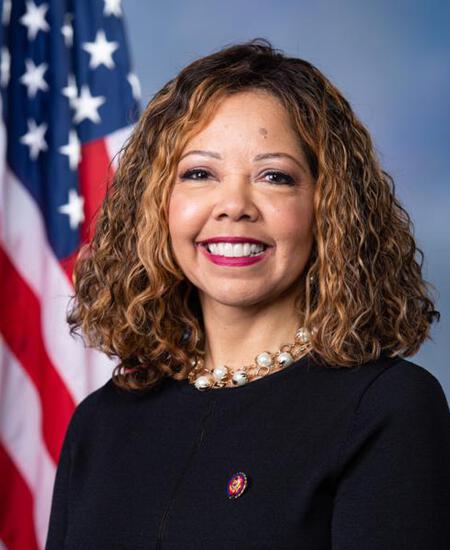
Rep. Lucy McBath
Sponsored bills
Maddy summaryThe Neighborhood Homes Investment Act creates a new tax credit for developers who build or rehabilitate affordable homes in distressed communities. The credit is calculated as the lesser of (1) the difference between development costs and sale price, (2) 40% of development costs, or (3) 32% of the national median home price. It applies only to homes sold to qualified homeowners with income up to 140% of area median income in designated "qualified census tracts" (areas with high poverty rates, low median home values, and low median family income). Developers must meet quality standards and repay the credit if the home is sold within 5 years of the affordable sale. This credit aims to address the "value gap" that prevents housing development in distressed communities by incentivizing affordable home construction and rehabilitation.
Maddy summaryThe Adult Education WORKS Act establishes "college and career navigators" who provide personalized guidance to help individuals access education, job training, and workforce development services. These navigators help people identify career paths, connect to financial aid, and develop digital literacy and information literacy skills needed for success in education and employment. The bill requires state and local workforce boards to collaborate with adult education providers to promote these navigator positions and authorizes $135 million annually for library-based and community-based navigator programs. It updates definitions to include digital and information literacy skills as essential components of adult education. The bill directly affects adult education providers, workforce development systems, and individuals seeking to improve their job skills or educational opportunities.
Maddy summaryThe GOSAFE Act prohibits the sale, manufacture, transfer, and possession of gas-operated semi-automatic firearms and large capacity ammunition feeding devices (those holding more than 10 rounds). It defines gas-operated firearms as those that use gas from fired cartridges to cycle the action, requiring the Attorney General to publish a list of prohibited firearms within 180 days. The bill establishes a process for manufacturers to seek approval for new firearm designs before selling to civilians and creates a "Firearm Safety Trust Fund" to cover related costs. Certain firearms are exempt, including single-shot, muzzle-loading, and firearms with permanently fixed magazines holding 10 or fewer rounds. Violations could result in fines up to $5,000 or up to 12 months in prison.
Maddy summaryHR 2767, the BRAIN Act, aims to advance brain tumor research and improve patient care by requiring the NIH to create a public database of tumor samples collected with federal funding. It authorizes $50 million annually for a Glioblastoma Therapeutics Network to accelerate treatment development and $10 million for cellular immunotherapy research (including CAR-T therapies) targeting brain tumors. The bill also mandates a national awareness campaign to increase understanding of cancer clinical trials and biomarker testing, plus $5 million yearly for pilot programs studying survivor care coordination and follow-up services. Additionally, it directs the FDA to issue guidance ensuring brain tumor patients can access clinical trials. These provisions directly affect patients, researchers, and healthcare providers focused on brain tumors and rare cancers.
Maddy summaryThe American Family Act (HR 2763) establishes a new refundable child tax credit that provides monthly payments to eligible families with children. It would pay $300 per month for each child under age 6 and $360 per month (120% of $300) for each child age 6 or older, with income limits of $150,000 for joint filers and $112,500 for other filers. The bill creates a "period of presumptive eligibility" to determine eligibility for monthly payments, allowing families to receive advance payments based on information from previous tax returns. This would directly affect millions of families with children who meet the income requirements, providing more consistent financial support throughout the year rather than an annual tax credit.
Maddy summaryHR 2799, the Closing the Bump Stock Loophole Act of 2025, prohibits the sale, possession, and modification of devices that increase the firing rate of semi-automatic firearms to mimic machine guns (commonly called "bump stocks"). It specifically bans manual, power-driven, or electronic devices designed to speed up firing, as well as modified firearms that achieve this effect. Owners of pre-existing modified firearms must register them within 120 days of the law's enactment, with exemptions for government entities and firearms already lawfully modified and registered before the bill passes. The bill does not restrict standard semi-automatic firearms or require registration of unmodified guns.
Maddy summaryThe Raise the Wage Act of 2025 gradually increases the federal minimum wage from $9.50 to $17.00 per hour over six years, with annual adjustments based on median wage growth. It raises the base wage for tipped workers from $6.00 to $17.00 per hour, phasing out their separate minimum wage structure by 2029. The bill also eliminates special minimum wage certificates for disabled workers after 2029, requiring employers to pay the standard minimum wage. These changes apply to most covered workers, including tipped employees and those under 20, with specific transition timelines for each group.
Maddy summaryThis bill establishes federal minimum standards for collective bargaining rights for public employees and supervisors. The Federal Labor Relations Authority would determine if state laws provide these rights, and if not, would establish them for affected employees. The bill guarantees public employees the right to form unions, bargain collectively, and engage in concerted activities, while requiring public employers to recognize unions and put agreements in writing. It also prohibits strikes or lockouts that would disrupt emergency services. This would apply to public employees in states that don't meet the federal standards for collective bargaining rights.
Maddy summaryThe No Tax Breaks for Union Busting Act would deny tax deductions for employers who spend money to influence employees' decisions about union activities, such as union elections or collective bargaining. It defines "labor organization activities" broadly to include union elections, labor disputes, and collective actions. The bill requires employers to report such spending on tax returns and prevents them from deducting these expenses from taxable income. This would apply to employers using tactics like captive audience meetings, outside consultants, or other efforts to sway workers' union decisions. The policy aims to remove tax incentives for employers to interfere with workers' rights under labor law.