

Maddy summaryHR 5830, the Guaranteed Income Pilot Program Act of 2025, would establish a 3-year pilot program providing monthly cash payments to 20,000 eligible low-income individuals aged 18-65. Participants would receive payments equal to the fair market rent for a 2-bedroom apartment in their ZIP code, paid monthly on the 15th, with these payments not counting as income for other federal benefits. The program, funded at $495 million annually for fiscal years 2026-2030, requires a study tracking impacts on participants' financial stability, health, housing, and other outcomes. The final report would assess the program’s feasibility for broader expansion.
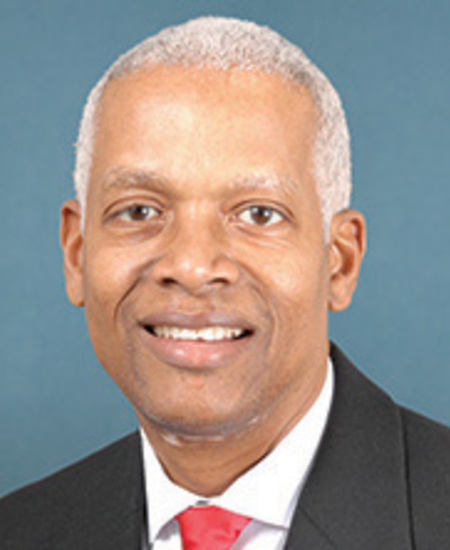
Rep. Henry C. "Hank" Johnson, Jr.
Sponsored bills
Maddy summaryHRES 824 is a ceremonial House resolution recognizing the religious and historical significance of Diwali, the festival of lights. It acknowledges Diwali’s meaning across Hindu, Sikh, and Jain traditions - symbolizing light over darkness, good over evil, and marking spiritual milestones like Guru Hargobind’s release and Lord Mahavira’s Nirvana. The resolution expresses respect for Indian-Americans and the global Indian diaspora, highlighting Diwali’s role in U.S. religious diversity. As a non-binding recognition, it does not create new laws, policies, or funding, but formally honors the cultural observance.
Maddy summaryThis bill requires federal agencies to report detailed spending data on advertising contracts starting with the 2027 budget. Specifically, agencies must disclose total advertising expenditures and break down spending for contracts with women-owned, minority-owned, and socially/economically disadvantaged small businesses (as defined by law). The reporting applies to both past fiscal year spending and estimated future spending for each agency. This is a transparency measure focused solely on data collection, not on changing how contracts are awarded or funding levels.
Maddy summaryHRES 815 is a non-binding House resolution expressing that immigration enforcement by ICE and CBP must be transparent and respect constitutional rights. It requires ICE/CBP officers to wear body cameras during public operations, ban masks/face coverings (except for safety threats), and visibly display name/badge/agency. The resolution also calls for civilian oversight boards, mandatory de-escalation training, and Justice Department oversight of ICE. It directly affects all ICE and CBP enforcement personnel and their interactions with the public, particularly in residential raids and detention. The resolution references similar pending bills but does not create new law.
Maddy summaryThis bill requires congressional and White House approval before any corporate or individual name, logo, or advertisement can be displayed on the White House grounds or in its buildings. It blocks permanent or semi-permanent displays (like plaques or signage) without consent from the House Speaker, Minority Leader, and White House Curator. The law applies to all White House grounds and structures, preventing unsanctioned commercial endorsements or sponsorships. Existing rules for commemorative monuments (under the Commemorative Works Act) would still govern approved displays.
Head Start Shutdown Protection Act of 2025 This bill requires the Department of Health and Human Services to reimburse a state, local government, or school district that uses its funds to maintain participation in the Head Start program or the Early Head Start program during a government shutdown in which there is a lapse in federal appropriations for the programs. The Head Start programs provide comprehensive early childhood education and development services to low-income children. The programs seek to promote school readiness through the provision of educational, health, nutritional, social, and other services.
Maddy summaryThis bill requires FEMA to reimburse fire departments for specific expenses when National Fire Academy courses or activities are canceled due to a government funding gap. It covers travel costs and "backfill" expenses (like overtime pay for staff covering shifts) incurred by departments that planned to send personnel to in-person, off-campus, or virtual courses. Fire departments must submit an itemized claim within 30 days after funding resumes, and reimbursement must be issued within 90 days. Exceptions apply if cancellation is due to "good cause," such as facility closures unrelated to funding, instructor unavailability, or national emergencies.
Maddy summaryThis bill makes federal funding for the WIC program mandatory by requiring Congress to appropriate necessary funds annually for fiscal year 2026 and each subsequent year. It removes discretionary language from WIC funding requirements and clarifies that eligible participants must be served without participation limits. The bill directly affects low-income pregnant women, new mothers, and young children who rely on WIC for nutrition assistance, ensuring continued access to critical food, health, and education services.
Maddy summaryHRES 797 is a non-binding resolution expressing concern about the rising number of book bans in U.S. schools and libraries. It cites PEN America data showing 6,870 book bans affecting 3,751 titles between July 2024 and June 2025, with books about race, LGBTQ+ experiences, and marginalized communities disproportionately targeted (e.g., *The Handmaid’s Tale*, *Maus*, *This Book Is Gay*). The resolution calls on schools to follow best practices for book challenges, protect students’ access to diverse materials, and return books removed from military schools under recent executive orders. It directly addresses students, educators, librarians, and authors impacted by censorship, emphasizing that such bans threaten free expression and democratic values.
Maddy summaryHR 5707, the Voter Purge Protection Act, sets strict standards for states removing voters from registration lists. It requires states to use only objective, reliable evidence (like proof of death or moved residence) to remove voters - not factors like not voting or not responding to notices - and mandates 48-hour written notice to affected voters with reinstatement instructions. States must also issue public notices about removal programs to help voters verify their status. This bill directly affects state election officials and voters whose registration might be challenged, aiming to prevent improper removals under the National Voter Registration Act. It amends existing federal voting laws to enforce these new verification and notice requirements.