

Maddy summaryThe PrEP Access Act expands Medicare Part B coverage to include pharmacist-provided HIV prevention services, such as pre-exposure prophylaxis (PrEP) counseling, medication administration, and related testing. It directly affects Medicare beneficiaries (primarily seniors) and pharmacists, allowing pharmacists to bill Medicare for these services under state law. Key provisions set payment at 80% of the lesser of actual charges or 85% of physician rates, and prohibit balance billing for these services. The policy change takes effect January 1, 2027, making PrEP more accessible through pharmacy settings.
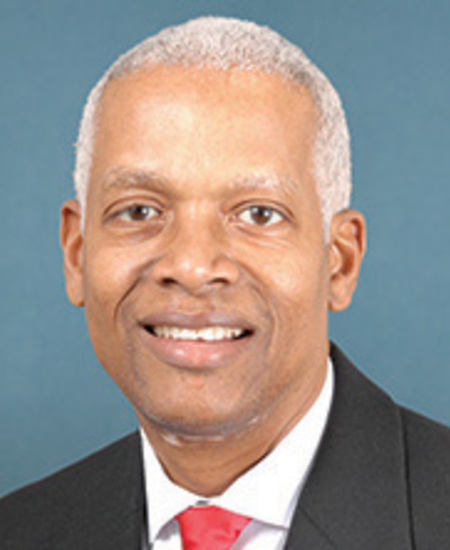
Rep. Henry C. "Hank" Johnson, Jr.
Sponsored bills
Maddy summaryHRES 1004 is a symbolic House resolution honoring Dr. Martin Luther King, Jr.'s legacy by celebrating diversity and condemning hate. It specifically calls for the House to celebrate his 97th birthday on January 19, 2026, and to condemn harassment, discrimination, or prejudice targeting Black Americans, Indigenous people, Jewish, Asian-American/Pacific Islander, Muslim, Hispanic/Latino communities, and LGBTQ+ individuals. The resolution affirms Dr. King’s teachings on unity and equality but does not create new laws or impose obligations on any entity. As a ceremonial resolution, it has no legal effect and directly affects no individuals or groups.
Maddy summaryThis bill requires federal agencies that use or fund complex AI systems (called "covered algorithms") to establish civil rights offices staffed by experts. These offices must monitor and report on potential bias in algorithms affecting programs like benefits, housing, or loans, particularly regarding traits like race, gender, or disability. Agencies must submit detailed reports every two years starting one year after the bill passes, outlining risks, mitigation steps, stakeholder engagement, and recommendations. The law also creates an interagency working group to coordinate efforts across agencies. It directly affects any federal agency using or overseeing such AI systems, aiming to prevent unfair outcomes through transparency and accountability.
Maddy summaryHR 7100 establishes a Department of Justice Task Force on Anti-Sikh Hate and Discrimination to address systemic bias against Sikhs. The Task Force must draft a formal definition of anti-Sikh hate for DOJ use, develop educational programs for law enforcement and schools, and produce annual reports on hate crimes and trends. It requires quarterly collaboration with Sikh organizations and translation of materials into Punjabi. The bill directly affects Sikhs in the U.S. (who face disproportionate targeting as noted in FBI data) and mandates federal agencies to improve hate crime data collection and response. This is a policy-focused measure to standardize definitions, enhance reporting, and support community safety through DOJ action.
Maddy summaryHR 7125, the Stop Body Camera Paywalls Act, requires states and local governments seeking certain federal law enforcement grants to certify they do not charge fees for public access to body camera footage, dash camera footage, or prison surveillance recordings. To qualify for Byrne or COPS grant programs, applicants must confirm no financial barriers exist for the public requesting these specific video recordings. The bill makes certification mandatory for grant eligibility, directly affecting law enforcement agencies receiving federal funds under these programs.
Maddy summaryHRES 996 is a resolution introduced by multiple House members to impeach Kristi Lynn Arnold Noem, the Secretary of Homeland Security, for alleged violations of law and the Constitution. It outlines three articles of impeachment: obstructing congressional oversight by denying access to detention facilities and withholding funds, violating public trust through warrantless arrests and excessive force (including tear gas on children), and self-dealing by awarding federal contracts to associates without competitive bidding. If approved by the House, this resolution would formally charge Noem, triggering a Senate trial to determine her removal from office. The resolution itself does not enact new policy but initiates the constitutional impeachment process against a sitting Cabinet official.
Maddy summaryHRES 995 is a symbolic resolution supporting Korean American Day, commemorating January 13 as the anniversary of the 1903 arrival of the first large wave of Korean immigrants to the U.S. It urges all Americans to recognize Korean Americans' contributions to U.S. society, economy, and U.S.-South Korea relations, honoring their historical journey and ongoing impact. The resolution has no legal effect or policy changes - it serves solely as a formal acknowledgment of cultural heritage.
Maddy summaryThis resolution (HRES 985) expresses the House of Representatives' opposition to declawing cats for cosmetic or convenience reasons, not for medical necessity. It defines "declawing" broadly to include any procedure that disables a cat’s claws (such as surgical removal or tendon cutting), emphasizing that these practices cause long-term pain and behavioral issues. The resolution specifically supports banning elective declawing while allowing medically necessary procedures to address existing health conditions. It urges states without such bans to consider legislation, citing widespread support from veterinary organizations and existing bans in 7 U.S. states and numerous municipalities.
Maddy summaryHR 7046, the Qualified Immunity Abolition Act of 2026, removes qualified immunity as a defense in civil rights lawsuits against law enforcement officers. It directly affects federal, state, and local law enforcement officers by eliminating their ability to avoid liability in cases where they allegedly violated constitutional rights. The bill amends Section 1983 of federal law to prohibit using four specific defenses: claiming good faith, believing conduct was lawful, arguing rights weren't clearly established, or asserting the law was unclear at the time. This change means officers can no longer dismiss lawsuits based on these arguments after the bill's enactment. The law applies to all civil actions pending or filed after the effective date.
Maddy summaryThis bill would increase the base pay for Federal Bureau of Prisons correctional officers by 35 percent, replacing their current base rate for all pay calculations (including retirement and locality adjustments). It applies to officers whose duties involve inmate custody, control, or direct custodial contact, including certain supervisory staff and lower-grade Bureau of Prisons employees with similar duties. The pay increase is capped at the Executive Schedule level V rate and would expire after five years unless a Department of Justice Inspector General review finds progress in reducing non-custodial staff use for custodial duties and excessive overtime. The review, required 180 days before expiration, would assess impacts on recruitment, retention, and institutional safety.