

Ensuring Coverage in Public Health Emergencies Act of 2021 This bill requires private health insurance plans to provide a 30-day special enrollment period for eligible individuals after a public health emergency is declared. An employee who is eligible but not enrolled may enroll in an employer-provided group health plan during the special enrollment period.
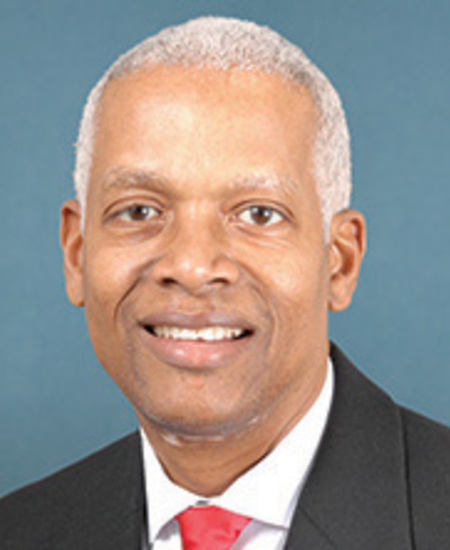
Rep. Henry C. "Hank" Johnson, Jr.
Sponsored bills
Stop COVID-19 Test Surprise Medical Bills Act of 2021 This bill modifies provisions requiring health insurance plans to cover COVID-19 (i.e., coronavirus disease 2019) diagnostic testing services at no cost, without prior authorization, and without medical management requirements. The bill specifies that a plan may not make determinations about the circumstances surrounding individuals' tests, such as why they sought testing or whether they showed symptoms of COVID-19. The bill also specifies that plans may encourage individuals to obtain tests from lower priced providers as long as such efforts do not delay, or impede access to, testing. The bill also requires the Department of Health and Human Services (HHS) to survey and report on the cash prices of testing services and the compliance of providers with the requirement to publish such prices. Additionally, HHS, jointly with the Department of the Treasury and the Department of Labor, must issue guidance clarifying the process for submitting claims for testing services.
Emergency Water is a Human Right Act This bill creates a grant program, administered by the Department of Health and Human Services, to provide funds to states and Indian tribes to assist low-income households that pay a high proportion of household income for drinking water and wastewater services. Further, any entity receiving financial assistance under this grant program must ensure that no home energy service or public water system service is or remains disconnected or interrupted during the COVID-19 (i.e., coronavirus disease 2019) public health emergency.
Environmental Justice Mapping and Data Collection Act of 2021 This bill establishes an interagency Environmental Justice Mapping Committee that must create a tool to identify environmental justice communities. Environmental justice communities are communities with significant representation of communities of color, low-income communities, or tribal and indigenous communities that experience, or are at risk of experiencing, higher or more adverse human health or environmental effects, as compared to other communities. The Environmental Protection Agency (EPA) must establish an environmental justice data repository to maintain the data collected by the committee. The EPA must make the repository available to regional, state, local, and tribal governments.
Ally's Act This bill requires private health insurance plans to cover certain hearing devices and systems (e.g., bone-anchored auditory implants) and related items and services. The bill also imposes limits on cost sharing.
Comprehensive Breast Reconstruction Act of 2021 This bill provides for Medicare, Medicaid, and private health insurance coverage of certain tattooing services in connection with post-mastectomy breast reconstruction, and aligns the scope of Medicare and Medicaid coverage of such breast reconstruction with that of private health insurance. Specifically, the bill provides for coverage of reconstructive tattooing services that are performed by a health care practitioner or state-licensed tattoo artist pursuant to a physician prescription, and expands Medicare and Medicaid coverage to include all stages of reconstruction, surgery to produce a symmetrical appearance, and prostheses and physical complications of mastectomies (e.g., lymphedemas).
End Diaper Need Act of 2021 This bill establishes and expands programs to increase access to diapers and related supplies primarily for low-income families. The Department of Health and Human Services must award demonstration grants to entities with experience in community distribution of basic necessities or other community services to meet diapering needs of eligible families with infants and toddlers. Additionally, the bill permits states to use Medicaid funds to provide medically necessary diapers and supplies to certain low-income families. These families must have a child who is over age three and diagnosed with a serious condition such as bowel or bladder incontinence. It also allows individuals to buy medically necessary diapers and supplies with funds from health savings accounts and other tax-advantaged accounts for health care expenses.
Insular Area Medicaid Parity Act This bill eliminates Medicaid funding limitations for U.S. territories beginning in FY2021.
COVID-19 Cold Storage Expansion Act of 2021 This bill requires the Department of Health and Human Services to reimburse health care providers for costs to obtain and operate certain equipment capable of maintaining cold storage of COVID-19 (i.e., coronavirus disease 2019) vaccines. To receive this reimbursement, health care providers must sign an agreement to participate in the Center for Disease Control and Prevention's COVID-19 Vaccination Program. The agreement sets out prioritization, reporting, and other requirements for the program.
COVID-19 Prevention and Awareness Act of 2021 This bill authorizes the Centers for Disease Control and Prevention to award various grants to federally qualified health centers and other organizations to prevent, treat, and raise awareness of certain diseases or conditions, such as asthma or cancer, that increase the risk of mortality from COVID-19 (i.e., coronavirus disease 2019).