

Unemployment Insurance Technology Modernization Act of 2021 This bill requires the Department of Labor to study and report on the technology needs of federal and state unemployment compensation programs. Based on this study, Labor must develop, operate, and maintain a modular set of technology capabilities to modernize the delivery of unemployment compensation. Before the deployment of the technology capabilities to all states, Labor must select at least four states to participate in a pilot program to test the technology capabilities and demonstrate that they meet requirements. The bill establishes accessibility requirements for filing online unemployment compensation claims. In addition, it prohibits the technology capabilities from relying solely on a high-risk automated decision system to (1) deny a claim for unemployment compensation, (2) reduce the amount of unemployment compensation for which a claimant is eligible, or (3) deny a claimant's right to appeal an unemployment compensation decision.
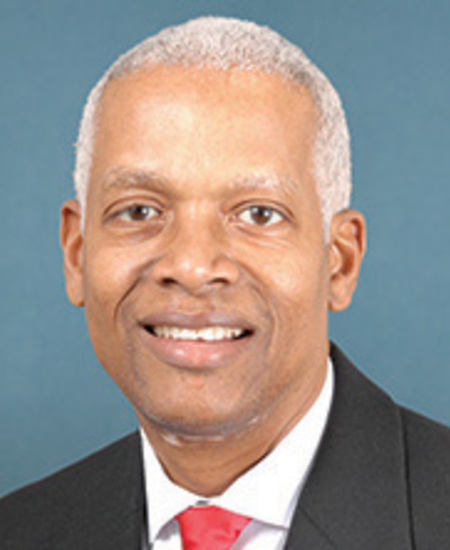
Rep. Henry C. "Hank" Johnson, Jr.
Sponsored bills
This bill redesignates the federal building located at 935 Pennsylvania Avenue, NW, in the District of Columbia (currently known as the J. Edgar Hoover Building) as the Federal Bureau of Investigation Building.
Coronavirus Containment Corps Act This bill requires the Centers for Disease Control and Prevention (CDC) to develop, within 21 days, a nationwide contact tracing strategy for COVID-19 (i.e., coronavirus disease 2019) that addresses issues including workforce needs. To implement that strategy, the bill establishes grant programs in the CDC and the Indian Health Service (IHS). It also expands programs in the Department of Labor. The CDC must award grants to state and local health departments to, among other purposes, hire and train individuals for contact tracing positions and related roles. The IHS must award similar grants to tribes and tribal organizations. Additionally, Labor must award grants for states and other jurisdictions to support recruitment and employment of dislocated workers and other individuals in public health roles. Grants and contracts that include contact tracing in their scope of work must comply with prevailing wage requirements that apply to federal service contracts. Employees who work under such grants or contracts must receive similar compensation to that prevailing in the locality where work is performed. The CDC and Labor must report certain information on specified timelines, and the Government Accountability Office must evaluate the activities of grantees.
Gun Trafficking Prohibition Act This bill establishes stand-alone criminal offenses for trafficking in firearms and straw purchasing of firearms. The bill expands the categories of prohibited persons (i.e., persons barred from receiving or possessing a firearm or ammunition) to include persons who intend (1) to sell or transfer a firearm or ammunition to a prohibited person, (2) to sell or transfer a firearm to further a crime of violence or drug trafficking offense, or (3) to unlawfully export. It increases the maximum prison term for the (1) sale or transfer of a firearm to a prohibited person, or (2) receipt or possession of a firearm by a prohibited person. The bill revises the existing prohibition on transferring a firearm knowing that it will be used to commit a crime of violence or drug trafficking offense. Specifically, it broadens the scope of unlawful conduct covered by the prohibition and increases the maximum prison term for a violator. Similarly, the bill revises the existing prohibition on smuggling a firearm into the United States with the intent to unlawfully import or to promote a crime of violence or drug trafficking offense. It broadens the scope of unlawful conduct and increases the maximum prison term for a violator. Finally, the bill makes it a crime to smuggle a firearm or ammunition out of the United States, or conspire or attempt to do so, with the intent to unlawfully export or to promote a crime of violence or drug trafficking offense.
Mental Health Access and Gun Violence Prevention Act of 2021 This bill authorizes FY2022 appropriations for the Department of Justice, the Department of Health and Human Services, and the Social Security Administration to (1) increase access to mental health care treatment and services, and (2) promote reporting of mental health information to the National Instant Criminal Background Check System.
Federal Death Penalty Abolition Act of 2021 This bill prohibits the imposition of a death penalty sentence for a violation of federal law. It eliminates statutory authority for the death penalty as a sentencing option for federal offenses. It also requires a person who was sentenced to death before enactment of this bill to be resentenced.
This resolution recognizes Black History Month as an important time to celebrate the unique contributions of all LGBTQ+ Black Americans in U.S. history.
Black History is American History Act This bill requires entities (e.g., institutions of higher education, libraries, and museums), in order to be eligible for certain grants administered by the Department of Education (ED), to include Black history in their teaching of American history. It also requires Black history to be included in tests administered by the National Assessment of Educational Progress (NAEP). Specifically, the bill mandates the inclusion of Black history as a required component of American history for such entities to be eligible for American History and Civics Academies' competitive grants. These grants support the establishment of (1) Presidential Academies for Teachers of American History and Civics, which offer workshops to teachers of American history and civics to strengthen their knowledge and prepare them to teach in these subjects; and (2) Congressional Academies for Students of American History and Civics, which support high school students in developing an understanding of these subjects. (Currently, Black history is not a required component of American history for either academy.) In addition, ED must give priority to grant applicants that align their activities with programs and resources of the Smithsonian Institution's National Museum of African American History and Culture. The bill also requires the inclusion of Black history in tests administered by the NAEP, which measures student academic achievement in various subjects.
This resolution honors the life and legacy of former Representative John Robert Lewis and commends his achievements in the struggle for civil rights.
This resolution recognizes the roles that development and diplomacy play in advancing American interests and national security, and it expresses support for a substantial U.S. international affairs budget.