

Puerto Rico Self-Determination Act of 2021 This bill establishes a process for the people of Puerto Rico to vote on the political status (e.g., statehood) of the territory. Congress may ratify the decision through a joint resolution. The bill declares that the legislature of Puerto Rico has the authority to call a status convention regarding the political status of the territory. The bill provides for public financing of delegate elections to the status convention and establishes a Congressional Bilateral Negotiating Commission to provide advice and consultation to delegates of the status convention. The status convention must provide self-determination options for a referendum of the people of Puerto Rico. Ranked-choice voting is a permitted format for the referendum. Delegates shall carry out an educational campaign through traditional paid media related to the referendum. The bill provides for congressional consideration of a joint resolution to ratify the self-determination option selected through the referendum.
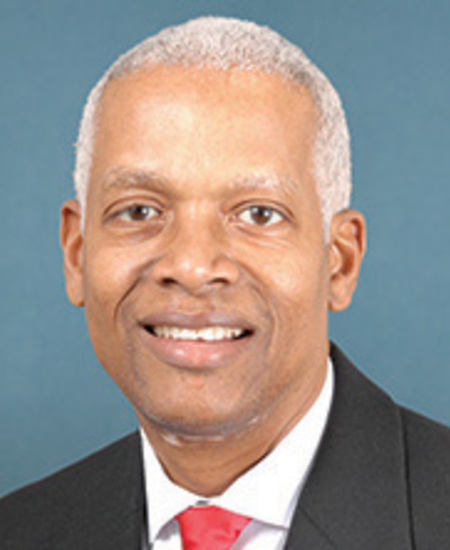
Rep. Henry C. "Hank" Johnson, Jr.
Sponsored bills
Puerto Rico Statehood Admission Act This bill establishes a process for the admission of Puerto Rico into the union as a state, on an equal footing with all other states, based on a majority vote of the people of Puerto Rico.
Flexible Financing for Rural America Act This bill allows rural utility service providers to submit to the Department of Agriculture (USDA) a request to adjust the interest rate or modify the terms of certain loans. The request shall include a report summarizing how the adjustment or modification will assist the borrower in providing critical utility services to a rural community. Specifically, on receipt of a request, USDA or the Department of the Treasury (in the case of a loan owned by the Federal Financing Bank) must adjust the interest rate on the loan to match certain interest rates for obligations of comparable maturity to the term remaining on the loan (or a higher rate requested by the borrower), and make modifications to the loan terms as necessary to address changes in the financial position of the borrower due to the COVID-19 public health emergency and to promote the financial sustainability of the borrower. In carrying out the adjustments or modifications, USDA or Treasury shall not impose or collect any fee from, or impose any penalty on, a borrower. The bill also provides funding to implement the adjustments and modifications and for the liquidation of residual intragovernmental amounts owed by the Federal Financing Bank in connection with certain loans.
National Heritage Area Act of 2021 This bill establishes a National Heritage Areas System to recognize certain areas of the United States that tell nationally significant stories and to conserve, enhance, and interpret the areas' natural, historic, scenic, and cultural resources that illustrate significant aspects of U.S. heritage, and authorizes appropriations through FY2034 for each National Heritage Area. Through such system, the Department of the Interior may provide technical and financial assistance to local coordinating entities to support the establishment, development, and continuity of such areas. The bill extends the authority for the Erie Canalway National Heritage Corridor Commission and the Gullah/Geechee Cultural Heritage Corridor Commission until September 30, 2034. The local coordinating entity of a National Heritage Area, not later than three years after the area is included in the National Heritage Area System, shall submit to Interior a management plan for approval. Interior, not later than one year before the authorization for federal funding expires for a National Heritage Area, shall (1) conduct an evaluation of the accomplishments of that area, and (2) submit a report detailing the evaluation to specified congressional committees. Based upon the evaluation, Interior shall prepare a report with recommendations for the National Park Service's continued role, if any, with respect to the area. Interior may carry out or certify a study to assess the suitability and feasibility of designating a specific geographic area as a National Heritage Area to be included in the National Heritage Area System.
Philippine Human Rights Act This bill imposes limitations on providing assistance to the police or military of the Philippines. No federal funds may be used to provide such assistance until the Philippines government has taken certain actions, including (1) investigating and successfully prosecuting members of its military and police forces who have violated human rights, (2) withdrawing the military from domestic policing activities, and (3) establishing that it effectively protects the rights of journalists and civil society activists. The President shall also direct U.S. representatives at multilateral development banks to vote against providing loans to the police or military of the Philippines.
LGBTQ Essential Data Act This bill directs the Centers for Disease Control and Prevention to more frequently collect information on the sexual orientation and gender identity of deceased individuals through the National Violent Death Reporting System.
Pink Tax Repeal Act This bill prohibits product manufacturers or service providers from selling substantially similar products at different prices based on the gender of the intended purchaser. If, for example, the only difference between two products is the color, they are substantially similar. The bill provides authority for the Federal Trade Commission and state attorneys general to enforce these requirements.
Equal Dignity for Married Taxpayers Act of 2021 This bill modifies several tax provisions that refer to married couples to make the provisions equally applicable to legally married same-sex couples.
Protecting our Students in Schools Act of 2021 This bill prohibits the use of corporal punishment in schools that receive federal funding. Specifically, the bill authorizes the Department of Education (ED) to take specified actions (e.g., withholding funds and issuing cease-and-desist orders) for schools that allow school personnel, law enforcement officers, or school security guards to subject students to corporal punishment. The bill also establishes enforcement provisions, including a private right of action for a student who has been subjected to corporal punishment. Each state educational agency (SEA) that receives federal funding must submit specified information to ED, including a school climate report that describes the SEA's policies and procedures related to exclusionary and aversive discipline practices in schools. Additionally, the bill authorizes ED to award three-year grants to SEAs and, through them, subgrants to local educational agencies to implement positive behavioral interventions and supports to address student behavior and reduce exclusionary and aversive discipline practices. ED must promulgate regulations as necessary to ensure compliance with the bill. The Department of Defense and the Department of the Interior must ensure that the schools they operate or fund also comply with these regulations.
Supplemental Security Income Restoration Act of 2021 This bill modifies eligibility for, and other components of, the Supplemental Security Income (SSI) program, including by (1) increasing applicable income and resource limits used to determine SSI eligibility, (2) equalizing treatment of married couples when both spouses receive SSI as compared to two unmarried individuals, and (3) eliminating the penalty on SSI applicants or recipients who transfer resources to another individual for less than fair market value.