

This bill designates the community-based outpatient clinic of the Department of Veterans Affairs in Columbus, Georgia, as the Robert S. Poydasheff VA Clinic.
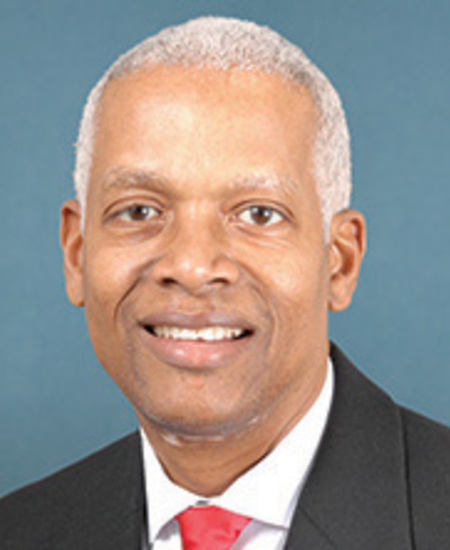
Rep. Henry C. "Hank" Johnson, Jr.
Sponsored bills
Maddy summaryHRES 785 is a symbolic resolution designating November 8, 2021, as "National First-Generation College Celebration Day." It urges all Americans to celebrate this day, recognize the contributions of first-generation college students (those whose parents did not earn bachelor's degrees), and honor the Higher Education Act of 1965. The resolution highlights existing federal programs like TRIO and Pell Grants that support underrepresented students but does not create new laws or funding. As a non-binding resolution, it has no direct policy impact but aims to raise awareness about first-generation students' challenges and achievements.
Veterans' Preference Parity Act This bill modifies the eligibility criteria for certain veterans to qualify for a preference in the federal hiring process. Specifically, an individual who is honorably discharged from active duty service is eligible for a veterans' preference, if the active duty service was performed for more than 180 total days (currently, consecutive days). Additionally, a retired member of the Armed Forces is eligible for a veterans' preference, even if the retiree (1) is not a disabled veteran and (2) retired at or above the rank of major or its equivalent.
Sarah Keys Evans Congressional Gold Medal Act This bill provides for the award of a Congressional Gold Medal to Sarah Keys Evans in recognition of her achievements relating to the desegregation of passengers on interstate buses in the 1950s.
Partner with Korea Act This bill creates an E-4 treaty trader visa category for up to 15,000 nationals of South Korea each fiscal year who are coming to the United States solely to perform specialty occupation services, subject to various requirements. The 15,000 limit shall only apply to principal aliens and not the spouses or children of such aliens. (A specialty occupation is one that requires the theoretical and practical application of highly specialized knowledge and a bachelor's degree or higher.)
Greyhound Protection Act of 2021 This bill modifies the federal criminal statute commonly known as the Wire Act. Currently, the Wire Act contains four prohibitions on the use of a wire transmission facility (e.g., the telephone or internet) for certain gambling activities. All four prohibitions apply to sports gambling. However, there have been conflicting interpretations of the applicability of the prohibitions to nonsports gambling (e.g., state lotteries). This bill amends the Wire Act to expressly state that the statute does not authorize the use of wire communications to gamble on commercial greyhound racing or permit the transport of animals for commercial dog racing or related activities.
Untraceable Firearms Act of 2021 This bill establishes a federal statutory framework to regulate the manufacture, sale, offer to sell, transfer, purchase, and receipt of ghost guns (i.e., guns without serial numbers). Additionally, the bill revises the federal statutory framework regulating the manufacture, possession, sale, import, shipment, delivery, receipt, and transfer of undetectable firearms. Among the revisions, the bill defines undetectable firearm as a firearm without a major component wholly made of detectable material.
Raise the Age Act This bill establishes new restrictions on the sale or transfer of certain semiautomatic firearms to individuals under 21 years of age. Specifically, this bill makes it unlawful for a licensed gun dealer, importer, manufacturer, or collector to sell or deliver a semiautomatic center-fire rifle that has (or has the capacity to accept) an ammunition feeding device with a capacity of more than five rounds to an individual who the licensee knows or has reasonable cause to believe is under age 21. The prohibition does not apply if the individual under age 21 is a full-time law enforcement officer or active-duty member of the Armed Forces. The bill also requires the Federal Bureau of Investigation to report on the operation of its public access line, including a description of information sharing protocols and recommendations for improving such protocols.
Freedom for Families Act This bill prohibits using federal funds for facilities used to detain noncitizen families and addresses related issues. Specifically, no funds made available may be used to operate or construct a family detention center, whether operated by U.S. Immigration and Customs Enforcement or a contractor. This prohibition shall also apply to funds made available before this bill's enactment. Funds obligated to operate such centers must instead be used for implementing and developing nondetention programs that are community-based and consistent with international best practices. The Department of Homeland Security (DHS) may place an apprehended noncitizen family into such a nondetention program if DHS makes an individualized determination that doing so will facilitate the family's compliance with immigration laws. The programs must provide to participants a legal orientation and meaningful access to counsel.
Let Our Cities And Local businesses Help Employees Achieve Long-Term Health Act or the LOCAL HEALTH Act This bill authorizes private businesses and local governments and agencies to require the use of face masks and take other measures aligned with Centers for Disease Control and Prevention guidelines to prevent the spread of COVID-19, provided that the required measures accommodate individuals with disabilities and include exemptions for sincerely held religious beliefs. The bill also (1) prohibits a state from establishing or enforcing a law that restricts an authorized measure, and (2) provides immunity to private businesses and local government entities from federal or state claims arising from an authorized measure unless the claim involves negligent behavior or willful misconduct.