

Honoring the Oath Act of 2021 This bill establishes the Military Family Immigration Advisory Committee and modifies the naturalization procedures for a noncitizen in the Armed Forces. U.S. Immigration and Customs Enforcement shall notify the committee when any individual in removal proceedings is a (1) member of the Armed Forces, (2) veteran, or (3) noncitizen spouse or minor child of such an Armed Forces member or veteran. The committee shall review the case of any such individual and make recommendations to the Department of Homeland Security (DHS) and the Department of Justice as to how the case should be resolved. Such an individual shall not be removed until the committee has provided its recommendations. DHS and the Department of Defense shall jointly carry out a program allowing a noncitizen individual who serves on active duty in the Armed Forces (and any noncitizen spouse or minor children of the individual) to become a U.S. citizen if the individual is not otherwise ineligible for citizenship. The Armed Forces member shall be given the opportunity to apply for citizenship during the accession process into the Armed Forces. DHS shall adjudicate such an individual's application by the last day of the individual's active service in the Armed Forces.
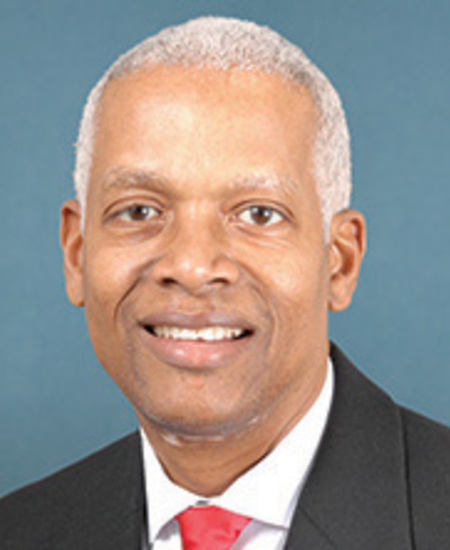
Rep. Henry C. "Hank" Johnson, Jr.
Sponsored bills
Veteran Deportation Prevention and Reform Act This bill provides protections from deportation for noncitizen veterans and contains other related provisions. U.S. Immigration and Customs Enforcement (ICE) must identify each individual in removal proceedings who is a member of the Armed Forces, a veteran, or a noncitizen spouse or minor child of such an individual. That individual may not be removed until (1) ICE has transferred that individual's case files to an advisory committee created under this bill, and (2) that committee has provided recommendations as to the outcome of the case. The Department of Homeland Security (DHS) shall create a system to share information across various agencies about noncitizen veterans who may be subject to removal to ensure that such a veteran's military service is taken into consideration in immigration-related cases. DHS shall also create a system for (1) identifying noncitizens who are or may be veterans, and (2) collecting data relating to such noncitizens who are in removal proceedings or may have been removed. DHS and the Department of Defense must jointly carry out a program to naturalize a noncitizen (and the noncitizen's spouse and minor children) who serves on active duty in the Armed Forces and is not otherwise ineligible for citizenship if that noncitizen submits an application. DHS shall also establish a program for eligible noncitizen veterans (generally those not convicted for certain serious crimes) to obtain permanent resident status. Similarly, the Department of Justice shall provide permanent resident status to such an eligible veteran in removal proceedings or subject to a final order of removal.
Emmett Till Antilynching Act This bill makes lynching a federal hate crime offense. Specifically, the bill imposes criminal penalties—a fine, a prison term of up to 30 years, or both—on an individual who conspires to commit a hate crime offense that results in death or serious bodily injury or that includes kidnapping or an attempt to kidnap, aggravated sexual abuse or an attempt to commit aggravated sexual abuse, or an attempt to kill.
This resolution supports the goals and ideals of National Women's History Month and recognizes the women and organizations that continue to promote the teaching of women's history.
Federal Government Advertising Equity Accountability Act This bill requires the President to include information in each budget regarding executive agency expenditures for advertising services, including expenditures for the advertising services of socially and economically disadvantaged small businesses and of women and minority-owned businesses.
Chattahoochee River Act This bill requires the U.S. Army Corps of Engineers (USACE) to provide design and construction assistance for water-related resource protection and restoration projects that affect the Chattahoochee River Basin. The basin is located in Georgia, Alabama, and Florida. Specifically, the bill requires USACE to provide assistance to state and local agencies and tribal entities for projects that include (1) sediment and erosion control, (2) ecosystem restoration, (3) protection of essential public works, and (4) the beneficial uses of dredged material. Further, the bill requires USACE, stakeholders, and state and local agencies to develop a comprehensive Chattahoochee River Basin restoration plan. The plan must give priority to eligible projects that will also improve the quality or quantity of the water or that use natural hydrological features and systems.
Sickle Cell Care Expansion Act of 2022 This bill establishes programs to increase treatment and other services for populations with sickle cell disease. Sickle cell disease is an inherited blood disorder that can lead to pain, anemia, infections, and stroke. Specifically, the Department of Health and Human Services must award grants to federally qualified health centers, community-based organizations, or other nonprofits that treat or otherwise support populations with sickle cell disease for education and advocacy programs concerning the disease. Additionally, the Health Resources and Services Administration must establish a program to provide scholarships or student loan repayment awards to individuals who commit to engage in clinical practice or research related to sickle cell disease for a period of obligated service as physicians.
Disadvantaged Business Enterprise Supportive Services Expansion Act The bill increases funding for and expands the disadvantaged business enterprise supportive services program of the Department of Transportation (DOT). The program provides training, assistance, and services to minority-owned small businesses to help them achieve proficiency to compete, on an equal basis, for federal aid highway project contracts and subcontracts. Specifically, the bill (1) increases the annual funding cap for the program from $10 million to $25 million, and (2) authorizes DOT to implement the program at the Federal Transit Administration and Federal Aviation Administration so that small businesses owned and controlled by socially and economically disadvantaged individuals may achieve proficiency to compete for contracts and subcontracts regarding public transportation and airport projects.
Creating a Respectful and Open World for Natural Hair Act of 2022 or the CROWN Act of 2022 This bill prohibits discrimination based on a person's hair texture or hairstyle if that style or texture is commonly associated with a particular race or national origin. Specifically, the bill prohibits this type of discrimination against those participating in federally assisted programs, housing programs, public accommodations, and employment. Persons shall not be deprived of equal rights under the law and shall not be subjected to prohibited practices based on their hair texture or style. The bill provides for enforcement procedures under the applicable laws.
Forced Arbitration Injustice Repeal Act of 2022 or the FAIR Act of 2022 This bill prohibits a predispute arbitration agreement from being valid or enforceable if it requires arbitration of an employment, consumer, antitrust, or civil rights dispute.