Maddy summaryHRES 1159 is a symbolic resolution (not a law) recognizing the existing partnership between the U.S. Department of Agriculture (USDA) and NASA. It highlights how the agencies share data - like NASA’s satellite soil moisture monitoring and USDA’s ground-based research - to improve agricultural practices, resource conservation, and food security. The resolution encourages them to strengthen collaboration, including STEM education efforts, to support farmers and ranchers who produce food, fuel, and fiber. It does not create new policies or funding but formally acknowledges their mutual benefits and urges continued cooperation.
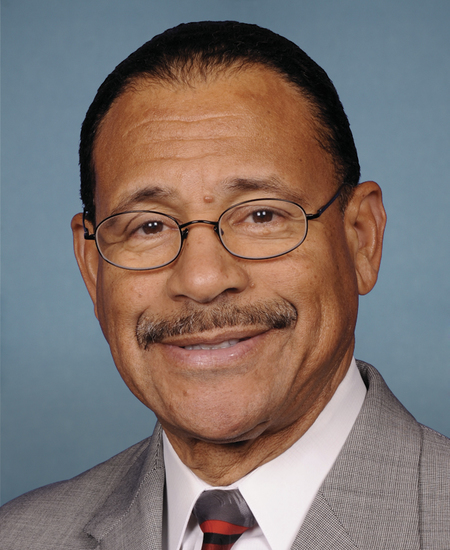
Rep. Sanford D. Bishop, Jr.
Sponsored bills
Securing and Understanding our National Renewable Agriculture Yields for Energy Act or the SUNRAY for Energy Act This bill requires the Department of Agriculture (USDA) to conduct a study, research, and demonstration regarding agrivoltaic systems. The bill defines agrivoltaic system as a system under which solar energy production and agricultural production, including crop or animal production, occur in an integrated manner on the same piece of land through the duration of a project. Specifically, the bill directs USDA to study agrivoltaic systems, which includes conducting a review of current research and identifying research gaps. USDA must also develop a five-year plan for using USDA's research, extension, outreach, conservation, and renewable energy activities to better support agrivoltaic systems that do not displace agricultural production. USDA must also develop a definition for agrivoltaic system for the purposes of incorporating these systems into federal agriculture and energy programs, and investment tax credits. In addition, the Agricultural Research Service must establish and maintain a network of agrivoltaic systems research and demonstration sites in multiple U.S. regions to investigate increasing agricultural productivity and profitability, enhancing agricultural resilience and the capacity to mitigate and adapt to climate change, protecting biodiversity, and increasing economic opportunities in rural communities. Further, the Natural Resources Conservation Service must develop national and regional guidance on best practices for the protection of soil health and productivity during the siting, construction, operation, and decommissioning of solar energy systems on agricultural land. The guidance must be updated at least every two years.

This resolution supports the designation of National FFA Week. It also (1) recognizes the important role of the National FFA Organization (Future Farmers of America) in developing the next generation of globally conscious leaders who will change the world; and (2) celebrates the 10th anniversary of the Give the Gift of Blue program, which has donated more than 17,000 FFA blue jackets to FFA members in need.
Maddy summaryHR 7015, the CAREERS Act, expands federal funding for workforce training programs to better serve rural communities. It modifies eligibility to include career and technical education schools and requires training programs to align with specific rural industry sectors like broadband, healthcare, agriculture, manufacturing, and water services. The bill mandates grantees to report on employment outcomes for participants and addresses rural workforce challenges such as worker displacement and youth migration. This directly affects rural workforce development boards, training providers, and workers in designated rural industries seeking job skills and career pathways.
Maddy summaryThis bill authorizes a Congressional Gold Medal to recognize individuals who defended Bataan, Corregidor, Attu, and other Pacific locations during World War II. It specifically honors U.S. and Filipino military personnel who fought or were held as prisoners of war by Japan between December 1941 and August 1945, as well as the impacted Saskinax̂ people (indigenous Attu residents). The medal will be struck by the U.S. Treasury, displayed at the Smithsonian Institution, and made available for research. Duplicate bronze medals may be sold to cover costs, with proceeds deposited into the U.S. Mint fund. This is a commemorative measure with no new benefits or policy changes.
Maddy summaryThis bill (HR 9242) renames a U.S. Department of Agriculture facility in Athens, Georgia, as the "Abit Massey Poultry Research Center." It directly affects the U.S. National Poultry Research Center and all federal documents referencing it, requiring updates to official records, maps, and publications. The bill makes no policy changes; it solely updates the facility's name and all related government references to honor Abit Massey.
Maddy summaryThis bill creates a 5-year pilot program (2025-2030) to provide crop loss payments to small-scale farmers growing specific seasonal and perishable crops like asparagus, bell peppers, blueberries, cucumbers, and squash. Farmers qualify if their crop's market price falls below a calculated 5-year average price (excluding the highest and lowest years) due to imports, and they meet income thresholds ($5 million average adjusted gross income over 3 years, with 75%+ income from farming). Payments equal the price difference multiplied by the farmer's average production (excluding extreme years), funded at $200 million annually. The program directly affects eligible small farms in regions where these crops are grown within their seasonal marketing window (typically 4 weeks post-harvest).
Maddy summaryThis bill permanently removes a 2026 expiration date for a tax exclusion allowing employers to pay employees' student loans through educational assistance programs without those payments being counted as taxable income. It directly affects employees who receive employer-sponsored student loan repayment assistance and employers offering such programs. The key provision amends the Internal Revenue Code to make this tax exclusion permanent, applying to all future payments made after the bill's enactment. This change simplifies the tax treatment for both employers and employees participating in these student loan repayment programs.
Maddy summaryHRES 1385 designates the week of August 4-10, 2024, as "National Farmers Market Week" to recognize the economic and community role of farmers markets. The resolution highlights that farmers markets generated $1.7 billion in income for U.S. farmers in 2020, supported 8,771 markets nationwide by 2019, and connect urban and rural communities while promoting sustainable farming and nutrition access. It does not create new laws or funding but formally acknowledges these markets’ contributions to local economies, public health, and community engagement. The resolution aims to raise awareness of farmers markets’ importance, directly affecting farmers, vendors, and consumers who rely on these venues.
Maddy summaryHR 2971, the Veterans Claims Education Act of 2023, requires the Department of Veterans Affairs (VA) to provide veterans filing claims with clear information about free or low-cost assistance. Specifically, it mandates that veterans not represented by an accredited person receive notice about free help from veterans service organizations, an online directory of trained representatives, and how to report unaccredited representatives charging fees. The VA must also include fee warnings and links to these resources on its claim-filing websites. Additionally, the bill requires the VA to review and report on its processes for recognizing accredited representatives within 180 days of enactment.