

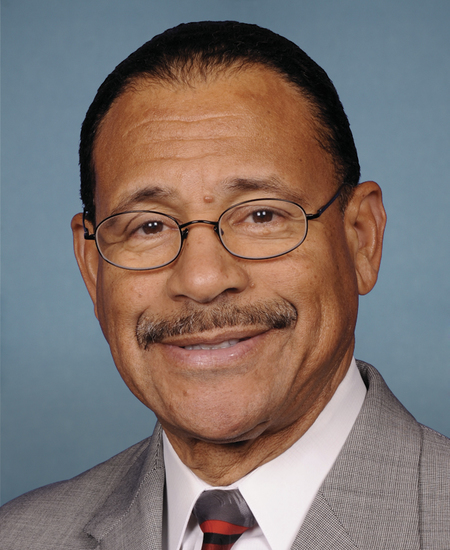
Photo of Sanford D. Bishop, Jr.
D United States House · District 2 · Georgia On the 2026 ballot

Rep. Sanford D. Bishop, Jr.

Compare
Total votes
2,837
all sessions
Attendance
99%
34 missed
Near the chamber average
With party
97%
of cast votes
Lower than 79% of chamber peers
Bipartisan score
2%
crosses aisle rarely
Higher than 78% of chamber peers
Sponsored
1,335
bills & resolutions
Near the chamber average
Committees
4
assignments
1,335 bills and resolutions

Sponsored bills

Total
1,335
Primary
27
Co-sponsor
1,308
This page
1,335
matching current filters
Co-sponsor HR 1054
In committee · Indiana House · Co-sponsor
Educators Expense Deduction Modernization Act of 2025

Maddy summaryHR 1054, the Educators Expense Deduction Modernization Act of 2025, increases the annual tax deduction available to eligible K-12 teachers for out-of-pocket classroom expenses. The bill raises the deduction limit from $250 to $1,000 per year for qualifying educators, applying to taxable years beginning December 31, 2025. It amends Internal Revenue Code sections 62(a)(2)(D) and 62(d)(3) to update the deduction amount and relevant tax year references. This change directly affects elementary and secondary school teachers who itemize deductions and incur eligible classroom costs. The bill makes no other policy changes beyond modernizing the deduction amount and effective date.

In committee Feb 6, 2025 1 co-sponsor
Co-sponsor HR 1103
In committee · Indiana House · Co-sponsor
New Markets Tax Credit Extension Act of 2025

Maddy summaryThis bill permanently extends the New Markets Tax Credit (NMTC), a federal tax incentive that encourages private investment in low-income communities. It directly affects community development entities (CDEs) that channel capital into underserved neighborhoods for projects like housing, healthcare, and businesses. Key provisions include permanently extending the credit beyond 2025, adding annual inflation adjustments to the credit amount starting in 2026, and ensuring the credit isn't reduced by the alternative minimum tax for investments made after December 2024. The changes apply to taxable years beginning after December 2024, providing long-term stability for community development financing.

In committee Feb 6, 2025 1 co-sponsor
Co-sponsor HR 1083
In committee · Indiana House · Co-sponsor
Incentivizing Readiness and Environmental Protection Integration Sales Act of 2025

Maddy summaryThis bill creates a tax exclusion for landowners who sell certain property interests through the Defense Department's Readiness and Environmental Protection Integration (REPI) program. It excludes the gain from taxable income when selling "qualified real property interests" (including full ownership, remainder interests, or surface use restrictions) to a qualified organization under the REPI program, which protects military readiness areas while conserving environmentally sensitive lands. The exclusion does not apply if the property was purchased within three years prior to sale (except for family partnerships or family-owned entities). This policy change directly affects landowners participating in the REPI program by reducing tax liability on qualifying sales.

In committee Feb 6, 2025 1 co-sponsor
Co-sponsor HR 1099
In committee · Indiana House · Co-sponsor
CLEAR Act

Maddy summaryThe CLEAR Act extends the Freedom of Information Act (FOIA) to certain federal entities established under Section 3161 of Title 5, United States Code, including the National Archives and Records Administration. It requires these entities to process FOIA requests for all records - regardless of when they were created - starting from the law's enactment date. This change directly affects the public, who can now access historical and current records held by these entities through FOIA. The bill does not alter existing record-keeping practices but ensures consistent access to information across these specific federal bodies.

In committee Feb 6, 2025 1 co-sponsor
Co-sponsor HRES 116
In committee · Indiana House · Co-sponsor
Condemning the pardons for individuals who were found guilty of assaulting Capitol Police Officers.

Maddy summaryHRES 116 is a non-binding House resolution condemning pardons granted to individuals convicted of assaulting Capitol Police officers. It expresses the House's disapproval of such pardons but does not alter any laws or affect legal proceedings. The resolution has no legal force and serves only as a formal statement of disapproval by the sponsoring lawmakers. It directly addresses the pardons of specific individuals found guilty in criminal cases related to the January 6, 2021, Capitol breach.

In committee Feb 5, 2025 1 co-sponsor
Co-sponsor HR 989
In committee · Indiana House · Co-sponsor
To codify Executive Order 11246 titled "Equal Employment Opportunity".

Maddy summaryHR 989 would turn Executive Order 11246 into law, requiring federal contractors and subcontractors to follow its equal employment nondiscrimination rules. This bill directly affects businesses working with the U.S. government by making these requirements legally binding. The key provision ensures the existing order has the full force of law, rather than being subject to executive changes.

In committee Feb 5, 2025 1 co-sponsor
Co-sponsor HR 1020
In committee · Indiana House · Co-sponsor
BOOST Act

Maddy summaryHR 1020 (BOOST Act) creates a tax credit for homeowners in rural unserved areas to improve broadband access. It allows a 75% credit (up to $400) for purchasing signal boosters, satellite customer equipment, or ground stations used in a primary residence. The credit applies only once per household and expires after 2029, targeting areas eligible for FCC's Rural Digital Opportunity Fund. This directly affects individual homeowners in designated rural broadband gaps seeking to enhance their internet connectivity.

In committee Feb 5, 2025 1 co-sponsor
Co-sponsor HR 995
In committee · Indiana House · Co-sponsor
No Tax Breaks for Outsourcing Act

Maddy summaryThis bill modifies corporate tax rules to prevent companies from avoiding US taxes by moving operations overseas. It targets tax breaks that companies currently use when they outsource work to foreign countries or reorganize as foreign entities (so-called "inverted corporations"). The bill requires companies to pay tax on foreign profits based on each country where they operate, limits tax deductions for interest by multinational corporations, and treats foreign corporations managed in the US as domestic for tax purposes. These changes aim to close loopholes that allow companies to reduce their US tax burden through foreign operations.

In committee Feb 5, 2025 1 co-sponsor
Co-sponsor HR 916
In committee · Indiana House · Co-sponsor
Rosa Parks Commemorative Coin Act

Maddy summaryHR 916, the Rosa Parks Commemorative Coin Act, authorizes the U.S. Treasury to mint and sell commemorative coins (gold $5, silver $1, and half-dollar) in honor of Rosa Parks, a pivotal civil rights leader whose 1955 bus protest sparked the Montgomery Bus Boycott. The coins, to be issued in 2029, will feature designs reflecting her legacy and be sold to the public at face value plus a fixed surcharge ($35 for gold, $10 for silver, $5 for half-dollar). All surcharge funds will be directed to the Rosa and Raymond Parks Institute for Self Development to support its youth development and civil rights education programs. The bill ensures the coins are legal tender, with the Treasury recovering all costs without net government expense.

In committee Feb 4, 2025 1 co-sponsor
Co-sponsor HR 930
In committee · Indiana House · Co-sponsor
Stop the Wait Act of 2025

Stop the Wait Act of 2025 This bill phases out the initial waiting period for Social Security Disability Insurance (SSDI) benefits and eliminates the waiting period for certain disabled individuals to become eligible for Medicare.  Under current law, individuals generally must wait five months after the onset of disability to begin receiving SSDI benefits. The bill would gradually reduce this waiting period before eliminating it entirely in the year 2030.  Further, the bill would eliminate the 24-month waiting period for certain disabled workers and other individuals to become eligible for Medicare. Under current law, individuals under the age of 65 may generally enroll in Medicare after they have been eligible for SSDI or Social Security child’s, widow’s, or widower’s benefits by reason of disability for 24 months. The bill would eliminate this waiting period for individuals for whom the annual cost of certain medical insurance would exceed a specified percentage of their household income (i.e., those who cannot afford minimum essential coverage). Medicare eligibility for these individuals must be available retroactively to the first month that an individual qualified for SSDI or Social Security child’s, widow’s, or widower’s benefits by reason of disability.

In committee Feb 4, 2025 1 co-sponsor
Showing 361 to 370 of 1,335 bills
Previous 1 … 36 37 38 … 134 Next