

Maddy summaryThe Nutrition CARE Act of 2025 requires Medicare to cover medical nutrition therapy services for beneficiaries with eating disorders starting January 1, 2026. It directly affects Medicare beneficiaries with eating disorders, including an estimated 1.6 million people on Medicare Part B, with specific focus on underserved groups like 420,500-560,700 Black, Indigenous, and People of Color beneficiaries. The bill mandates coverage through registered dietitians or nutrition professionals, requiring at least 13 hours of services in the first year (including initial assessment) and 4 hours annually thereafter, with referrals from physicians or psychologists. This addresses a current gap where Medicare does not cover medical nutrition therapy for eating disorders at any treatment level. The policy change aims to improve access to a critical treatment pillar for a condition with high mortality rates and significant healthcare costs.
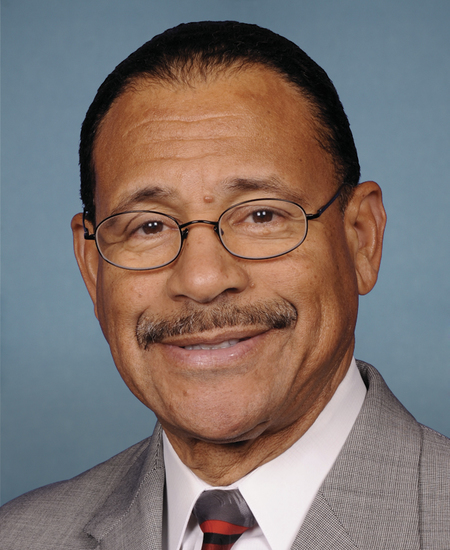
Rep. Sanford D. Bishop, Jr.
Sponsored bills
Maddy summaryThis bill establishes a federal grant program to fund mental health crisis response training for law enforcement and corrections officers. It provides up to $10 million annually for state, local, and tribal agencies to cover training costs, including travel and lodging, for officers responding to mental health crises. The training must be evidence-based, developed with healthcare professionals and people with lived mental health experience, and cover de-escalation, empathy, community resources, and safety protocols. Agencies applying must demonstrate current training gaps, officer safety records, and how the training will reduce injuries to officers and the public during mental health emergencies. The grants are supplemental to existing funding and require annual reporting on training participation and outcomes.
Maddy summaryHR 2077, the Helping Heroes Act, establishes the Veteran Family Resource Program within the Department of Veterans Affairs. The program requires the VA to appoint family coordinators at each Veterans Health Administration network within five years to help veterans and their families access VA benefits and community resources addressing social needs like housing, food, and mental health. Coordinators must assess family needs, build relationships, and connect veterans to services, including wellness programs for children. The VA must also conduct a survey of disabled veterans' families every five years to identify unmet needs and report program outcomes to Congress within two years of implementation. This bill directly affects veterans (especially those with disabilities) and their families by connecting them to support services through VA and community partnerships.
Save America's Forgotten Equines Act of 2025 or the SAFE Act of 2025 This bill permanently prohibits the slaughter of equines (e.g., horses and mules) for human consumption. (Current law prohibits the slaughter of dogs and cats for human consumption. This bill extends the prohibition to equines.) Specifically, this bill prohibits a person from knowingly (1) slaughtering an equine for human consumption; or (2) shipping, transporting, possessing, purchasing, selling, or donating an equine to be slaughtered for human consumption or equine parts for human consumption. The bill subjects a violator to a fine. The bill applies to conduct in or affecting interstate or foreign commerce or within the special maritime and territorial jurisdiction of the United States. However, it does not apply to an activity carried out by an Indian for a religious ceremony. As background, in recent years, the appropriations acts have prohibited the Department of Agriculture (USDA) from using federal funds to inspect horses before they are slaughtered for human consumption. Therefore, there are currently no USDA-inspected horse slaughter facilities in the United States.
Maddy summaryHR 1417 establishes a new program within the U.S. Department of Agriculture to provide tailored technical assistance to rural health care facilities. The program directly supports facilities like hospitals, clinics, and health centers in rural areas by helping them identify operational needs, improve financial management, and access USDA loan and grant programs. Key provisions include prioritizing facilities in medically underserved areas or facing financial vulnerability, with a $2 million annual funding limit for fiscal years 2026-2030. The program requires annual reports on outcomes and effectiveness to Congress, focusing on preventing facility closures and strengthening rural health care delivery.
Maddy summaryHR 1271 increases funding for scholarships at 1890 institutions - historically Black colleges and universities established under the Second Morrill Act - by adding mandatory annual support. It amends existing law to explicitly include bachelor's and graduate programs in scholarship eligibility and requires $15 million annually from the Commodity Credit Corporation starting in fiscal year 2025, to remain available until spent. This funding directly supports students at these institutions by expanding access to financial aid for higher education. The bill updates previous funding language to ensure ongoing support beyond 2023.
Maddy summaryHRES 260 designates March 27, 2025, as "National Women in Agriculture Day" to recognize women's contributions to U.S. agriculture. The resolution highlights that women represent over 1.2 million agricultural producers (more than one-third of all U.S. producers) and generated $222 billion in agricultural sales in 2022. It encourages citizens to recognize women working in agriculture and supports their roles in leading the industry, mentoring future agricultural workers, and advancing food production. This is a symbolic resolution with no new policies or funding, solely celebrating existing contributions during National Women’s History Month and National Ag Week.
Maddy summaryThe COST of Relocations Act (HR 2470) requires federal agencies to conduct a detailed benefit-cost analysis before relocating more than 5% or 100 employees (whichever is smaller) outside their current commuting area. Agencies must submit an unredacted report to their Inspector General, covering expected outcomes, stakeholder impacts, risk assessments, and how the move affects the agency's mission. The Inspector General then reviews the report and submits findings to Congress within 90 days, including an assessment of whether the relocation complies with existing OMB guidance. This law applies specifically to significant relocations of federal operations, ensuring transparency without overriding other legal requirements for such moves.
Maddy summaryHRES 256 designates March 2025 as Endometriosis Awareness Month, recognizing endometriosis as a common chronic condition affecting approximately 1 in 10 women of reproductive age. The resolution supports raising public awareness, promoting early detection and culturally competent care for those with the disease, and encourages increased research funding for better treatments and a potential cure. It specifically highlights the significant impacts of endometriosis, including diagnostic delays (3-11 years), chronic pain, high healthcare costs ($13,000+ annually per patient), and reduced workforce participation. This non-binding resolution directly affects women and girls living with endometriosis and aims to foster public education and support through designated awareness activities.
Maddy summaryHR 2381, the SCREENS for Cancer Act of 2025, reauthorizes and updates the National Breast and Cervical Cancer Early Detection Program (NBCCEDP). It directly affects low-income, uninsured, or underinsured women across all 50 states, territories, and tribal communities by expanding access to breast and cervical cancer screenings, diagnostic services, and patient navigation support. Key provisions include updating program language to emphasize prevention alongside detection and control, adding specific strategies to reduce disparities, and appropriating $235 million annually for fiscal years 2026-2030. The bill also requires a GAO study by 2027 to assess program eligibility, service trends, and barriers to screening access.