

Maddy summaryThis bill designates the Museum of the Blind People’s Movement (currently located at the National Federation of the Blind Jernigan Institute in Baltimore, Maryland) as the National Museum of the Blind People’s Movement. It formally recognizes the museum, operated by blind individuals, as the first national institution dedicated to preserving and showcasing the history of blind people’s contributions and struggles in the U.S. The museum already collects artifacts, documents, and literature documenting the blind community’s collective achievements and civil rights efforts since the 1940s. The bill’s key provision is this official congressional designation, elevating the existing museum as a national platform for education and awareness about blind people’s movement.
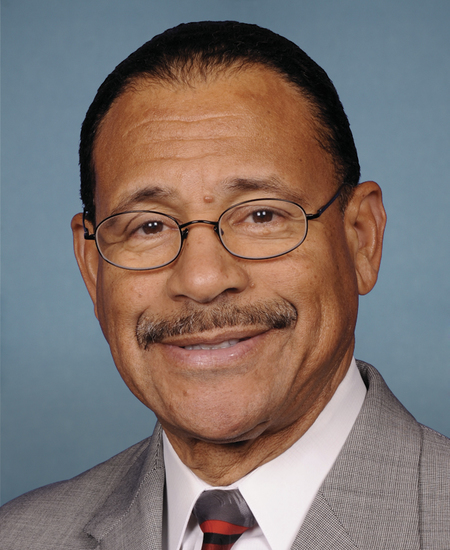
Rep. Sanford D. Bishop, Jr.
Sponsored bills
Maddy summaryThis bill creates two federal grant programs to support medical residency training in rural areas. The first program provides grants to eligible organizations (like rural hospitals, health centers, and medical schools) to establish or expand residency programs where doctors train in rural settings for over half their residency time, focusing on primary care, high-need specialties, or maternal health. The second program funds technical assistance grants to help these organizations apply for and run the training programs. The bill authorizes $12.7 million annually from 2026 to 2030, with grants for the training programs lasting up to 3 years and technical assistance grants up to 4 years.
Maddy summaryHRES 856 is a non-binding resolution expressing the House of Representatives' view that the U.S. Department of Agriculture (USDA) should use its existing contingency funds and interchange authority to fund the Supplemental Nutrition Assistance Program (SNAP) for November 2025. The resolution cites that the USDA holds over $5 billion in contingency funds set aside for emergencies and has legal authority under the Department of Agriculture Organic Act to transfer funds between nutrition programs to maintain SNAP benefits. This would directly support approximately 42 million people relying on SNAP, including 16 million children, 8 million seniors, 4 million people with disabilities, and 1.2 million veterans, preventing disruption during a potential funding gap. The resolution does not create new law but urges the administration to use existing resources to ensure continued food assistance.
Maddy summaryHR 6358, the Veteran Education Empowerment Act, creates a federal grant program to help colleges establish or improve dedicated Student Veteran Centers. These centers provide veterans, active-duty service members, and their families with lounge space, benefits counseling, academic support, and mental health services. Institutions must serve significant numbers of veterans and have sustainability plans to qualify for grants, with funding capped at $500,000 per institution over four years. The bill directly affects colleges serving veterans and aims to address challenges like isolation and transition difficulties through centralized campus support.
Give Kids a Chance Act of 2025 This bill expands the Food and Drug Administration’s (FDA’s) authority with respect to research on rare pediatric diseases, including by permitting the FDA to take enforcement action against drug sponsors that fail to satisfy pediatric study requirements and by reauthorizing programs that support pediatric research. Specifically, the bill modifies requirements relating to molecularly targeted pediatric cancer investigations to permit research on new drugs in combination with active ingredients that have already been approved, provided certain conditions are met; permits the FDA to take enforcement action against drug sponsors that fail to comply with pediatric study requirements, if such sponsors demonstrated a lack of due diligence in satisfying the requirement; renews the FDA’s authority to award priority review vouchers to sponsors of new products intended to treat rare pediatric diseases through September 30, 2029; and reauthorizes through FY2027 certain funding for the National Institutes of Health to support priority pediatric research. The bill also provides statutory authority for the FDA’s interpretation of the orphan drug exclusivity period. The bill specifies, consistent with FDA regulations, that the seven-year market exclusivity period for drugs for rare diseases or conditions (i.e., orphan drugs) prohibits the approval of the same drug for the same approved use or indication with respect to the disease or condition. (In Catalyst Pharmaceuticals, Inc. v. Becerra , a court rejected the FDA’s interpretation and held that orphan drug exclusivity extends to all uses or indications for the disease or condition.)
Maddy summaryHRES 906 would change House rules to require a 60% vote of members present and voting to censure, disapprove, or remove any House member, delegate, or resident commissioner from committee assignments. Currently, a simple majority (50%+1) could trigger these actions, but this bill raises the threshold to a supermajority. The change applies directly to all voting members of the House and affects disciplinary procedures for members. This is a procedural rule change that makes it harder to take formal disciplinary actions against House members.
Maddy summaryHR 6181, the John Lewis Every Child Deserves a Family Act, prohibits child welfare agencies receiving federal funds from discriminating against children, youth, or prospective foster/adoptive parents based on religion, sex (including sexual orientation and gender identity), or marital status. It directly affects LGBTQ youth in foster care - overrepresented at 30% of the system - who face higher risks of trauma, group home placements, and suicide attempts compared to non-LGBTQ peers. Key provisions require agencies to collect data on sexual orientation and gender identity, establish a National Resource Center for LGBTQ youth support, provide cultural competency training, and eliminate discriminatory practices. The law aims to improve safety, permanency, and placement stability by expanding access to family-based care and ensuring equitable services for all children in the system.
Maddy summaryThis bill (HR 6015) ensures existing labor agreements between the Department of Veterans Affairs (VA) and employee unions remain in full effect through their scheduled terms. It also cancels two executive orders (14251 and 14343) that previously excluded VA from standard federal labor-management programs. The bill directly affects VA employees and their unions by preserving current collective bargaining rights and requiring VA to follow standard federal labor rules. It does not change veterans' benefits or healthcare access; it only modifies VA's internal labor relations procedures. This is a procedural bill focused on labor-management processes, not direct policy changes for veterans.
Maddy summaryThis bill establishes fairer pay and retirement benefits for federal firefighters. It requires that overtime hours worked during a firefighter's regular schedule be included in retirement calculations, improving retirement payouts. The bill also sets a maximum 60-hour regular workweek for federal firefighters, to be defined by the Office of Personnel Management within one year. These changes directly affect federal firefighters by addressing pay disparities with municipal firefighters and enhancing recruitment and retention.
Maddy summaryHR 6146, the STAY Act, requires the Department of Defense to submit a report by March 2026 analyzing options to reduce frequent military relocations (permanent changes of station) and sea-shore rotations (moving between ship assignments and shore duty). The report must assess costs, potential savings, and impacts on service member retention, spouses' employment, and children's education across all military branches. It will identify feasible adjustments to tour lengths or rotations while maintaining mission readiness and career progression, and recommend legislative or policy changes for potential pilot programs. This bill does not change current policy but mandates a study to inform future decisions about military assignment patterns.