

Family and Medical Insurance Leave Act or the FAMILY Act This bill entitles every employee to a family and medical leave insurance (FMLI) monthly benefit payment of two-thirds of the employee's regular pay, limited to a maximum of $4,000, for not more than 60 days of qualified caregiving. The bill establishes the Office of Paid Family and Medical Leave within the Social Security Administration to administer the FMLI program. An FMLI benefit payment must be coordinated with any periodic benefits received under a state or local temporary disability insurance or family leave program. The bill imposes a tax on employers, employees, and self-employed individuals to fund FMLI benefits. It also establishes the Federal Family and Medical Leave Insurance Trust Fund to hold tax revenues.
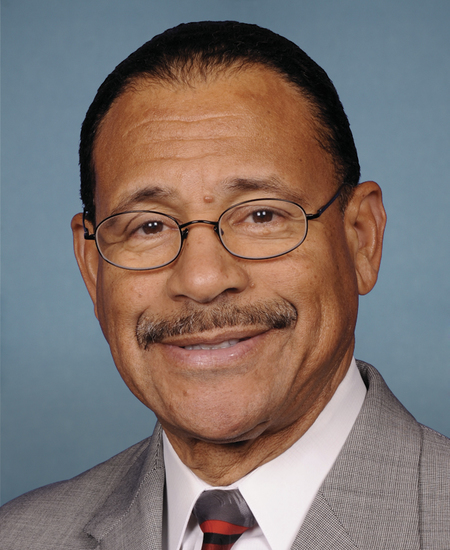
Rep. Sanford D. Bishop, Jr.
Sponsored bills
American Opportunity Accounts Act This bill establishes tax-exempt American Opportunity Accounts to provide children at birth with a $1,000 savings account with annual contributions up to $2,000 depending on family income. The accounts are available to children at age 18 for specified purposes, including educational expenses, home ownership, and investment that provides long-term returns.
This resolution expresses support for a National Day of Mourning for the lives lost as a result of COVID-19 (i.e., coronavirus disease 2019).
USPS Fairness Act This bill repeals the requirement that the U.S. Postal Service annually prepay future retirement health benefits.
Advancing Connectivity during the Coronavirus to Ensure Support for Seniors Act or the ACCESS Act This bill provides funding to increase access to telehealth services and virtual visits in skilled and other nursing facilities during the COVID-19 (i.e., coronavirus disease 2019) emergency. The bill designates the funding as emergency spending, which is exempt from discretionary spending limits. Specifically, the bill provides additional funding for FY2021, to remain available through FY2022, to the Telehealth Resource Center Program to address barriers to telehealth faced by skilled and other nursing facilities. The Office for the Advancement of Telehealth within the Federal Office of Rural Health Policy in the Health Resources and Services Administration manages this program. In addition, the bill provides funding for FY2021, to remain available through one month after the emergency period ends, to the Department of Health and Human Services (HHS) for grants to nursing facilities to support virtual visits for residents during the COVID-19 emergency. HHS must develop relevant guidance for these grants within 15 days. HHS must also coordinate with the Federal Communications Commission to ensure grantees have access to telecommunications and broadband services.
Comprehensive Breast Reconstruction Act of 2021 This bill provides for Medicare, Medicaid, and private health insurance coverage of certain tattooing services in connection with post-mastectomy breast reconstruction, and aligns the scope of Medicare and Medicaid coverage of such breast reconstruction with that of private health insurance. Specifically, the bill provides for coverage of reconstructive tattooing services that are performed by a health care practitioner or state-licensed tattoo artist pursuant to a physician prescription, and expands Medicare and Medicaid coverage to include all stages of reconstruction, surgery to produce a symmetrical appearance, and prostheses and physical complications of mastectomies (e.g., lymphedemas).
Nationally Enhancing the Well-being of Babies through Outreach and Research Now Act or the NEWBORN Act This bill establishes a pilot program through which the Health Resources and Services Administration must award grants to territorial, tribal, and local health departments in areas with the highest rates of infant mortality to address birth defects, premature births, and other leading causes of infant death.
This concurrent resolution recognizes the difficult challenges Black veterans faced when returning home after serving in the Armed Forces, their heroic military sacrifices, and their patriotism in fighting for equal rights and for the dignity of a people and a nation. The concurrent resolution also recognizes the need for the Department of Veterans Affairs to continue to work to eliminate any health and benefit disparities for minority veterans.
This concurrent resolution calls for the Citizens' Stamp Advisory Committee to recommend that the Postmaster General issue a commemorative postage stamp honoring the Buffalo Soldiers.
This resolution recognizes Black History Month as an important time to reflect on the significant contributions of African Americans in the history of the United States, including in the Armed Forces.