Federal Death Penalty Prohibition Act This bill prohibits the imposition of a death penalty sentence for a violation of federal law. A person sentenced to death before enactment of this bill must be resentenced.
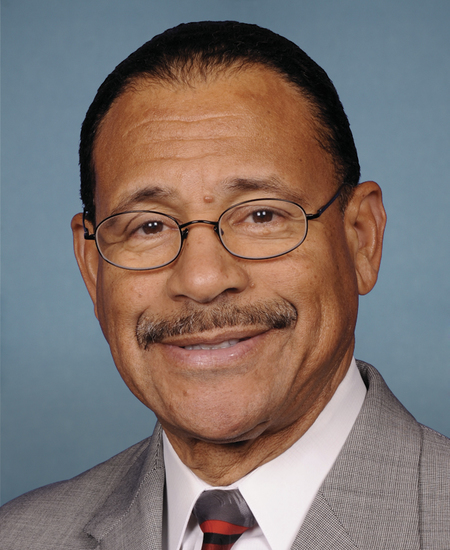
Rep. Sanford D. Bishop, Jr.
Sponsored bills
Build America's Libraries Act This bill establishes and provides funds through FY2024 for the Build America's Libraries Fund, from which the Institute of Museum and Library Services (IMLS) must allocate funding to states and, through them, need-based grants to libraries to make long-term improvements to library facilities. The IMLS must also award grants to Indian tribes and organizations that primarily serve and represent Native Hawaiians. Specifically, the bill requires each state that receives an allocation, and each library that receives a grant, to carry out certain activities to improve library facilities. These activities include constructing and renovating library facilities, investing in infrastructure projects to improve internet access and connectivity, improving indoor air quality, and making facilities accessible to individuals with disabilities. The bill also outlines administrative and oversight provisions, including by requiring library projects to use iron and steel products that are produced in the United States.

COVID-19 Eviction Consumer Report Fairness Act This bill prohibits from inclusion in a consumer credit report information related to an eviction occurring during the COVID-19 (i.e., coronavirus disease 2019) national emergency or occurring in the 120 days after the termination of such emergency.
Child Poverty Reduction Act of 2021 This bill requires the Department of Health and Human Services (HHS) and the Census Bureau to take certain actions with respect to poverty measures and data related to child poverty. It also requires the National Academy of Sciences to report annually on child poverty and study other issues, such as policies to reduce intergenerational poverty. Specifically, HHS must enter into an agreement with the Census Bureau to annually report an anchored supplemental poverty measure for individuals under the age of 18 and must otherwise collaborate with the bureau to, for example, correct income data to account for underreporting. Currently, the Census Bureau uses the official poverty measure (based on cash resources) and the supplemental poverty measure (based on both cash and certain noncash resources, such as nutrition assistance program benefits) to measure poverty. Anchoring the supplemental poverty measure fixes the poverty threshold at a given point in time and then adjusts it for inflation. HHS must publish resources on its website related to child poverty, and the Census Bureau must release certain economic and survey data at the same time it releases a specific report related to income, poverty, and health insurance coverage in the United States.
This bill raises the borrowing limit of the Commodity Credit Corporation from $30 billion to $68 billion.
This resolution expresses support for the goals of the International Decade for People of African Descent and calls on the United States, in cooperation with African descent communities and organizations, to develop strategies to combat racism domestically and globally.
Alzheimer's Caregiver Support Act This bill authorizes grants to expand training and support services for families and caregivers of individuals living with Alzheimer's disease or a related dementia. The Department of Health and Human Services may award these grants to community organizations and health care and social service providers.
Unemployment Insurance Technology Modernization Act of 2021 This bill requires the Department of Labor to study and report on the technology needs of federal and state unemployment compensation programs. Based on this study, Labor must develop, operate, and maintain a modular set of technology capabilities to modernize the delivery of unemployment compensation. Before the deployment of the technology capabilities to all states, Labor must select at least four states to participate in a pilot program to test the technology capabilities and demonstrate that they meet requirements. The bill establishes accessibility requirements for filing online unemployment compensation claims. In addition, it prohibits the technology capabilities from relying solely on a high-risk automated decision system to (1) deny a claim for unemployment compensation, (2) reduce the amount of unemployment compensation for which a claimant is eligible, or (3) deny a claimant's right to appeal an unemployment compensation decision.
Concealed Carry Reciprocity Act This bill establishes a federal statutory framework to regulate the carry or possession of concealed firearms across state lines. Specifically, an individual who is eligible to carry a concealed firearm in one state may carry or possess a concealed handgun (other than a machine gun or destructive device) in another state that allows its residents to carry concealed firearms. It sets forth requirements for the lawful concealed carry across state lines. The bill preempts most state and local laws related to concealed carry and establishes a private right of action for a person adversely affected by interference with a concealed-carry right established by this bill.
Original Black History Month Resolution of 2021 This resolution recognizes the importance of commemorating Black History Month to acknowledge the achievements of African Americans throughout history.