

Urban Forests Act of 2021 This bill provides for support to maintain urban forests. The Department of Agriculture (USDA) shall establish a grant program to be known as the Tree City USA Grant Program to provide competitive grants to qualifying local governments to enhance and maintain urban forests. USDA and the Department of Labor shall jointly establish Civilian Conservation Centers in urban and community areas. A specified five-year report on state forests and their resources shall contain an analysis of forest carbon over the previous two decades. Such report shall demonstrate the efforts taken by the Forest Service to conduct a strategic national forest inventory by measuring field plots in combination with advanced technology to improve data, information, and estimates of precision; and use advanced geospatial technologies to improve the area and volume estimates of those field plots, especially for sub-state regions and smaller areas. USDA shall enter into a memorandum of understanding with the Departments of Health and Human Services, Housing and Urban Development, the Interior, Labor, and Transportation and the Environmental Protection Agency to identify strategies to increase equitable access to urban forests through existing programs and authorities; and conduct research on the benefits of urban forests for air quality, heat island mitigation, energy burden reduction, and enhanced shading for heat-resilient housing and active transit.
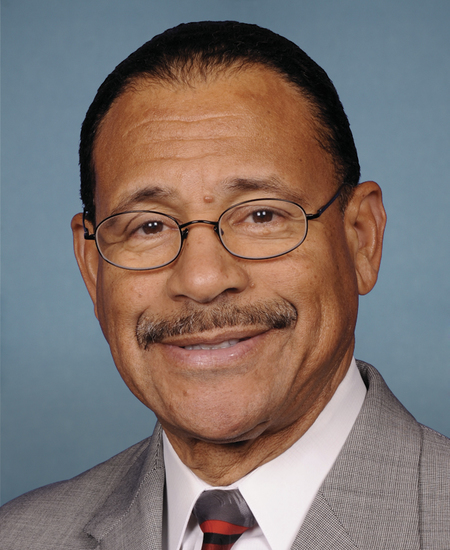
Rep. Sanford D. Bishop, Jr.
Sponsored bills
Hamas International Financing Prevention Act This bill imposes sanctions targeting Hamas, the Palestinian Islamic Jihad, and any affiliate or successor groups. The President shall periodically report to Congress a list of each foreign person or instrumentality that knowingly assists, provides significant support or services to, or is involved in a significant transaction with a senior member or supporter of any of the targeted groups. The President shall impose two or more sanctions on the named persons. Specifically, the person may be (1) denied credit and services from the Export-Import Bank, (2) barred from purchasing certain controlled defense articles, (3) denied exports of items on the U.S. Munitions List, (4) prevented from receiving exports of certain goods or technology controlled for national security reasons, (5) prohibited from receiving financing of more than $10 million from any U.S. financial institution, or (6) subject to property-blocking restrictions. The President shall periodically report to Congress a list of foreign governments that have repeatedly provided material support for the targeted groups' terrorist activities. The President shall bar these governments from receiving for one year (1) U.S. assistance, or (2) exports of controlled munitions. The Department of Treasury shall instruct U.S. leadership of international financial institutions to oppose the provision of assistance to an identified government for one year. The bill provides for certain exceptions and waivers, such as for transactions that would serve U.S. national interests. The President shall report to Congress and periodically provide briefings on other specified topics related to the targeted groups, such as where these groups secure financing and surveillance equipment.
National and Regional Greenways Act This bill requires the Department of Transportation (DOT) to establish a grant program for states, localities, and tribes to support community greenway paths for walking, bicycling, and other motor vehicle alternatives. DOT must designate eligible greenway paths that are considered regionally or nationally significant through a national greenway paths network; paths must cross multiple localities or states, reduce congestion, improve safety, benefit the environment, support communities, or meet other specified criteria. Eligible projects must support access to public parks, transportation, and other community needs.
United States Army Rangers Veterans of World War II Congressional Gold Medal Act This bill provides for the award of a single Congressional Gold Medal to the U.S. Army Rangers Veterans of World War II in recognition of their dedicated service during World War II.
Computer Science for All Act of 2021 This bill establishes a program through which the Department of Education must award grants to states, local educational agencies, and eligible tribal schools to serve as models for national replication of computer science education expansion efforts. Grant recipients must use these funds for certain activities, including training teachers to teach computer science and expanding access to high-quality learning materials and online options.
Veteran Education Empowerment Act This bill reauthorizes through FY2029 and otherwise revises a Department of Education (ED) grant program for student veteran centers. Specifically, ED must make grants to institutions of higher education (IHEs) or consortia of IHEs to establish, maintain, improve, or operate a student veteran center. A student veteran center is a dedicated space on a campus that provides students who are veterans or members of the Armed Forces with (1) a lounge or meeting space for themselves, their spouses or partners, their children, and veterans in the community; and (2) a centralized office for student veteran services that serves as a single point of contact to coordinate comprehensive support services for student veterans.
This resolution supports the designation of ALS Awareness Month. Amyotrophic lateral sclerosis (ALS) is a progressive neurodegenerative disease, also known as Lou Gehrig's disease, that affects nerve cells in the brain and spinal cord.
John Lewis Every Child Deserves a Family Act This bill prohibits discrimination on the basis of sexual orientation, gender identity, marital status, or religion in the provision of child welfare programs and services by entities receiving federal funding. The Department of Health and Human Services (HHS) must provide technical assistance to help states follow this requirement, including (1) guidance for bringing state laws into compliance, (2) developing training to increase cultural competency related to social identity, and (3) training for judges and attorneys involved in child welfare cases, among other supports. Additionally, HHS must establish the National Resource Center on Safety, Well-Being, Placement Stability, and Permanency for LGBTQ Children and Youth Involved with Child Welfare Services to provide training, technical assistance, and guidance to applicable state and local agencies and service providers. Further, the Religious Freedom Restoration Act may not be the basis for challenging the application or enforcement of this bill. The Government Accountability Office must study and report on states' compliance with the requirements of the bill no later than three years after enactment.
Pharmacy DIR Reform To Reduce Senior Drug Costs Act This bill establishes certain requirements for prescription drug plans and the prices of covered drugs under the Medicare prescription drug benefit. Specifically, the bill requires price concessions, payments, and fees that are negotiated with a pharmacy to be included in a drug's negotiated price, excluding incentive payments, and for this price to be provided at the point of sale. Additionally, prescription drug plans must report price concessions or incentive payments that are made after payment for covered drugs at the point of sale, including by contracted intermediaries, to the pharmacy at least annually. The Centers for Medicare & Medicaid Services must establish standardized pharmacy performance measures with respect to incentive payments and price concessions; such measures must account for all pharmacy types, including specialty pharmacies, and focus on patient health outcomes and other targeted areas.
Keeping All Students Safe Act This bill prohibits the use of seclusion and limits the use of physical restraint in schools and Head Start programs that receive federal funding. Specifically, the bill prohibits the use of seclusion, which is the involuntary confinement of a student alone in a room or area from which the student is physically prevented from leaving. The term does not include a time out, which may involve separating the student from others in a non-locked setting. The bill prohibits the use of mechanical or chemical restraints or physical restraints that restrict breathing or are life threatening. The bill outlines the requirements for the use of physical restraint, including that the student's behavior must pose an imminent danger of serious physical injury to the student or other individual. Each state must ensure that a sufficient number of program personnel are trained and certified by a state-approved crisis intervention training program. Additionally, each program must establish procedures to follow after an incident involving physical restraint. Further, the bill establishes enforcement provisions, including a private right of action for a student who has been subjected to unlawful seclusion or restraint. The Department of Education and the Department of Health and Human Services must withhold payments from a program for unlawful seclusion or restraint. Finally, the bill requires each state educational agency (SEA) to establish, implement, and enforce policies and procedures required by the bill. It also creates a grant program to assist SEAs with these activities.