

Maddy summaryHR 24, the Federal Reserve Transparency Act of 2023, requires a comprehensive audit of the Federal Reserve System's Board of Governors and Federal Reserve banks within 12 months of the bill's enactment. The Congressional auditor (Comptroller General) must then submit a detailed report to Congress within 90 days, including findings, conclusions, and recommendations for improving transparency. This bill directly affects the Federal Reserve System by mandating greater oversight of its operations and financial activities. The key provision repeals a prior limitation that prevented audits of certain Fed programs, aiming to clarify which activities are subject to audit under existing law.
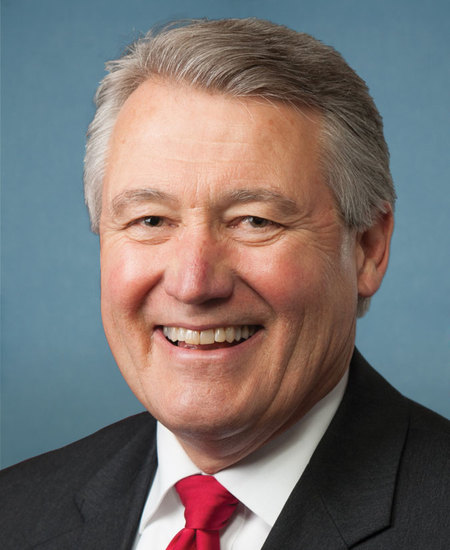
Rep. Rick W. Allen
Sponsored bills
WHO Withdrawal Act This bill requires the President to immediately withdraw the United States from the World Health Organization (WHO) and prohibits using any federal funds to provide for U.S. participation in the WHO. The bill also repeals the 1948 act authorizing the United States to join the WHO.
Maddy summaryHR 214, the Veterans’ True Choice Act of 2023, allows veterans with service-connected disabilities to choose TRICARE Select over VA health care. It creates a new category of "covered veteran beneficiaries" who can enroll in TRICARE Select during the annual open enrollment period, with cost-sharing based on their disability status - not their military service date. The bill requires the VA and Defense Departments to establish a reimbursement agreement for these enrollments and mandates quarterly reports to Congress on implementation. This change directly affects veterans who qualify for TRICARE only through this new provision, giving them a formal choice between VA care and TRICARE Select.
Maddy summaryHR 59, the SAVE Act, prohibits the sale of petroleum products drawn from the U.S. Strategic Petroleum Reserve (SPR) to entities headquartered in specific countries listed in federal regulations or to any entity based in Russia. This policy change directly affects energy companies and organizations operating in those designated countries or Russia, restricting their access to the government's emergency oil stockpile. The bill amends the Energy Policy and Conservation Act by adding a new section (170) that mandates this sales prohibition, with minor updates to existing law to reflect the change. The key mechanism is a direct ban on SPR petroleum sales to the specified entities, effective upon the bill's enactment.
Maddy summaryThis bill establishes nationwide recognition for valid concealed carry permits. It allows permit holders from any state to carry concealed handguns in states that either issue such permits or don't ban concealed carry, provided they carry a photo ID and their valid permit. Key provisions include making presentation of a valid permit and ID prima facie evidence of compliance, shifting the burden of proof to prosecutors if challenged, and requiring courts to award attorney fees to successful defendants. It does not override state laws prohibiting concealed carry on private property or government lands, nor does it affect restrictions on federal lands like national parks.
Jurists United to Stop Trafficking Imitation Child Exploitation Act of 2023 or the JUSTICE Act of 2023 This bill broadens the federal criminal prohibition on importation or transportation of obscene materials. Specifically, the bill makes it a crime to import, or knowingly use a common carrier or interactive computer service to transport, a child sex doll.
Maddy summaryHR 53 (FIND Act) requires federal contractors to certify they do not refuse to work with firearm manufacturers, dealers, ammunition sellers, or related safety device companies based on bias. It prohibits main contractors from awarding subcontracts exceeding 10% of a contract’s value to entities that fail to make this certification, and bans efforts to circumvent the rule through complex subcontract tiers. The law applies to all federal procurement contracts, directly affecting businesses bidding on government work. Violations risk contract termination and suspension from future government contracts.
Fair and Open Skies Act This bill prohibits the Department of Transportation (DOT) from issuing a foreign air carrier permit or an exemption from certain air carrier certificate requirements under the United States-European Union Air Transport Agreement of April 2007, unless DOT finds that issuing the permit or exemption would be consistent with Article 17 bis of the agreement, which provides that opportunities created by the agreement do not undermine labor standards or the labor-related rights and principles contained in the laws of the respective parties to the agreement; and imposes conditions on the permit or exemption necessary to ensure compliance with Article 17 bis . The bill modifies policy considerations relating to air carrier certificates to require DOT to consider preventing entry into U.S. markets by flag of convenience carriers (i.e., foreign air carriers established in a country other the home country of their majority owner in order to avoid regulations of the home country) and preventing the undermining of labor standards. In carrying out such air carrier certificate requirements, DOT must consider preventing entry of flag of convenience carriers into U.S. markets as being in the public interest and consistent with public convenience and necessity for safety in air transportation and air commerce. In formulating U.S. international air transportation policy relating to the elimination of discrimination and unfair competition, the Department of State and DOT must include in their considerations the undermining of labor standards.
Cardiovascular Advances in Research and Opportunities Legacy Act This act addresses research, education, and awareness concerning valvular heart disease and its treatment. This disease is caused by damage to or disease affecting any valve that controls blood flow in the heart. The National Institutes of Health may conduct or support research on the disease in consultation with the National Heart, Lung, and Blood Institute (NHLBI). The NHLBI must also conduct a workshop on mitral valve prolapse, which occurs when the valve between the chambers of the left side of the heart seals improperly. The Department of Health and Human Services (HHS) must develop best practices to treat valvular heart disease. HHS may also carry out other projects to increase education and awareness of the disease.
This joint resolution nullifies a Department of Labor rule concerning the fiduciary duties with respect to employee benefit plans. Under the rule issued on December 1, 2022, plan fiduciaries may consider climate change and other environmental, social, and governance factors when they make investment decisions and when they exercise shareholder rights, including voting on shareholder resolutions and board nominations.